SAFETY INSTRUCTIONS
GLAZED COOKING UTENSILS- OnLycertain types VENTILATING HOODS:
of glass, glass/ceramic, ceramic, earthenware, or CLEAN VENTILATING HOODS FREQUENTLY -
otherglazed utensilsare suitablefor range-top serv- Greaseshouldnotbe allowedto accumulateonhood
icewithoutbreakingdue tothe suddenchangeintern- orfilter. Whenflamingfoodsunderthe hood,turnthe
perature, fan off. The fan, if operating,may spreadthe flame.
IMPORTANT SAFETY NOTICE AND WARNING
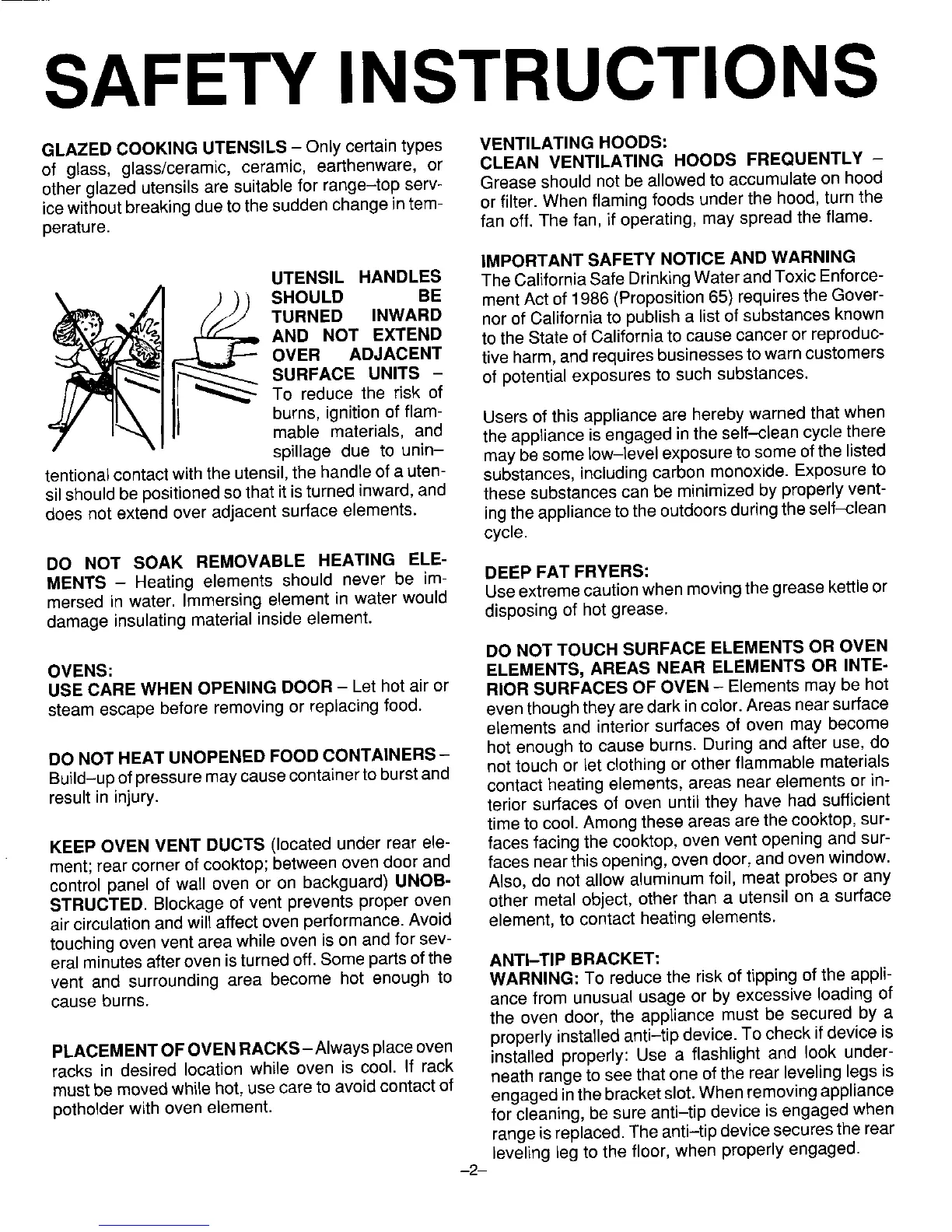
UTENSIL HANDLES The CaliforniaSafe DrinkingWater andToxicEnforce-
_ _ SHOULD BE mentAct of 1986 (Proposition 65) reqaires the GOVer-
TURNED INWARD nor of California to publish a list of substances known
AND NOT EXTEND to the State of Californiato cause cancer or reproduc-
OVER ADJACENT tive harm,and requires businessesto warncustomers
SURFACE UNITS - of potential exposures to such substances.
To reduce the risk of
burns, ignition of flam- Users of this appliance are hereby warned that when
mable materials, and the appliance is engaged inthe self-clean cycle there
spillage due to unin-
may be some low-level exposureto some ofthe listed
tentional contact wLththe utensil, the handle of a uten- substances, including carbon monoxide. Exposure to
sil should bepositioned so that it is turned inward,and these substances can be minimized by properly vent-
does not extend over adjacent surface elements, ing the appliancetothe outdoors during the self-clean
cycle.
DO NOT SOAK REMOVABLE HEATING ELE-
MENTS - Heating elements should never be im- DEEP FAT FRYERS:
mersed in water. Immersing element in water would Use extremecaution when movingthe grease kettleor
damage insulating material inside element, disposing of hot grease.
DO NOT TOUCH SURFACE ELEMENTS OR OVEN
OVENS: ELEMENTS, AREAS NEAR ELEMENTS OR INTE-
USE CARE WHEN OPENING DOOR - Let hotairor RIOR SURFACES OF OVEN - Elements may be hot
steamescape before removingor replacingfood. eventhoughtheyaredarkincolor.Areasnearsurface
elements and interior surfaces of oven may become
DO NOT HEAT UNOPENEDFOOD CONTAINERS- hot enough to cause burns. During and after use, do
Build-up of pressure maycausecontainer toburstand not touch or let clothing or other flammable materials
result in injury, contact heating elements, areas near elements or in-
terior surfaces of oven until they have had sufficient
time to cool. Amongthese areas are the cooktop,sur-
KEEP OVEN VENT DUCTS (located under rear ele- faces facingthe cooktop, oven vent opening and sur-
merit; rear corner of cooktop; between oven doorand faces near this opening, oven door, and ovenwindow.
control panel of wall oven or on backguard) UNOB- Also, do not allow aluminum foil, meat probes or any
STRUCTED. Blockage of vent prevents proper oven other metal object, other than a utensil on a surface
air circulation and will affect oven performance. Avoid element, to contact heating elements.
touching oven ventarea while oven is on and for sev-
eral minutesafter oven is turned off. Some parts ofthe ANTI-TIP BRACKET:
vent and surrounding area become hot enough to WARNING: To reduce the risk of tLppingof the appli-
cause burns, ance from unusual usage or by excessive loading of
the oven door, the appliance must be secured by a
PLACEMENT OF OVEN RACKS-Always placeoven properly installedanti-tip device. To check if device is
racks in desired location while oven is cool. If rack installed properly: Use a flashlight and look under-
must be movedwhile hot, use care to avoid contact of neath range to see that one of the rear leveling legs is
potholder with oven element, engaged inthebracket slot.When removingappliance
for cleaning, besure anti-tip device is engaged when
rangeis replaced. The anti-tip device securesthe rear
leveling Legto the floor, when properly engaged.
-2-


 To Next Page
 Loading...