Need help?
Do you have a question about the Magic Chef CDB4000 and is the answer not in the manual?
Basic precautions for using the dishwasher safely, covering operation, loading, and potential hazards.
Instructions for properly grounding the dishwasher to prevent electrical shock hazards.
Overview of the dishwasher's control panel buttons and indicators for operation.
Step-by-step guide to starting and operating the new dishwasher for the first time.
Steps on how to safely stop the dishwasher cycle at any point during operation.
General advice on how to load dishes for optimal cleaning and prevent damage.
Tips to avoid thumping or clattering noises during dishwasher operation.
Guidelines for loading the bottom rack, including placement of plates, bowls, and large items.
General instructions for using the dishwasher, including detergent and rinse aid.
Tips for optimizing dishwasher performance and conserving energy and water.
Details on available optional drying and warming features for the dishwasher.
Instructions on how to modify the selected wash cycle or settings during operation.
Explanation of the dishwasher's drying mechanism and steam release.
Guidance on safe washing practices for various materials and special items.
Information on the drain air gap, its function, and cleaning instructions.
Common problems and their solutions for dishwasher operation and cleaning.
Guidance on removing spots and filming from dishes using rinse aid or vinegar.
Troubleshooting tips for dishes not drying properly after the wash cycle.
Information on preventing damage like chipping to dishes during operation.
Explanation of common dishwasher noises and their potential causes.
Contact information and procedures for obtaining help and service for the appliance.
Details of the one-year limited warranty covering parts and labor for the appliance.
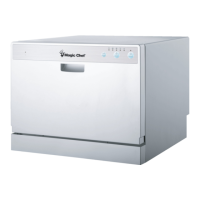
This document is a Use & Care Guide for the Magic Chef Undercounter Dishwasher, Model CDB4000. It provides comprehensive instructions for safe operation, effective use, and proper maintenance of the appliance.
The Magic Chef Undercounter Dishwasher is designed to clean dishes, glasses, and silverware efficiently. It operates by spraying water and detergent onto soiled items, followed by rinsing and drying cycles. The dishwasher features a two-section detergent dispenser for pre-wash and main wash cycles, and a rinse aid dispenser to prevent spots and streaks. It offers various wash cycles tailored to different soil levels and item types, including Heavy Wash, Pots & Pans, Normal Wash, and Rinse & Hold. Drying options include No Heat Dry and Heated Dry, allowing users to choose between energy saving and optimal drying performance. An integrated Plate Warmer cycle is also available to warm serving dishes or dinner plates. The appliance is equipped with an overfill protection float to prevent overfilling and a filter screen to trap food particles.
Before initial use, users are instructed to remove all packaging materials and read the entire guide for safety information and operating tips. To start a cycle, users should scrape large food soil from dishes, properly load the dishwasher ensuring the spray arm(s) can rotate freely, add detergent to the appropriate sections of the dispenser, and check the rinse aid level. It is recommended to run hot water at the nearest sink before starting the dishwasher to ensure optimal water temperature. The cycle is initiated by firmly closing the door and selecting the desired cycle and options using the control knob.
Loading instructions emphasize placing soiled surfaces towards the spray and avoiding stacking or overlapping items to ensure thorough cleaning and drying. Specific guidance is provided for loading the top rack (cups, glasses, smaller items, plastic items marked "dishwasher safe") and the bottom rack (plates, pans, casseroles, utensils, heavily soiled cookware). Silverware should be loaded with handles pointing up to avoid nesting and to reduce the risk of injury from sharp items. The guide also advises against loading certain items like disposable aluminum, cast iron, and wooden ware, which may be damaged in the dishwasher.
The detergent dispenser has a Pre-Wash section and a Main Wash section. The amount of detergent required varies based on water hardness and soil level, with detailed charts provided for soft to medium and medium to hard water conditions. Only automatic dishwashing detergent should be used, and it should be added just before starting a cycle and stored in a cool, dry place. The rinse aid dispenser, which holds 6 oz (175 mL), should be kept full to improve drying and prevent spots.
Users can stop a cycle by opening the door slightly, waiting for the spraying action to cease, and then fully opening the door, or by slowly turning the cycle control knob clockwise until water draining is heard, allowing the dishwasher to drain, and then turning the knob to Off. Cycles or settings can be changed mid-cycle by lifting the door latch, turning the control knob, checking detergent levels, and re-latching the door. Items can be added during a cycle before the main wash starts by lifting the door latch, waiting for the spray to stop, adding items, and then closing and re-latching the door after a brief pause.
The dishwasher incorporates several efficiency tips, such as not pre-rinsing dishes, using low energy cycles when possible, utilizing delay features during off-peak hours, running the dishwasher at night during summer, and using the energy-saving dry option with rinse aid. Maintaining a hot water temperature of 120°F (49°C) at the dishwasher inlet is crucial for optimal performance.
Regular cleaning of the dishwasher's exterior is recommended using a soft, damp cloth or sponge and a mild detergent. For the interior, which may develop a white film from hard water minerals, cleaning should be done when the dishwasher has cooled. A paste of powdered dishwasher detergent on a damp sponge, or liquid automatic dishwasher detergent, can be used. Alternatively, a vinegar rinse procedure (described in the troubleshooting section) can address spotting and filming. After cleaning the interior, a Wash or Normal Wash cycle with detergent should be run.
The filter screen requires periodic cleaning. After a cycle and once the heating element has cooled, the bottom rack should be slid forward (or removed) to access the screen. Collected particles can then be removed with fingers or a paper towel.
For models with a drain air gap, it should be checked periodically, especially if the dishwasher is not draining well. The drain air gap, typically located on top of the sink or countertop, protects the dishwasher from water backing up if the drain is clogged. Cleaning instructions usually involve lifting the chrome cover, unscrewing a plastic cap, and checking for soil buildup.
For seasonal storage, such as during summer months or in locations exposed to freezing temperatures, the water supply and power supply to the dishwasher should be turned off. For winterization in near-freezing conditions, authorized service personnel should be consulted to prevent water damage to lines.
The guide also includes a comprehensive troubleshooting section to address common issues like the dishwasher not starting, not filling, water remaining, detergent residue, odors, condensation, and dishes not being clean or dry. It provides solutions for spotting, filming, and damage to dishes, as well as unusual noises. For instance, if dishes are spotted or filmed, users are advised to check water hardness, rinse aid levels, water temperature, and detergent amount. A white vinegar rinse is suggested for occasional use to remove spots and film.
 General
| Type | Built-In |
|---|---|
| Capacity | 12 place settings |
| Energy Star Certified | Yes |
| Installation Type | Built-In |
| Voltage | 120V |
| Wash Cycles | 6 |
| Dimensions | 24 inches |
| Control Type | Electronic |
| Color | White |


 To Next Page