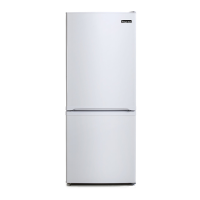
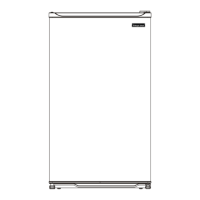
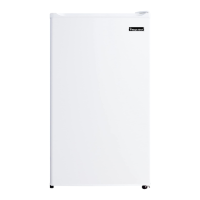
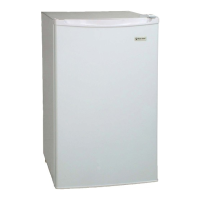
This document is an instruction manual for the Magic Chef 9.2 Cu. Ft. Bottom Freezer Refrigerator, Model No. MCBM920S. It provides comprehensive information on the appliance's function, technical specifications, usage, and maintenance.
Function Description
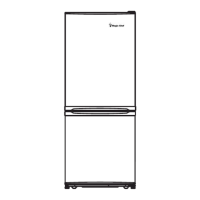
The Magic Chef MCBM920S is a 9.2 cubic foot bottom freezer refrigerator designed for household use. It features two independently controlled compartments: a refrigerator section at the top and a freezer section at the bottom. This design allows for separate temperature management for fresh and frozen foods. The refrigerator is intended for freestanding installation and is not designed to be recessed or built-in. It is also not suitable for use in an RV or with an inverter, nor is it recommended for outdoor installations or in garages where ambient temperatures can fall below 50°F (10°C) or exceed 85°F (29.4°C), as this can hinder performance. The appliance utilizes refrigerants, which must be removed according to federal and local regulations upon disposal.
Important Technical Specifications
- Model No.: MCBM920S
- Capacity: 9.2 Cu. Ft.
- Unit Dimensions (inches):
- Width: 23 4/5"
- Height: 59 4/5"
- Depth: 26 2/3"
- Net Weight: 134 lbs
- Electrical Requirements: Standard 115/120 Volt A.C. ~/60Hz electrical outlet with three-prong ground.
- Temperature Control: Separate controls for the refrigerator and freezer compartments, located at the rear of the refrigerator section. The range for both controls is from "COLD" to "COLDEST."
- Reversible Door: The refrigerator is built with a reversible door, allowing the user to choose between left or right-hand opening.
Usage Features
The refrigerator is designed for user convenience and efficient food storage.
- Temperature Control: Both the refrigerator and freezer compartments have independent temperature controls. Upon initial setup, it's recommended to set the control knob to "COLDEST" for at least 2 hours before loading food to ensure thorough chilling. After 24 to 48 hours, the control can be adjusted to suit individual needs. Adjusting the refrigerator temperature control will also affect the freezer temperature. The manual advises adjusting the thermostat control by one increment at a time and allowing several hours for temperature stabilization.
- Interior Layout: The refrigerator compartment includes an interior light, temperature control, multiple refrigerator shelves, a glass crisper cover, and a crisper for fresh produce. The door features refrigerator door racks, a can dispenser, and a bottle storage bin.
- Freezer Compartment: The bottom freezer compartment includes its own temperature control, a freezer shelf, and a freezer basket. It is designed for long-term storage of frozen food. Users are cautioned not to touch the interior of the freezer chamber or frozen foods with wet hands to avoid frostbite. The manual also advises against storing canned foods or food in glass containers in the freezer.
- Ice Tray: An ice tray is provided for making ice. Users can pour cool water into the tray and place it in the freezer for two hours. Twisting the tray releases the ice cubes. For faster ice making, the temperature control can be set to a colder position.
- Door Reversibility: A key feature is the reversible door, which allows the user to change the opening direction from left to right or vice versa. Detailed instructions with graphics are provided for removing and replacing hinges, door stops, and hole plugs to achieve this. This process requires careful attention to ensure proper alignment and sealing of the doors.
- Safety Precautions: The manual emphasizes important safety instructions, including the risk of child entrapment, proper disposal of refrigerants, and avoiding flammable fluids near the appliance. It also provides guidelines for electrical connection, stressing the importance of a properly grounded outlet and advising against the use of extension cords.
Maintenance Features
Proper maintenance ensures the longevity and efficient operation of the refrigerator.
- Cleaning: Regular cleaning is recommended. Before cleaning, the refrigerator should be turned off and unplugged. All food content should be removed. The interior can be cleaned with a damp warm cloth soaked in a solution of lukewarm water and baking soda (approximately 2 tablespoons of baking soda to a quart of water). The door gasket (seal) should be kept clean for efficient operation. The exterior can be cleaned with mild detergent and warm water, and both interior and exterior surfaces should be dried with a soft cloth.
- Vacation Time:
- Short Vacations (less than three weeks): The refrigerator can be left operating.
- Long Vacations (several months): The appliance should be unplugged, all food removed, and the interior cleaned and dried thoroughly. To prevent odors and mold growth, the door should be left open slightly, either by blocking it open or by removing it entirely.
- Moving the Refrigerator: Before moving, the refrigerator should be turned off and unplugged, and all food removed. Loose items inside should be securely taped down, and the doors taped shut. It's crucial to keep the refrigerator in an upright position during transportation.
- Energy Saving Tips: The manual offers several tips to improve energy efficiency:
- Locate the refrigerator in the coolest area of the room, away from heat sources and direct sunlight.
- Allow hot foods to cool to room temperature before placing them in the refrigerator.
- Avoid overloading the refrigerator, as this forces the compressor to run longer.
- Wrap foods properly and wipe containers dry to reduce frost build-up.
- Organize and label food to minimize door openings and extended search times.
- Troubleshooting Guide: A comprehensive troubleshooting guide is included to help users diagnose and resolve common issues such as the refrigerator not operating, frequent compressor cycling, temperature issues (too warm or too cold), external surface warmth, strange noises (popping, cracking, bubbling, gurgling), moisture formation, and doors not closing properly. This guide provides possible causes and solutions for each problem, aiming to reduce the need for service calls. For persistent issues, contact information for customer service is provided.
The manual concludes with a warranty statement, outlining the terms and conditions of the Magic Chef Refrigerator warranty, including coverage periods for parts, labor, and the compressor, as well as exclusions.


 To Next Page
 General