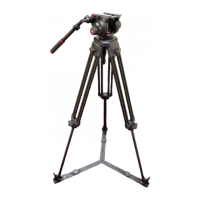
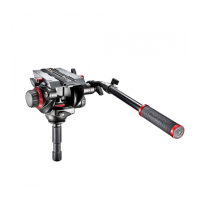
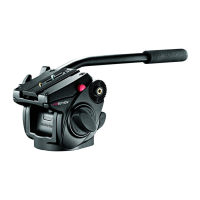
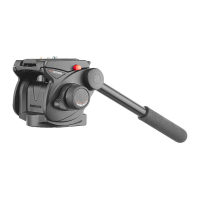
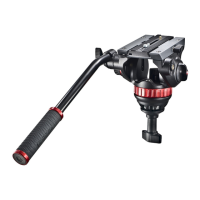
The Manfrotto 502 Tripod is a robust and versatile piece of equipment designed to provide stable support for various camera setups, particularly favored by first-year users. It is compatible with a range of cameras, including the Sony NX100, Canon DSLR cameras, and Bolex cameras, and can also be used with C100 cameras when a lighter tripod is preferred. This guide outlines the fundamental aspects of the tripod's components, their functions, and proper handling for optimal use and longevity.
Function Description
The primary function of the Manfrotto 502 Tripod is to offer a stable and adjustable platform for cameras, enabling smooth and precise movements for capturing video and still images. Its design incorporates a fluid head, which allows for controlled pan and tilt movements, crucial for professional-looking footage. The tripod's legs are extendable, providing a wide range of height adjustments to suit different shooting scenarios. A key feature of the head is its counterbalance system, which utilizes an internal spring to support heavier cameras, ensuring stability and ease of movement. This system helps to prevent accidental tilting and provides a more balanced feel when operating the camera.
Usage Features
The Manfrotto 502 Tripod is designed with several user-friendly features to enhance its functionality and ease of use.
Head Controls:
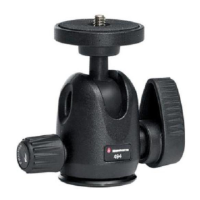
- Quick Release Plate: The tripod head features a quick-release plate that allows for swift attachment and detachment of cameras. A toggle on the side unlocks the plate, which can then be slid out by pressing a button on the back. The plate also slides on and off from the back, ensuring a secure connection.
- Arm Grip: An adjustable arm grip provides a comfortable handle for controlling the tripod head. A toggle loosens this grip, allowing the operator to position the arm at a desired angle.
- Tilt Movement Control: The tilt movement of the head, which allows the camera to move up and down, is controlled by two mechanisms. A toggle loosens or locks the tilt, while a tension ring on the side increases or decreases the resistance of the tilt movement. This allows for fine-tuning the fluidity of the tilt based on the camera's weight and desired shot.
- Pan Movement Control: Similarly, the pan movement, which allows the camera to rotate horizontally, is controlled by a toggle that loosens or locks the pan. A large red tension ring located at the bottom of the head adjusts the tension of the pan movement, providing smooth and controlled horizontal rotation.
- Spirit Level: A spirit level located at the back of the head helps ensure that the camera platform is perfectly level, which is essential for straight horizons and accurate framing.
- Levelling Screw Handle: Beneath the legs and head, a screw handle can be loosened to adjust the levelling of the head. This works in conjunction with the spirit level to achieve a perfectly horizontal camera position.
Leg Adjustments:
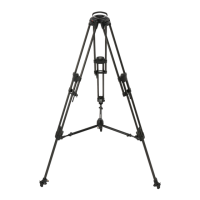
- Extendable Legs: The tripod features six tightening locks in total, distributed along its legs. Each lock can be loosened to extend the height of the tripod, allowing it to reach a maximum height of approximately 165cm. These locks can be opened by pulling on the side and closed by pushing down, providing quick and secure height adjustments.
- Stability: The robust leg design ensures stability even at maximum extension, providing a reliable base for camera operations.
Maintenance Features
Proper maintenance and storage are crucial for extending the lifespan of the Manfrotto 502 Tripod and ensuring its continued performance.
Head Maintenance:
- Spring Protection: The tripod head houses a spring as part of its counterbalance system. This spring is vulnerable to stretching and breaking if mishandled. Therefore, it is imperative to store the tripod head flat and not tilted up or down.
- Arm Handling: When lowering the arm, always ensure that the tightening toggle is undone. This will loosen the arm, allowing it to flop down naturally. Forcing the arm down without loosening the toggle can damage the internal spring, leading to costly repairs.
- Neutral Position: The head should always be kept flat and in a neutral position when not in use or when being packed away. This prevents unnecessary strain on the internal mechanisms.
Packing and Storage:
- Collapsing the Tripod: When packing away the tripod, use the locks on the legs to collapse them fully and bring the legs together. This compacts the tripod for easy transport and storage.
- Securing Legs: Once the legs are together, a rubber clip can be connected to the hooks on one of the legs to keep them bundled securely.
- Tripod Bag Usage: Tripods, like all equipment, need to be packed correctly to protect them from damage and make them comfortable to carry. The Manfrotto 502 Tripod comes with a dedicated bag.
- Orientation in Bag: Tripod heads are naturally heavier than their legs. Many tripod bags are designed with an offset weight distribution to counterbalance this, ensuring the bag rests perfectly straight when carried. To pack correctly, stand both the bag and the tripod upright. The bag has a distinct bottom section where the feet of the tripod should go. Insert the standing tripod feet-first into the bag and then zip it up. This ensures the heavier head is at the top of the bag, aligning with the bag's design for balanced carrying and protecting the head during transport.
By adhering to these usage and maintenance guidelines, users can ensure the Manfrotto 502 Tripod remains a reliable and effective tool for their photographic and videographic endeavors for many years.

 Need help?
 General
 Weight and Dimensions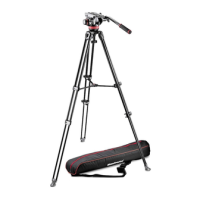

 To Next Page