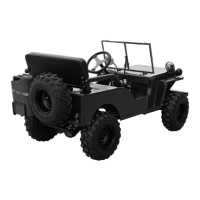
This document is an owner's manual for a Mini Jeep, an All-Terrain Vehicle (ATV) manufactured by Massimo Motor. It emphasizes that the vehicle is not a toy and can be hazardous to operate, particularly for children under 16, who are strictly prohibited from operating it. The manual stresses the importance of wearing an approved helmet and protective gear, and advises users to be aware of and follow local provincial/municipal regulations for off-road vehicles. It also states that the vehicle is not intended for use on public roads or highways.
Function Description:
The Mini Jeep is an All-Terrain Vehicle (ATV) designed for off-road use on private property and approved areas. It is a two-seater vehicle, designed for one operator and one passenger, and is not intended for racing, jumping, stunts, or "spin outs." The vehicle is equipped with a three-speed, centrifugal clutch transmission, allowing for forward movement (First, Second, Third Gears), Neutral, and Reverse. It utilizes disc brakes for stopping, with one on each front wheel and one on the rear axle. The vehicle is started via a keyed ignition switch and operated using an accelerator pedal and brake pedal. It includes basic features such as headlights, turn indicators, a horn, and a speedometer.
Important Technical Specifications (V 2.0):
- Model: PAZ125-1
- Dimensions:
- Length: 78 inches
- Width: 36 inches
- Height: 29 inches
- Ground Clearance: 3.9 inches
- Wheel Base: 49 inches
- Weight:
- Dry Weight: 350 lbs
- Max. Weight Capacity: 300 lbs (136 kg) (includes operator, passenger, and cargo)
- Engine:
- Type: 4-Stroke, Forced Air Cooled, Single Cylinder
- Displacement: 125 cc
- Max Power: 9hp @ 7500 rpm
- Max Torque: 6.5lb-ft @ 6500 rpm
- Idle Speed: 1500 ± 100 rpm
- Start Mode: Electric
- Engine Oil Capacity: 0.9 Qt
- Engine Oil Type: 10W/40-SE (API service classification "SM" only)
- Compression Ratio: 9.5:1
- Ignition Mode: CDI
- Lubrication: Forced/Splash
- Fuel:
- Fuel Tank Capacity: 1.05 US Gallons (4 liters)
- Fuel Type: Regular unleaded gasoline with an octane rating of 90 or higher
- Clutch: Centrifugal, Oil dipped, segmented
- Brakes:
- Front Brake Type: Disc-Brake
- Rear Brake Type: Disc-Brake
- Brake Fluid: DOT 4
- Tires:
- Type: Tubeless, low pressure
- Front/Rear Tire Size: 18x7.00-8 (180/70-8)
- Rim Size: 8x5.50
- Air Pressure: Keep at Maximum PSI recommended on sidewall
- Spark Plug:
- Type: Resistor-type (Recommended: C7HSANGK)
- Electrode Gap: 0.24 - 0.28 inches (0.6-0.7mm)
- Max Speed: 28 mph
- Steering Bar Angle: ≥30 deg
Usage Features:
- Safety First: The manual repeatedly warns against operating the vehicle under the influence of alcohol, drugs, or medication, and emphasizes the importance of adult supervision for operators and passengers under 18. It also prohibits operation on public roads, streets, highways, parking lots, sidewalks, or alleys.
- Protective Gear: Always wear an approved helmet (DOT, SHCA, or SNELL), face shields or goggles, boots or closed-toe shoes, gloves, and other appropriate protective clothing. Loose clothing, long hair, or articles worn by operators or passengers must be fully contained or covered to prevent entanglement in rotating parts.
- Pre-Ride Inspection: A thorough pre-ride inspection is mandatory before each use, covering brake pedal, parking brake, brake fluid, steering, tires and wheels, fasteners, fuel, air filter, oil, grass and debris, throttle, indicators/lights/switches, seatbelts, and operator/passenger readiness.
- Starting the Engine: Requires sitting in the driver's seat, fastening the seat belt, setting the parking brake, stepping on the brake pedal, placing the shifter in neutral, and turning the keyed ignition switch to "ON" then "START." The accelerator pedal should not be pressed during starting. A choke lever is available for cold weather starting.
- Stopping the Engine: Involves releasing the accelerator pedal, applying the brake to a complete stop, placing the shifter in neutral, setting the parking brake, and turning the keyed ignition switch to "OFF."
- Braking: Emphasizes moderate braking force, avoiding sudden braking, and practicing braking in different conditions. Engine braking occurs when the accelerator pedal is released.
- Parking: Park on a level surface, chock the wheels on inclines, turn front wheels, and ensure proper ventilation if parking indoors.
- Shifting Gears: The shifter lever allows selection of FORWARD (First, Second, Third Gears), NEUTRAL, or REVERSE. Shifting while driving requires releasing the accelerator pedal to reduce engine RPM, especially with the centrifugal clutch transmission.
- Driving Conditions:
- Slippery Surfaces: Drive slowly, watch the path, avoid quick turns, and correct skids by turning the steering wheel in the direction of the skid and releasing the throttle. Never apply brakes during a skid.
- Hills: Avoid steep hills (15° maximum). Drive straight uphill, avoid ascending/descending at an angle, and maintain a steady speed. If momentum is lost, back down in reverse using engine braking and light brake application.
- Sloped Surfaces (Side of a hill): NOT RECOMMENDED. If unavoidable, drive slowly, turn downhill immediately if overturning, and avoid obstacles that may cause sliding.
- Downhill: Avoid steep hills (15° maximum). Drive slowly in forward gear, never "coast" in neutral, and apply brakes lightly.
- Obstacles: Check for obstacles, drive slowly, and have passengers dismount before driving over large obstacles.
- Water: Avoid driving through water if possible. Never drive through water deeper than 3 inches. Test brakes after driving through water.
- Passenger Operation: Do not carry a passenger until the operator has at least four hours of driving experience. Never operate with a passenger under 12 years old. Ensure the passenger is tall enough, seated with seatbelt secured, feet on the floor, and grasping hand holds. Only one passenger is allowed.
Maintenance Features:
- Maintenance Schedule: A periodic maintenance and service checklist is provided, with items categorized by "AFTER BREAK-IN," "MONTHLY," "QUARTERLY," and "YEARLY." Items marked with an asterisk (*) must be inspected, replaced, or repaired by a competent mechanic.
- Break-in Period: A 10-hour break-in period is crucial for new vehicles. During this time, avoid full throttle or high speeds, use recommended oil, apply moderate braking force for the first 50 stops, and operate at lower speeds for clutch and belt break-in.
- Battery:
- Charging: Use a 12VDC, 1A (minimum) charger. Connect red positive (+) cable first, then black negative (-) cable. Normal charging time is 5-10 hours. Do not charge if temperature is below 3°C or if battery gets hot. Charge in a well-ventilated area, away from ignition sources.
- Installation: Connect positive (+) terminal first, then negative (-) terminal. Use an M6 x 12mm bolt and nut. Ensure wrench does not touch the negative terminal when connecting positive, and vice-versa.
- Type: Permanently sealed, do not loosen caps or add water/electrolyte.
- Safety: Batteries contain sulfuric acid (poisonous, corrosive) and generate explosive gases. Wear personal protective equipment. Keep metal tools and jewelry away from terminals.
- Fuel and Oil:
- Fueling: Turn ignition "OFF," allow engine to cool, refuel in a well-ventilated area away from flames/sparks. Do not overfill. Move vehicle 15 feet away before starting.
- Oil Selection: Use SAE 15W/40 (mineral based) or other suitable viscosity based on temperature. Check oil level before each ride.
- Oil Change: Initial oil change after 10 hours, then every 30-50 hours.
- Used Oil: Hazardous. Keep away from children/pets. Wear protective gear when handling. Recycle or dispose of properly.
- Air Filter:
- Maintenance: Service every 30 days of use, more frequently in dusty/wet conditions. Clean by tapping, spraying with cleaner, rinsing with warm water, and allowing to dry. Do not use pressurized air or direct heat.
- Operation: NEVER run the engine without the air filter in place to prevent severe engine damage.
- Spark Plug:
- Inspection/Replacement: Check every 50-100 hours. Inspect electrodes and insulator for deposits/erosion. Adjust gap to 0.24-0.28 inches.
- Installation: Thread by hand first, then tighten with a wrench (1/2 turn for new, 1/8 turn for old). Do not allow dirt/debris into the spark plug hole.
- Tires:
- Pressure: Check before each use and maintain at Maximum PSI on sidewall.
- Inspection: Check for damage, excessive wear (replace if tread depth is 1/8” or less, or every 3-5 years).
- Repair: Tubeless tires can be repaired with a plug type patch for punctures. Replace if damage is from a cut or cannot be plugged.
- Brakes:
- Inspection: Check operation before driving, fluid leaks, brake cylinder, hydraulic lines, joints, hoses, and fluid level. Friction pads should be >3/64" (1 mm).
- Fluid: Use DOT 4 Brake fluid. Do not reuse fluid or fluid exposed to air.
- General Maintenance: Keep all screws, nuts, and bolts tight. Keep engine free of dirt. Do not modify the vehicle or remove safety decals/guards.

 Need help?
 General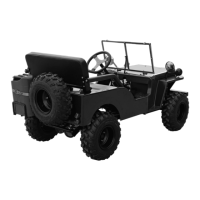

 To Next Page