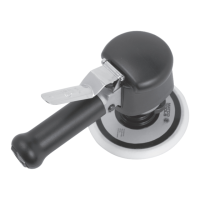
MT1874 6" Heavy Duty DA Sander
THIS INSTRUCTION MANUAL CONTAINS
IMPORTANT SAFETY INFORMATION.
READ THIS INSTRUCTION MANUAL CAREFULLY
AND UNDERSTAND ALL INFORMATION BEFORE
• Always operate, inspect and maintain this tool in
accordance with American National Standards
Institute Safety Code of Portable Air Tools (ANSI
B186.1) and any other applicable safety codes
• For safety, top performance and maximum durability
of parts, operate this tool at 90 psig 6.2 bar max
air pressure with 3/8" diameter air supply hose.
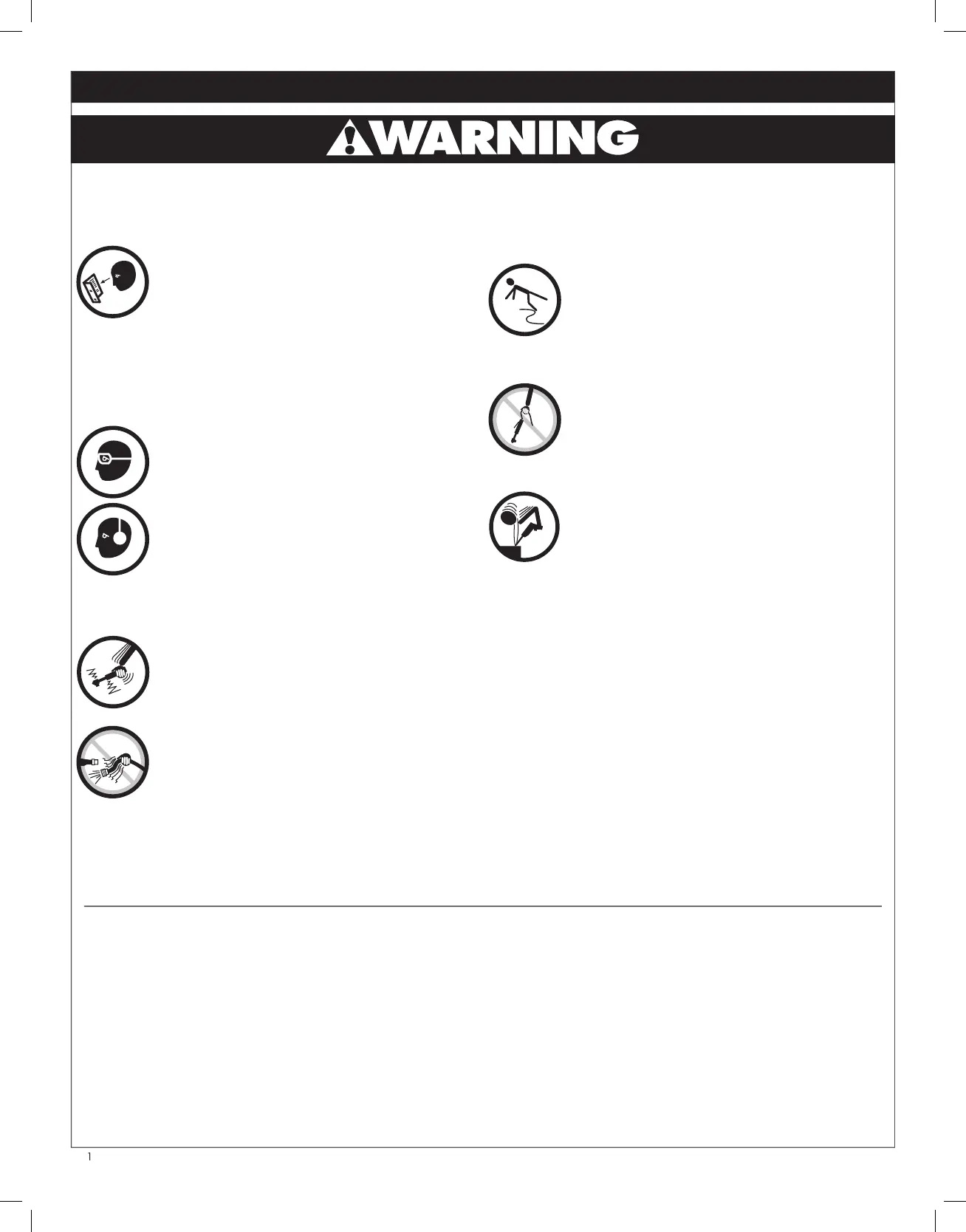
• Always wear impact-resistant eye and face
protection when operating or performing
• Always wear hearing protection when using this
tool. High sound levels can cause permanent hearing
Use hearing protection as recommended by
your employer or OSHA regulation.
• Keep the tool in efficient operating condition.
• Operators and maintenance personnel must be
physically able to handle the bulk, weight and
• Air powered tools can vibrate in use. Vibration,
repetitive motions or uncomfortable positions over
extended periods of time may be harmful to your
hands and arms. Discontinue use of tool if discomfort,
tingling feeling or pain occurs. Seek medical advice
• Air under pressure can cause severe injury. Never
direct air at yourself or others. Always turn off the
supply, drain hose of air pressure and detach tool
air supply before installing, removing or
adjusting any accessory on this tool, or before
performing any maintenance on this tool. Failure to
do so could result in injury. Whip hoses can cause
serious injury. Always check for damaged, frayed
or loose hoses and fittings, and replace immediately.
Do not use quick detach couplings at tool. See
instructions for correct set-up.
• Place the tool on the work before starting the tool.
• Slipping, tripping and/or falling while operating air
tools can be a major cause of serious injury or
death. Be aware of excess hose left on the walking
• Keep body working stance balanced and firm. Do
not overreach when operating the tool.
• Anticipate and be alert for sudden changes in motion
during start up and operation of any power tool.
• Do not carry tool by the hose. Protect the hose from
• Tool shaft may continue to rotate briefly after throttle
is released. Avoid direct contact with accessories
during and after use. Gloves will reduce the risk of cuts or
• Keep away from rotating end of tool. Do not
jewelry or loose clothing. Secure long hair.
can occur if hair is not kept away from
Choking can occur if neckwear is not kept away
from tool and accessories.
• Never mount a grinding wheel on a sander. A
grinding wheel that bursts can cause very serious
injury or death when not properly
guarded. Inspect backing pad before each use.
Do not use if cracked or damaged.
• Avoid direct contact with moving sanding pad to
prevent pinching or cutting of hands or other body
• Do not lubricate tools with flammable or volatile
liquids such as kerosene, diesel or jet fuel.
• Do not force tool beyond its rated capacity.
• Do not remove any labels. Replace damaged labels.
FAILURE TO OBSERVE THESE WARNINGS COULD RESULT IN INJURY
The air regulator knob can be used as an air throttle and can be used for
setting positive speed control. The air inlet used for connecting air supply has
standard 1/4" NPT thread.
Let the sander do the work. The normal weight of the machine is sufficient
for efficient sanding. Do not put additional pressure on the machine. This will
only slow down the speed of the pad, reduce sanding efficiency and put an
additional burden on the motor. Start the sander off the work, set it down on
the work evenly and move it slowly back and forth in wide, overlapping areas.
When finished sanding, lift it off the work before stopping the motor.
MT1874_011206_OpMan.indd 2 1/12/06 2:41:41 PM


 To Next Page
 Loading...