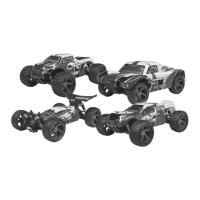
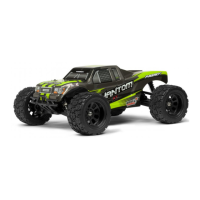
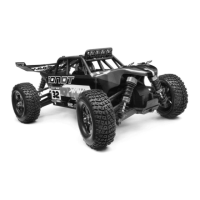
This manual describes the Maverick Quantum 2, an authentic radio-controlled (RC) vehicle, not a toy, designed for high-performance operation. It is available in both MT (Monster Truck) and XT (Truggy) configurations, as indicated by the exploded views and wheel options. The vehicle is designed for enthusiasts aged 14 and above, with adult supervision recommended for minors.
Function Description
The Maverick Quantum 2 is a radio-controlled car intended for recreational driving. It features a sophisticated control system that allows users to steer and control its speed. The vehicle is equipped with a built-in fail-safe system to protect it from running out of control due to radio glitches or loss of range, automatically setting the car to neutral. It is designed to be driven in wet conditions, with water protection for on-board radio system components, though it is not meant for complete submersion.
Important Technical Specifications
Power System:
- Battery Compatibility:
- 6-cell NiMH (7.2V) battery pack (minimum 5000 mAh recommended for Flux models).
- 2-3S LiPo (7.4-11.1V) battery pack (minimum 30C, 4000 mAh recommended for Flux models). Hard case LiPo batteries are required.
- Charger: A suitable battery charger is required and not included. Specific chargers for NiMH and LiPo batteries are essential; using an incorrect charger can damage the battery.
- ESC (Electronic Speed Controller): Factory-setup, but requires user familiarity and operation check. For LiPo battery use, the "Auto-LiPo" setting must be activated, as detailed in the ESC manual.
- Motor: Specific motor details are not explicitly listed but implied by the "Motor and Pinion Gear Maintenance" section.
Radio System:
- Transmitter: Requires 4x AA batteries (not included). Features an LED battery indicator that lights up when sufficient charge is present and flashes with an audible beep when batteries need replacing.
- Frequency Range: 2.4 to 2.4835 GHz.
- Maximum Power: 20dBm.
- Compliance: EU Directive 2014/53/EU, FCC Part 15 Class B, and Canadian ICES-003 compliant.
- Fail-Safe System: Built-in, factory-setup, designed to set the car to neutral in case of signal loss.
Chassis and Drivetrain:
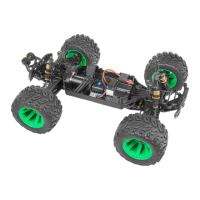
- Chassis: Main chassis and front/rear chassis plates.
- Suspension: Features shock absorbers (rebuildable with a shock rebuild kit), lower suspension arms, and hinge pins. Aluminum suspension braces are available.
- Drivetrain: Includes spur gear (51T, 32DP), differential gears (43T/12T/M1.25, 18T/10T), drive shafts (universal and rear), wheel axles (universal and rear), and a slipper clutch.
- Steering: Equipped with a servo saver, steering spindle/rear hub set, and steering link balls. Features steering trim adjustment and steering dual rate (D/R) to adjust maximum servo movement.
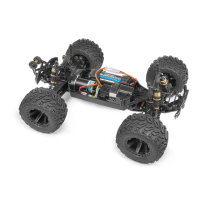
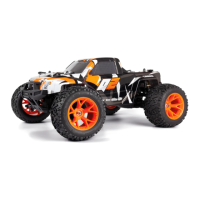
- Wheels/Tires: Quantum 2 MT 2.8in wheels (black, orange, green) and Tredz Linebacker tires (122x68/2.8in). Quantum 2 XT 2.8in wheels (black, orange, green) and Tredz MixBlok tires (122x68/2.8in).
- Other Components: Body clips, LED light set (front/rear), wheelie bar set (for XT model).
Usage Features
- Getting Started:
- Battery Charging: Drive batteries must be charged first, following the charger manual instructions.
- Transmitter Battery Installation: Insert 4x AA batteries into the transmitter, observing correct polarity.
- Battery Installation (Vehicle): Insert the drive battery pack into the designated compartment and secure it with straps. Connect the battery plug to the speed controller, ensuring correct polarity (red to red, black to black). The receiver must be OFF before connecting the battery.
- ESC Setup: The ESC is factory-setup, but users should familiarize themselves with its functions and check operation. LiPo battery users must activate the "Auto-LiPo" setting.
- Fail-Safe Check: The fail-safe system is factory-setup but should be checked before running.
- Operating Procedures:
- Power On Sequence: Turn on the transmitter first (LED battery indicator will light up), then turn on the receiver.
- Steering Trim: Adjust the steering trim to center the tires.
- Transmitter Operation: Control steering (left, straight, right) and throttle (forward, brake/reverse).
- Reverse Operation: Two methods for reverse are described:
- Method A: Forward -> Brake/Reverse (briefly) -> Stop (Neutral) -> Reverse.
- Method B: Forward -> Brake (1st time) -> Stop (Neutral) -> Brake (2nd time) -> Reverse.
- Practice Turning: Practice driving on a track with pylons. Note that steering directions are reversed when the car is running towards the driver. Allow 15 minutes of cooling between runs.
- Power Off Sequence: Turn off the receiver first, then the transmitter. Disconnect the battery when not in use to prevent overheating or fire.
- Wet Conditions Driving: The vehicle's on-board radio system components are water-protected for driving in wet conditions, but not for complete submersion. Additional maintenance is required after driving in wet conditions. Avoid driving in stormy conditions or near lightning. The transmitter is not waterproof and must be protected from rain.
Maintenance Features
- Regular Maintenance (After Every Run):
- Clean the chassis thoroughly, removing all dirt and debris, especially from suspension, drive shafts, and steering parts.
- Inspect all moving parts and screws for damage, loosening, or missing components.
- Check for trapped water in tires and transmission after wet driving.
- Lubricate metal parts like bearings and hinge pins after driving in wet or damp conditions.
- Dry off any water from the ESC and connectors after running in water.
- Scheduled Maintenance:
- Every Pack (x1): Chassis, wheels, motor and pinion gear, transmission (spur gear and diff gear), shocks, and radio.
- Every 10 Packs (x10): More detailed inspection and potential lubrication for all components.
- Every 20 Packs (x20): Comprehensive inspection and maintenance for all components.
- Troubleshooting: A dedicated section provides solutions for common issues such as the car not moving or not responding to controls, including:
- Incorrectly placed or weak/dead transmitter or vehicle batteries.
- Damaged motor.
- ESC shutdown due to heat protection.
- Incorrect servo reverse switch settings.
- Improperly connected ESC to motor wires.
- Incorrect neutral position or steering trim.
- Parts List and Exploded Views: Comprehensive lists and diagrams are provided for all components, facilitating identification and ordering of replacement parts.
- Warranty: Covered by a 90-day component guarantee from the date of purchase for manufacturing defects. Damage due to crashes, improper use, lack of maintenance, or abuse is not covered. Claims should be initiated through the retailer.
- Disposal: Electrical components should not be disposed of in household waste; local waste disposal centers should be used.

 Need help?
 General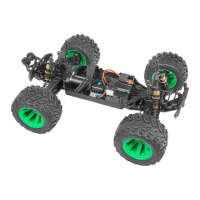


 To Next Page