EasyManua.ls Logo

Maytag MDBH950AWW - User Manual

Maytag MDBH950AWW
8 pages
Print Icon
To Next Page IconTo Next Page
Loading...
Technical Information- Dishwasher
May 2004 1 16023222
©2004 Maytag Services
MDBH950AWB MDBH950AWQ MDBH950AWS MDBH950AWW
MDBH970AWB MDBH970AWQ MDBH970AWS MDBH970AWW
Due to possibility of personal injury or property damage, always contact an authorized technician for servicing or
repair of this unit. Refer to Service Manual 16021814.
CAUTION
!
All safety information must be followed as provided in Service Manual 16021814.
!
WARNING
To avoid risk of electrical shock, personal injury, or death, disconnect power to dishwasher before servicing, unless
testing requires power.
Specifications MDBH950AW* MDBH970AW* Benefits MDBH950AW* MDBH970AW*
Power Source
Wash cycles 4 5
Voltage AC 120 VAC 120 VAC Heavy Wash X X
Amperage
(Single Unit)
15 A 15 A Normal Wash X X
Frequency 60 Hz 60 Hz Light Wash X X
Motor
horsepower
1/3 1/3 Rinse Only X X
Receptacle N/A N/A Auto Clean X
Plug N/A N/A Drying System X X
Dimensions Features
Heightoverall
33 ½” to 35 ¼” 33 ½” to 35 ¼” Control Lock X X
Width 23 7/8” 23 7/8” *Sanitizer X X
Depth 23 1/2” 23 1/2” *ToughScrub
Plus™
X X
Weight
*Extra Rinse X X
Un-crated 65 lbs. 65 lbs. QuietSeries
100™
X
QuietSeries
300™
X
2/4/6 Hour Delay
Start
X
1-9 Hour Delay
Start
X
Energy Star X X
Remaining Time
Countdown
Display
X
Active Vent Dry X X
Finer Filtration X X
Hard Food
Disposer
X X
9 Touch Pad
Controls
X
11 Touch Pad
Controls
X
*On selected models only

Other manuals for Maytag MDBH950AWW

Question and Answer IconNeed help?

Do you have a question about the Maytag MDBH950AWW and is the answer not in the manual?

Summary

Technical Information - Dishwasher

Safety and Warnings

Provides crucial safety warnings and cautions regarding personal injury, property damage, and electrical shock during servicing.

Component Specifications

Electrical Component Testing

Outlines test procedures and resistance values for components like the dishwasher motor, control board, water valve, and wax motors.

Component Specifications

Thermal and Heating Component Testing

Covers testing of the limit thermostat, sensor/thermistor, heating element, and drain motor with their respective procedures and values.

Component Readings;Testing

Manual Function Test Procedures

Explains how to initiate manual function tests to check individual component operations via keypad sequences.

Field Service Test Procedure

Outlines the field service test for checking sensors, motor, and control board performance with specific sequences.

Diagnostic Tips and Troubleshooting

Offers advice on diagnosing control board issues and component failures, including error indicators.

Membrane and Load Readings

Provides pin-out details, resistance values for control panel buttons, and major load components.

Electrical Diagnostics

Resistance and Continuity Checks

Details specific test points, expected resistance values, and continuity checks for various electrical components.

Motor Connectivity

Wiring Diagram

Component Information

Provides detailed specifications and values for major components like the wash motor, water valve, and heating element.

Cycle Chart

Cycle Descriptions and Options

Details the sequence, duration, and available options for each wash cycle, including notes on temperature checks.

Summary

Technical Information - Dishwasher

Safety and Warnings

Provides crucial safety warnings and cautions regarding personal injury, property damage, and electrical shock during servicing.

Component Specifications

Electrical Component Testing

Outlines test procedures and resistance values for components like the dishwasher motor, control board, water valve, and wax motors.

Component Specifications

Thermal and Heating Component Testing

Covers testing of the limit thermostat, sensor/thermistor, heating element, and drain motor with their respective procedures and values.

Component Readings;Testing

Manual Function Test Procedures

Explains how to initiate manual function tests to check individual component operations via keypad sequences.

Field Service Test Procedure

Outlines the field service test for checking sensors, motor, and control board performance with specific sequences.

Diagnostic Tips and Troubleshooting

Offers advice on diagnosing control board issues and component failures, including error indicators.

Membrane and Load Readings

Provides pin-out details, resistance values for control panel buttons, and major load components.

Electrical Diagnostics

Resistance and Continuity Checks

Details specific test points, expected resistance values, and continuity checks for various electrical components.

Motor Connectivity

Wiring Diagram

Component Information

Provides detailed specifications and values for major components like the wash motor, water valve, and heating element.

Cycle Chart

Cycle Descriptions and Options

Details the sequence, duration, and available options for each wash cycle, including notes on temperature checks.

Overview

This document provides technical information and operational details for a range of dishwashers, including models MDBH950AWB, MDBH970AWB, MDBH950AWQ, MDBH970AWQ, MDBH950AWS, MDBH970AWS, MDBH950AWW, and MDBH970AWW. It emphasizes safety precautions, diagnostic procedures, and component testing, making it a crucial resource for authorized technicians.

Function Description

The dishwashers are designed to clean dishes using various wash cycles and features. They operate on a 120 VAC, 60 Hz power supply, with a 1/3 horsepower motor. The control system manages water intake, heating, washing, rinsing, and drying, offering a range of options to suit different cleaning needs.

Usage Features

The dishwashers offer a variety of wash cycles and user-selectable features to optimize cleaning performance and convenience:

  • Wash Cycles:

    • Rinse Only: A quick cycle for rinsing dishes without detergent.
    • Quick Wash: A shorter wash cycle for lightly soiled dishes.
    • Light Wash: Designed for everyday loads with light to medium soil.
    • Normal Wash: A standard cycle suitable for most daily loads.
    • Heavy Wash: For heavily soiled pots, pans, and dishes.
    • Auto Clean: An intelligent cycle that adjusts wash time and intensity based on soil level detected by sensors.
  • Cycle Options:

    • Heavy Wash: Available on all models, this option provides a more robust cleaning for tough messes.
    • Normal Wash: A standard option for typical dishwashing needs.
    • Light Wash: For lighter soil levels.
    • Rinse Only: A quick rinse without detergent.
    • Auto Clean: Automatically adjusts the wash cycle based on soil sensing.
    • Drying System: Ensures dishes are dry at the end of the cycle.
    • Control Lock: Prevents accidental changes to settings during operation, a useful safety feature, especially in households with children.
    • Sanitizer: This option, available on selected models, provides a high-temperature rinse to sanitize dishes, meeting hygiene standards. It forces a temperature check at the end of the main wash, a 154°F temperature check prior to the rinse aid dispense in the final rinse, and adds an additional 5 minutes of rinse before the rinse aid dispense.
    • ToughScrub Plus™: An enhanced scrubbing feature for stubborn food residues. This option adds an additional 18 minutes of heated wash to the main wash and 5 minutes of heated rinse to the final rinse in the Light Wash cycle. In Normal Wash, it overrides the sensor's decision to skip cycle functions and adds an additional 7 minutes of heated wash to the main wash, with the main wash temperature check boosted to 145°F. For Heavy Wash, it adds 5 minutes of heated wash to the pre-wash, 12 minutes of heated wash to the main wash, and 5 minutes of heated rinse to the second pre-rinse, with the main wash temperature check boosted to 145°F. In Auto Clean, it overrides the sensor's decision to skip cycle functions and boosts the main wash temperature check to 145°F.
    • Extra Rinse: This option adds an additional fill between the main wash and the final rinse for an additional 5 minutes of unheated rinse in Quick Wash, Light Wash, Normal Wash, and Auto Clean cycles. For Heavy Wash, it adds an additional fill between the main wash and the final rinse for an additional 10 minutes of heated rinse.
    • QuietSeries 100™ / QuietSeries 300™: Indicates different levels of noise reduction technology, with 300™ offering a quieter operation.
    • Delay Start (2/4/6 Hour or 1-9 Hour): Allows users to program the dishwasher to start at a later time, offering flexibility for energy savings or convenience.
    • Energy Star: Indicates that the dishwasher meets energy efficiency guidelines.
    • Remaining Time Countdown Display: Provides a visual countdown of the cycle's progress.
    • Active Vent Dry: Enhances drying performance.
    • Finer Filtration: Improves water cleanliness during the wash cycle.
    • Hard Food Disposer: Grinds down food particles to prevent clogging.
    • Touch Pad Controls (9 or 11): Modern and easy-to-use interface for selecting cycles and options.
  • Temperature Options (Available on select models):

    • 160° Wash: If available for a given cycle, it forces a 160°F temperature check prior to the rinse aid dispense in the final rinse.

Maintenance Features

The manual provides detailed instructions for diagnostics and component testing, primarily intended for authorized technicians to ensure proper servicing and repair.

  • Safety Precautions: Emphasizes disconnecting power before servicing to prevent electrical shock, personal injury, or death.
  • Manual Function Test: A diagnostic mode initiated by pressing the "Normal Wash" key 5 times followed by the "Start" key within 6 seconds. This test activates individual components (wash motor, drain motor, water valve, soap dispenser, rinse aid dispenser, vent, heating element) to verify their operation. The LED above the activated keypad will illuminate, and the display will show a countdown until the mode times out or is canceled.
  • Field Service Test: Initiated by pressing the "Heavy Wash" key 5 times followed by the "Start" key within 6 seconds. This test performs a sequence of checks, including the vent wax motor, water valve, thermistor, and turbidity sensor calibration. It also tests the wash motor, dispenser wax motor, heater, and drain pump. The "Heavy Wash" LED will flash during this test. If a fault is detected, the test will abort, and two or more LEDs will flash, indicating a memory or software check.
  • Sales Floor Demo Mode: Activated by pressing the "Extra Rinse" keypad 5 times within 6 seconds. This mode illuminates LEDs in a progressive order and displays a countdown from '50' to '0', repeating until canceled. This mode is useful for checking control LEDs.
  • Diagnostic Tips: Recommends using the Sales Floor Demo Mode to check control LEDs and the Field Service Test to check control and components. If a component failure is diagnosed, the Manual Function Test can be used to verify individual component operation.
  • High Current or Low Current Motor Error: If detected during a wash cycle, the control will enter a 30-second auto-restart mode. If the unit cannot restart, it will shut down.
  • Membrane Readings: Provides resistance values for various membrane switch connections, allowing technicians to test the integrity of the control panel.
  • Load Readings: Offers resistance values for key components like the heater, wash motor, drain motor, vent wax motor, dispenser wax motor, water valve, and thermistor. These values help in diagnosing component failures.
  • Resistance Check Points and Values: Includes a circuit board diagram with resistance values for critical components, such as the thermistor, dispenser wax motor, vent wax motor, water valve, drain motor, wash motor, and heater. This section emphasizes removing power before performing resistance or continuity checks.
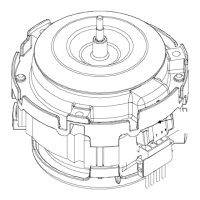
  • Motor Connectivity: Provides a diagram of the dishwasher motor and its wire harness connection plug, detailing the color-coded wires for common, main, ground, and start connections.
  • Wiring Diagram: A comprehensive diagram illustrating the electrical connections between all components, including the circuit board, door switch, thermostat, motor, water valve, heating element, float switch, vent, drain motor, water dispenser, and sensor/thermistor. This diagram is essential for tracing electrical paths and diagnosing wiring issues.
  • Cycle Chart: Detailed flowcharts for each wash cycle, outlining the sequence of operations (fill, pre-wash, main wash, drain, rinse, dry), approximate timings, and how options like Extra Rinse, ToughScrub, ToughScrub Plus, Sanitize, and 160° Wash affect the cycle. It also explains how the sensor input can cause certain segments of a cycle to be skipped.

Maytag MDBH950AWW Specifications

General IconGeneral
BrandMaytag
ModelMDBH950AWW
CategoryDishwasher
LanguageEnglish

Related product manuals