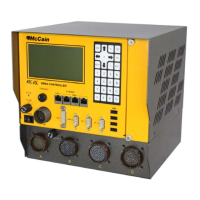
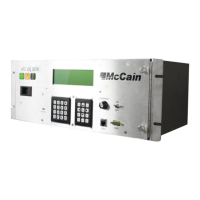
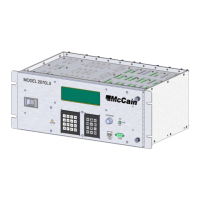
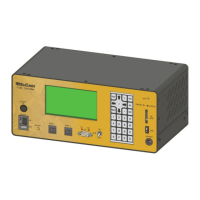
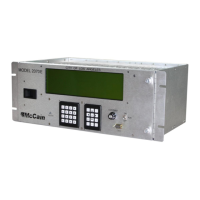
The McCain ATC eX2 NEMA Controller is an advanced, multi-application device designed to support multiple software applications simultaneously on a single platform. It is compliant with NEMA TS-2 and ATC 5.2b standards, offering revolutionary flexibility and control. The controller can be configured for either TS-2 Type 1 or TS-2 Type 2 applications and is backward compatible with TS-1, allowing for upgrades of existing intersections without replacing cabinet hardware.
Function Description
The ATC eX2 NEMA controller serves as the central processing unit for traffic management applications. It integrates various communication options and hardware interfaces to manage and monitor traffic signals. Its Linux operating system provides a robust, flexible, open-architecture platform capable of supporting third-party applications. The controller's modular design ensures that all hardware interfaces are accessible from the front panel, simplifying installation and maintenance.
Important Technical Specifications
- Operating System: Linux (kernel version 2.6.22)
- Microprocessor: Freescale MPC8360 PowerQuicc II Pro, running at 400MHz.
- Memory:
- 16MB NOR Flash Memory
- 256MB NAND Flash Memory
- 256MB DDR2
- 2MB Non-volatile SRAM
- Backup: Real-time clock (RTC)
- Applicable Standards: NEMA TS-2 2003 v2.06, ATC 5.2b
- Communication Interfaces:
- 1 SDLC port (SP3) routed to NEMA TS-2 PORT 1 (DB-15 female connector, RS-485 serial communication, software selectable speed from 19.2Kbps to 614Kbps, default 153.6 Kbps). Also available via DB-25 female connector (C12S).
- 2 Serial (asynchronous) ports on the front panel (SP-4 and SP-8, DB-9 female connectors, software selectable speed from 1.2Kbps to 115.2Kbps). SP-8 includes modem control lines (RTS, CTS, DCD).
- 2 Serial (asynchronous/synchronous) ports on a 2070 compatible modem board slot (SP-1 and SP-2, via DIN-96 connector, software selectable speed from 1.2Kbps to 115.2Kbps in asynchronous mode, 19.2Kbps to 614.4Kbps in synchronous mode).
- ENET 1: 100 Base-T Ethernet switch with 1 uplink and 2 additional ports (RJ-45).
- ENET 2: 100 Base-T Ethernet port dedicated for local communications (RJ-45).
- 2 USB ports with an internal USB hub.
- SP3 and SP5 supported on C12S connector.
- Front Panel Interface:
- Display: 16 lines x 40 characters LCD with backlight and auto-contrast.
- Keyboard: 7 x 4 keypad (28 keys).
- ACTIVE LED indicator.
- A2 circular connector for AC input and fault monitor signals.
- Rocker switch for ON/OFF.
- AC line fuse holder for a 2A fuse (3AG type).
- Cabinet Interfaces:
- NEMA TS-2 Type 1: PORT 1 (SDLC), A2 connector.
- NEMA TS-2 Type 2: A, B, C, and D connectors (with an optional connector box).
- Physical and Environmental Details:
- Input Voltage: 85 to 135 VAC at 60Hz ± 3Hz.
- Temperature Range: -37°C to +74°C (-34°F to 165°F).
- Relative Humidity: 0 to 95% (non-condensing).
- Dimensions (TS-2 Type 1): 7.5" H x 10.2" W x 10.6" D.
- Dimensions (TS-2 Type 2): 10.5" H x 10.2" W x 10.6" D.
- Weight (TS-2 Type 1): 7 lbs.
- Weight (TS-2 Type 2): 10 lbs.
- Mounting Method: Shelf mounted.
Usage Features
- Multi-Application Support: The controller can simultaneously run multiple transportation software applications, minimizing hardware requirements at intersections.
- Open Architecture: The Linux OS allows for flexibility and support for third-party applications.
- User Interface: A 16x40 character LCD with backlight and auto-contrast, combined with a 28-key keypad, provides intuitive navigation and data entry for monitoring controller status, modifying parameters, and configuring ports.
- Data Transfer: Quick data transfers, firmware upgrades, and log retrievals are facilitated via two hot-swappable USB ports.
- Ethernet Connectivity: Two Ethernet ports enable communication with central systems, peripheral devices, and remote terminal access for file transfers and updates.
- Configurability: The controller can be configured as a TS2 Type 1 or TS2 Type 2 unit, with the latter requiring an optional connector box to support MIL-Spec circular connectors and a special "D" connector.
- Boot Sequence: The controller follows a defined boot sequence, including kernel decompression, driver initialization, filesystem mounting, and Ethernet configuration, providing a login prompt for user access.
Maintenance Features
- Modular Design: The modular construction simplifies servicing and replacement of internal components.
- Front Panel Access: All hardware interfaces, including the power switch, fuse holder, serial ports, Ethernet, USB connectors, LCD, keypad, and ACTIVE LED, are accessible from the front panel.
- Dust and Debris Protection: The top cover is sealed to prevent dirt, dust, water, or other debris from entering, while ventilation holes on the sides are designed to prevent foreign material ingress.
- Preventive Maintenance: Regular maintenance includes ensuring an antistatic environment, disconnecting power before cleaning, removing dust, checking wiring and connectors, and tightening mounting hardware.
- Control Signals Board Adjustment: The AC input hysteresis for power failure and restoration is factory-set and typically does not require further adjustment.
- Troubleshooting: Visual inspection is recommended for diagnostics, with most issues related to harnesses. The McCain Diagnostic and Acceptance Test (DAT) is a pre-loaded tool (also available on USB) for testing and validating hardware, offering menus for CPU, I/O, serial ports, and front panel tests, along with error logging.
- Firmware Updates: The Linux Kernel and U-Boot can be updated via TFTP, requiring a local area network connection and a terminal program.

 Need help?
 General

 To Next Page