This document outlines the installation, operation, and maintenance procedures for a Ceiling Concealed Split Type Air Conditioner, available in both Cooling Only and Heat Pump models. The manual emphasizes safety precautions, proper installation techniques, and routine maintenance to ensure optimal performance and longevity of the unit.
Function Description
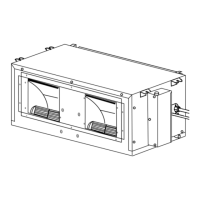
The Ceiling Concealed Split Type Air Conditioner is designed to provide efficient cooling and, for heat pump models, heating, for various indoor environments. The "split type" designation indicates that the system comprises two main units: an indoor unit, which is concealed within the ceiling, and an outdoor unit, typically placed outside the building. This design allows for quiet operation indoors while the noisier components are located externally.
The indoor unit draws in air, conditions it (cools or heats), and then discharges the conditioned air back into the room. The outdoor unit contains the compressor and condenser coil, responsible for the heat exchange process with the ambient air. Refrigerant piping connects these two units, facilitating the circulation of refrigerant to transfer heat.
The system operates by circulating refrigerant between the indoor and outdoor coils. In cooling mode, the indoor coil absorbs heat from the indoor air, and the refrigerant carries this heat to the outdoor coil, where it is released to the outside environment. In heating mode (for heat pump models), the process is reversed: the outdoor coil absorbs heat from the outside air, and the refrigerant transfers this heat to the indoor coil, releasing it into the room.
The unit is pre-charged with refrigerant R22, and specific guidelines are provided for additional charging based on piping length. Electrical connections are crucial for the unit's operation, with detailed wiring diagrams and recommended fuse and cable sizes provided for different models and power supply configurations. Protection devices, such as circuit breakers or fuses with double pole separation systems, are mandatory to ensure electrical safety.
Usage Features
The air conditioner is designed for user convenience and efficient climate control. Key usage features include:
- Remote Control Operation: The unit is controlled via a remote control, allowing users to adjust settings such as temperature, fan speed, and operating mode.
- Automatic Random Re-Start Function: In the event of a power cut, the unit is equipped with an auto random re-start function. This feature allows the air conditioner to automatically resume its previous operating mode once power is restored, ensuring continuous comfort without manual intervention. Users are advised to switch off the unit via the remote control before disconnecting power to prevent nuisance tripping.
- Temperature Control: Users can set their desired indoor temperature within a specified range. The system will then work to maintain this temperature, providing a comfortable indoor environment.
- Fan Speed Adjustment: The fan speed can be adjusted to control the airflow and noise level, allowing users to customize their comfort.
- Delay Timer: The remote controller incorporates a 3-minute delay in the circuit before the outdoor condensing unit starts up, protecting the compressor from frequent cycling.
- Troubleshooting Guide: A comprehensive troubleshooting section is included to help users identify and resolve common operational issues, such as the compressor not starting, low airflow, or abnormal sounds. This empowers users to perform basic checks before contacting a service technician.
Maintenance Features
Regular maintenance is essential to ensure the air conditioner operates efficiently and reliably. The manual provides detailed instructions for various maintenance tasks, categorized by component and recommended frequency:
- Indoor Air Filter Maintenance: The indoor air filter should be cleaned at least once every two weeks, or more frequently if necessary. This involves removing dust with a vacuum cleaner or washing it in lukewarm water with a neutral cleaning detergent, rinsing well, and drying before reinstallation. The use of gasoline, volatile substances, or harsh chemicals for cleaning is strictly prohibited.
- Indoor Unit Cleaning: The grille or panel of the indoor unit should be wiped clean with a soft cloth soaked in lukewarm water and a neutral detergent solution at least once every two weeks. Similar to the air filter, harsh chemicals should be avoided.
- Condensate Drain Pan & Pipe: The condensate drain pan and pipe should be checked for cleanliness and cleaned every three months to prevent blockages and water leakage.
- Indoor Fan Inspection: The indoor fan should be checked for any abnormal noise when necessary, indicating potential issues that may require attention.
- Indoor/Outdoor Coil Cleaning: The indoor and outdoor coils should be checked monthly for dirt or debris clogged between the fins. Any obstacles hindering airflow into or out of the units should also be removed to maintain optimal performance.
- Power Supply Checks: Every two months, the voltage and current of both indoor and outdoor units should be checked. Additionally, the electrical wiring should be inspected for faulty contacts, loose connections, or foreign matter, and wires should be tightened onto the terminal block if necessary.
- Compressor Inspection: The refrigerant circuit should remain sealed, and no maintenance is typically needed if it is sealed. However, refrigerant leaks at all joints and fittings should be checked every six months.
- Compressor Oil: The compressor oil is factory-precharged, and no additional oil is required as long as the circuit remains sealed.
- Fan Motor Oil: All fan motors are pre-lubricated and sealed at the factory, thus requiring no maintenance.
The manual stresses the importance of qualified personnel for installation and maintenance, especially for tasks involving electrical wiring and refrigerant handling. It also highlights the need to disconnect the main power supply before any servicing to prevent electrical shocks and fire hazards. Adherence to local codes and regulations is emphasized for all installation and maintenance procedures.

 Need help?
 General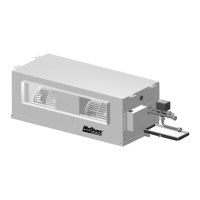



 To Next Page