
 Need help?
Do you have a question about the Mesa/Boogie F-30 and is the answer not in the manual?
Lists potentiometers, knobs, and mesa part numbers for Channel 1.
Lists potentiometers, knobs, and mesa part numbers for Channel 2.
Lists input jacks, switches, pilot lights, and their part numbers.
Lists fuse holders, jacks, and switches with their respective part numbers.
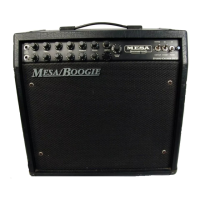
The Mesa/Boogie F-30 is a versatile guitar amplifier, designed to deliver a wide range of tones suitable for various musical styles. This amplifier is engineered with two distinct channels, each offering independent control over its sonic characteristics, allowing musicians to switch seamlessly between clean and overdriven sounds.
Channel 1, often referred to as the "Rhythm" channel, is optimized for producing clear, articulate clean tones or subtle, bluesy overdrives. It features dedicated controls for Gain, Treble, Middle, Bass, Reverb, and Master volume. The Gain control on this channel allows users to dial in the desired amount of input signal, influencing the channel's responsiveness and the onset of natural tube compression. Lower gain settings yield pristine cleans, while increasing the gain introduces a warm, organic breakup. The Treble, Middle, and Bass controls provide comprehensive equalization, enabling precise shaping of the frequency spectrum. This allows guitarists to tailor their sound to complement different guitars, pickups, and playing environments. The Reverb control adds a lush, spatial dimension to the sound, simulating the natural decay of an acoustic space. Finally, the Master volume for Channel 1 dictates the overall output level of this channel, allowing for fine-tuning of stage volume without altering the tonal balance set by the gain and EQ.
Channel 2, known as the "Lead" channel, is designed for higher-gain applications, offering a spectrum from crunchy rhythm tones to searing lead sounds. Like Channel 1, it includes independent controls for Gain, Treble, Middle, Bass, Reverb, and Master volume. The Gain control on Channel 2 is particularly potent, allowing for significant saturation and sustain, ideal for rock, metal, and fusion genres. The EQ section functions similarly to Channel 1, providing detailed control over the tonal landscape, but it is voiced to complement the higher gain structures of this channel. The Reverb control adds depth to lead lines, ensuring they sit well in the mix. The Master volume for Channel 2 provides independent control over its output level, facilitating balanced switching between channels for live performance.
Beyond its two primary channels, the F-30 incorporates several additional features that enhance its versatility. A built-in spring reverb unit provides a classic, analog reverberation effect, adding depth and ambiance to both clean and overdriven tones. The reverb level can be adjusted independently for each channel, offering flexibility in sound design.
The amplifier also includes an FX Loop, which is an essential feature for integrating external effects pedals. The FX Loop is a series loop, meaning that effects placed within it are inserted directly into the signal path after the preamp section and before the power amp. This configuration is ideal for time-based effects like delay, chorus, and flanger, as it prevents them from being overdriven by the preamp, preserving their clarity and integrity. The Mix Level control for the FX Loop allows users to blend the wet (effected) signal with the dry (unaffected) signal, offering precise control over the intensity of the external effects. Separate Send and Return jacks facilitate easy connection of external processors.
For silent practice or direct recording, the F-30 is equipped with a Record/Phones output. This output provides a speaker-emulated signal, allowing users to connect headphones for private practice sessions or to interface directly with recording equipment without the need for a microphone. This feature is invaluable for musicians who need to practice quietly or capture their amplifier's tone in a studio environment.
The F-30 also includes a Speaker Mute switch, which allows the amplifier to be used with headphones or for direct recording without a speaker cabinet connected. This is a crucial safety feature, as operating a tube amplifier without a load can damage the output transformer. The Speaker Mute switch ensures that the amplifier's output transformer is properly loaded internally when no external speaker is connected.
Multiple Speaker Outs are provided, offering flexibility in connecting various speaker cabinets. These outputs typically include options for different impedance loads, such as 8 Ohm and 4 Ohm, allowing users to match the amplifier to a wide range of cabinets. This ensures optimal power transfer and sound quality.
The amplifier's power section is driven by EL84 power tubes, known for their distinctive British-style chime and responsive breakup characteristics. These tubes contribute significantly to the F-30's dynamic feel and rich harmonic content. The preamp section utilizes 12AX7 tubes, which are standard for their high gain and tonal clarity.
Maintenance of the F-30, like any tube amplifier, involves periodic replacement of its vacuum tubes. The lifespan of tubes varies depending on usage, but regular inspection and replacement are essential for maintaining optimal performance and tone. The manual provides a list of tube types used in the amplifier, facilitating easy identification for replacement.
The power supply section is robust, designed to provide stable and clean power to all amplifier stages. It includes various filter capacitors and a bias supply for the power tubes, ensuring consistent operation and tube longevity. A pilot light indicates when the amplifier is powered on, and fuse holders protect the internal circuitry from overcurrent conditions. The manual details the specific fuse types and ratings for both domestic and export versions, which is critical for safe operation and replacement.
The F-30 is also designed with a footswitch input, allowing for remote control of key functions such as channel switching and reverb on/off. This hands-free operation is particularly useful during live performances, enabling guitarists to seamlessly transition between different sounds.
In summary, the Mesa/Boogie F-30 is a meticulously crafted tube amplifier that offers a comprehensive set of features for discerning guitarists. Its dual-channel design, versatile EQ, integrated reverb, FX loop, and direct recording capabilities make it a powerful tool for practice, performance, and studio work. The careful selection of components and thoughtful design ensure a rich, dynamic, and reliable sonic experience.
 General
| Type | Guitar Amplifier |
|---|---|
| Power Output | 30 Watts |
| Channels | 2 |
| Tubes | 4x12AX7, 2xEL84 |
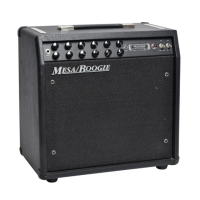
| Speaker | 1 x 12" |
| Reverb | Spring Reverb |
| Controls | Gain, Treble, Mid, Bass, Reverb, Master |
| Inputs | 1 x Instrument Input |
| Outputs | 1x External Speaker |


 To Next Page