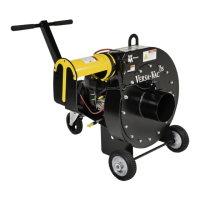
• The rotating fan blades will crush or cut if they come in contact with any body parts.
Follow Lockout/Tagout procedures before attempting to access the inside of the
vacuum.
• Stay clear of the inlet of the vacuum. A strong suction is present at the inlet and can pull in
clothing, hair, body parts, and other objects. Avoid wearing loose clothing or jewelry when
operating.
• Never reach inside the vacuum inlet or outlet while the unit is running.
• Stay clear of the outlet of the vacuum to avoid being struck by fast-moving material
discharging from the vacuum.
Failure to follow these precautions can lead to serious injury or death.
Fuel safety
To reduce the risk of fire:
• To prevent static electrical discharge igniting fuel vapors, the fuel tank must be in contact with the
ground before and during filling.
• Do not overfill the fuel tank. Leave room for the expansion of the fuel.
• Fill the tank away from the engine and avoid spills.
• If the fuel tank is attached to the engine, allow the engine to cool before filling.
Hot surfaces
To reduce the risk of fire or being burned, follow these instructions:
• Do not touch hot engine or exhaust surfaces. Allow them to cool.
• Do not allow anything to come in contact with hot engine or exhaust surfaces such as bags or hoses.
Do not vacuum up or operate near the following:
• Hazardous or toxic material
• Flammable materials, materials that are self-heating or can burn
• Hot, burning or smoldering material
Determine what will be removed
Vacuumed materials may get into the air or be contacted once collected.
• Inspect the material which will be removed.
o Ensure that it is material that is compatible with the vacuum being used.
o Remove any objects that could damage the vacuum or injure someone when the
material is discharged.
• Take appropriate precautions for the potential health hazards of the material to be removed.
o Potential health hazards could include but are not limited to: Skin irritation, eye irritation,
and respiratory ailments.
o Use the proper Personal Protective Equipment (PPE) such as long sleeve shirt and pants,
safety glasses or goggles, appropriate respirators, and hearing protection.
It is the operator’s responsibility to ensure that only the intended materials: fiberglass, cellulose
(properly treated with fire retardant), and rock wool insulation are collected in the removal process.
In the case of air duct cleaning, only common household dust shall be removed.
Equipment Set-Up
1. Place your equipment on a level surface and out of the wind, if possible. If your model comes
with a wheel locking device, engage it.
2. Attach debris guard, discharge “Y”, or hose to the outlet.


 To Next Page
 Loading...