EasyManua.ls Logo

Microsoft Surface Docking Station 2 - User Manual

Microsoft Surface Docking Station 2
4 pages
Print Icon
To Next Page IconTo Next Page
Loading...
Use Surface Dock
Surface DevicesSurface
The Surface Dock is designed so you can switch quickly from your Surface on thego to using it
as a full desktop PC. If you have a docking station, seeUse Surface docking station.
Get to know your Surface Dock
Use the Surface Dock to connect your Surface to full-size monitors, an ethernet connection,
external speakers, and more. It also charges your Surface. If you're not sure which dock you have,
go toIdentify your Surface Dock and features.
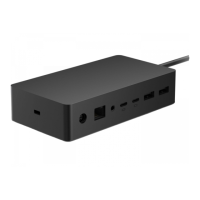
Ports
Get to know the ports on your Surface Dock.
Power
jack
The power jack connects your dock to
its power supply.
USB-C Port
(on Surface
Dock 2)
Use this port to connect USB-C
accessories.
The USB-C ports on the back of
Surface Dock 2 can be connected to an
external monitor. Depending on your
monitor's video output ports, you may
need a display adapter (sold separately).
Mini
DisplayPort
Use this port to connect to your external
monitor. Depending on your monitor's
Question and Answer IconNeed help?

Do you have a question about the Microsoft Surface Docking Station 2 and is the answer not in the manual?

Summary

Get to know your Surface Dock

Ports

Get to know the ports on your Surface Dock for connectivity.

Set up your Surface Dock

Set up your workspace and plug in

Plug in the dock, connect network, peripherals, and monitor.

Connect your Surface to your dock

Set up your monitor

Configure how your external monitor displays content from your Surface.

Get the latest Surface and Windows updates

Overview

The Surface Dock is a versatile accessory designed to transform your portable Surface device into a full-fledged desktop PC, offering enhanced connectivity and productivity. Its primary function is to provide a seamless transition between mobile and desktop computing environments, allowing users to quickly connect their Surface to a range of peripherals and external displays.

Function Description:

The Surface Dock serves as a central hub for connecting your Surface device to various external components, effectively expanding its capabilities. It enables users to connect to full-size monitors, establish a wired Ethernet connection for reliable network access, connect external speakers for improved audio, and attach a variety of USB peripherals such as printers, headsets, and external drives. Beyond connectivity, the Surface Dock also charges your Surface device, ensuring it remains powered while in use as a desktop. This functionality is particularly beneficial for users who frequently switch between working on the go and at a dedicated workspace, as it eliminates the need to repeatedly plug and unplug multiple cables.

Important Technical Specifications (Ports):

The Surface Dock is equipped with a range of ports to accommodate diverse connectivity needs. The specific port configuration may vary slightly between different Surface Dock models, such as the original Surface Dock and Surface Dock 2.

  • Power Jack: This dedicated port is used to connect the dock to its power supply, ensuring that both the dock and the connected Surface device receive power.
  • USB-C Port (on Surface Dock 2): Surface Dock 2 features USB-C ports, which are highly versatile. These ports can be used to connect various USB-C accessories, providing fast data transfer and power delivery capabilities. Additionally, the USB-C ports on the back of Surface Dock 2 are capable of connecting to external monitors. Depending on the monitor's video input, a display adapter (sold separately) might be required to facilitate the connection.
  • Mini DisplayPort (on Surface Dock): The original Surface Dock includes Mini DisplayPort connections for video output. Similar to USB-C for displays, connecting to an external monitor via Mini DisplayPort may necessitate a display adapter if the monitor's video input does not directly match.
  • USB Ports: The dock provides multiple USB ports, which are essential for connecting a wide array of computer peripherals. These ports allow users to transfer large files to external drives, connect USB printers, headsets, and other accessories, as well as charge various devices.
  • Audio Port (3.5mm): An integrated 3.5mm audio port allows users to connect their favorite audio accessories, such as wired speakers or headphones, for an enhanced audio experience. This is particularly useful for desktop setups where higher-quality audio output is desired.
  • Ethernet Port: For situations requiring a stable and high-speed wired network connection, the Ethernet port on the Surface Dock is invaluable. It allows the Surface device to connect to a wired network, offering greater reliability and speed compared to wireless connections, which is crucial for tasks like large file transfers, online gaming, or video conferencing.

Usage Features:

Setting up and using the Surface Dock is designed to be straightforward, enhancing the user experience.

  • Workspace Setup: The initial setup involves placing the dock in the desired location on your desk and arranging the necessary cords and cables for easy access.
  • Power Connection: The first step in connecting the dock is to plug the AC end of its power cord into a power source, then connect the other end to the power jack on the dock itself.
  • Network Connection: If a wired network connection is preferred, a network cable is connected to the Ethernet port on the dock.
  • Peripheral Connection: USB computer peripherals are connected to the available USB ports on the dock.
  • Monitor Connection: Video cables from external monitors are connected to the appropriate video output ports on the dock (Mini DisplayPort for Surface Dock, or USB-C for Surface Dock 2). Users may need to purchase additional cables or adapters depending on their monitor's input connectors.
  • Audio Connection: Audio accessories like speakers or headphones are connected to the 3.5mm audio port.
  • Connecting Surface to Dock: Once the workspace and peripherals are set up, the Surface device is connected to the dock via the SurfaceConnect port. For Surface Pro users, the microSD card can remain in its slot.
  • Monitor Configuration: After connecting the Surface and external monitor(s) to the dock, users can configure how content is displayed across the screens. Options include:
    • Duplicate these displays: The same content appears on both the Surface screen and the external monitor(s).
    • Extend these displays: The desktop is spread across multiple screens, allowing users to drag items between them, effectively expanding their workspace.
    • Show only on [selected screen]: Content is displayed only on the selected external screen, with the Surface screen remaining blank.
  • Audio Switching: If external speakers are not used, audio will typically play through the Surface's built-in speakers. Instructions are provided for troubleshooting and switching between the dock's audio output and the Surface's internal speakers.

Maintenance Features:

Maintaining the Surface Dock primarily involves ensuring it is kept up-to-date with the latest software and firmware, which is crucial for optimal performance and compatibility.

  • Software and Firmware Updates: To ensure the Surface Dock functions correctly and efficiently, it is important to regularly get the latest Surface and Windows updates. These updates often include performance improvements, bug fixes, and enhanced compatibility with new devices and software.
  • Update Process: When performing updates, it is essential to ensure that the Surface device is connected to the Surface Dock and that the dock is receiving power. This ensures a stable connection and prevents interruptions during the update process. Specific guidance is provided on how to update the Surface Dock itself.
  • Troubleshooting Resources: The manual points to resources for troubleshooting common issues, such as problems with connecting a second screen or general issues with Surface Dock and docking stations, which contributes to effective maintenance and problem resolution.

In summary, the Surface Dock is an indispensable tool for Surface users seeking to maximize their productivity by seamlessly integrating their portable device into a comprehensive desktop environment, offering robust connectivity, charging capabilities, and a user-friendly setup process.

Microsoft Surface Docking Station 2 Specifications

General IconGeneral
BrandMicrosoft
ModelSurface Docking Station 2
CategoryDocking Station
LanguageEnglish

Related product manuals