
 Need help?
Do you have a question about the Midea FP-92LFC100GMTH-W2 and is the answer not in the manual?
Outlines general safety rules and explains warning symbols used in the manual for safe operation.
Provides critical warnings and precautions to prevent electric shock hazards during operation and maintenance.
Details essential safety guidelines for children, emphasizing supervision and preventing misuse of the appliance.
Warns against using flammable substances with the machine and potential explosion risks.
Specifies safe installation locations, conditions, and environmental considerations to prevent hazards.
Covers safe practices for handling the machine, preventing physical damage, and operational precautions.
Provides detailed instructions on correctly connecting the water supply hose to the machine.
Explains the proper methods for connecting the drain hose to ensure efficient water discharge.
Detailed breakdown of the control panel's buttons, display indicators, and their functions.
A comprehensive guide for diagnosing and resolving common operational problems and error codes.
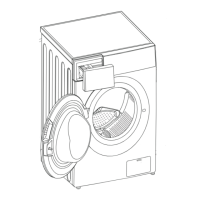
This document is a user manual for a Midea washer-spinner-dryer, specifically models FP-92LFC100GMTH-W2 and FP-92LFC120GMTH-W1. It provides comprehensive instructions for safe installation, operation, and maintenance of the appliance.
The device is a multi-functional appliance designed for washing, spinning, and drying clothes. It offers various programs tailored to different laundry types and needs, including options for delicate items, heavy-duty cleaning, and quick washes. The integrated drying function allows users to complete the entire laundry process within one machine, with options for different drying levels and timed drying.
The washer-spinner-dryer is designed for home use and handles textiles suitable for machine washing and drying. Before use, it is crucial to remove all packaging materials and transport bolts to prevent damage. The appliance requires proper grounding and should be installed on a rigid, dry, and level surface, away from direct sunlight and heat sources. The standard inlet water pressure should be between 0.05MPa and 1MPa.
Before Each Wash: Users are advised to check clothing labels and use non-foaming or less-foaming detergents suitable for machine washing. It's important to empty all pockets to prevent damage from sharp objects. Small items should be placed in a laundry net, and clothes that easily form fiber balls or have long strands should be turned inside out. Tassels should be tied into knots, and zippers and buttons fastened. Clothes should be segregated by texture and material. Washing a single item is not recommended as it can cause imbalance and noise; adding one or two more items can help. Flammable substances like kerosene, gasoline, alcohol, or other flammable materials should never be washed or dried in the appliance.
Detergent Dispenser: The dispenser has compartments for pre-wash detergent, main wash detergent, and softener. Detergent is only needed in the pre-wash compartment if the pre-washing function is selected. Powder detergents that have clumped should be diluted before pouring into the dispenser to prevent clogging. The type of detergent should be chosen based on washing temperatures for optimal results and energy efficiency.
Control Panel and Programs: The control panel features an On/Off button, Start/Pause button, Option button, and Program selector. The display shows settings, estimated remaining time, and status messages. Available options include:
Program Descriptions:
Regular maintenance is essential to extend the appliance's lifespan. Before any maintenance, the power plug must be disconnected, and the water supply turned off.
Cleaning the Cabinet: The cabinet surface should be cleaned with diluted non-abrasive neutral detergents. Any water on the surface should be wiped off immediately. Sharp objects should not be used on the cabinet.
Cleaning the Drum: Rust from metal articles should be removed immediately with chlorine-free detergents. Steel wool should never be used. Laundry should not be placed in the machine during drum cleaning.
Cleaning the Door Seal and Glass: After each wash, the glass and door seal should be wiped to remove lint and stains, which can cause water leaks. Coins, buttons, and other objects should be removed from the door seal.
Cleaning the Inlet Filter: The inlet filter needs cleaning if the water flow pressure decreases. This involves closing the faucet, removing the water supply hose, cleaning the filter, and reconnecting the hose. The filter at the washing machine side also needs to be pulled out with pliers, cleaned with a brush, and reinstalled.
Cleaning the Detergent Dispenser: The detergent dispenser can be removed by pressing down on the arrow on the softener cover, lifting the clip, and pulling out the drawer. All compartments should be washed with water. The inside recesses can be cleaned with an old toothbrush. After cleaning, the softener cover and drawer should be pushed back into position. Alcohol, solvents, or chemical products should not be used to clean the machine.
Cleaning the Drain Pump Filter: The drain pump filter collects thread strands and small foreign matter. It should be cleaned periodically. Users must beware of hot water and allow the detergent solution to cool down before opening the service filter. The machine must be unplugged to avoid electrical shock. To clean, open the lower cover cap, rotate and pull out the emergency drain hose, remove the hose cap, drain water, then open the filter by turning it counter-clockwise, remove extraneous matter, and close the cover cap. Ensure all parts are reinstalled properly to prevent leaks. The pump cover should never be removed during a wash cycle while hot water is present.
 General
| Capacity | 9.2 kg |
|---|---|
| Color | White |
| Type | Front Load |
| Spin Speed | 1400 RPM |
| Weight | 68 kg |
| Delay Start | Yes |
| Child Lock | Yes |
| Display | LED |
| Water Consumption | 50 L |
| Dimensions (WxDxH) | 850 mm |
| Programs | Cotton, Delicate, Quick, Wool |



 To Next Page