FAULT DIAGNOSIS
MANUAL OVERRIDE
14 TECHNICAL DOCUMENTATION
STATUS / FAULT CONDITIONS continued.
In the unlikely event of “SENSOR FAILURE”, the Mikrofill 3 may begin to give incorrect readings and could cause
alarm conditions. If this occurs, a MANUAL OVERRIDE can be employed which will reinstate the BMS relays in
the unit, forcing them into a healthy position and preventing the unit from locking out any equipment that the
unit has been linked to.
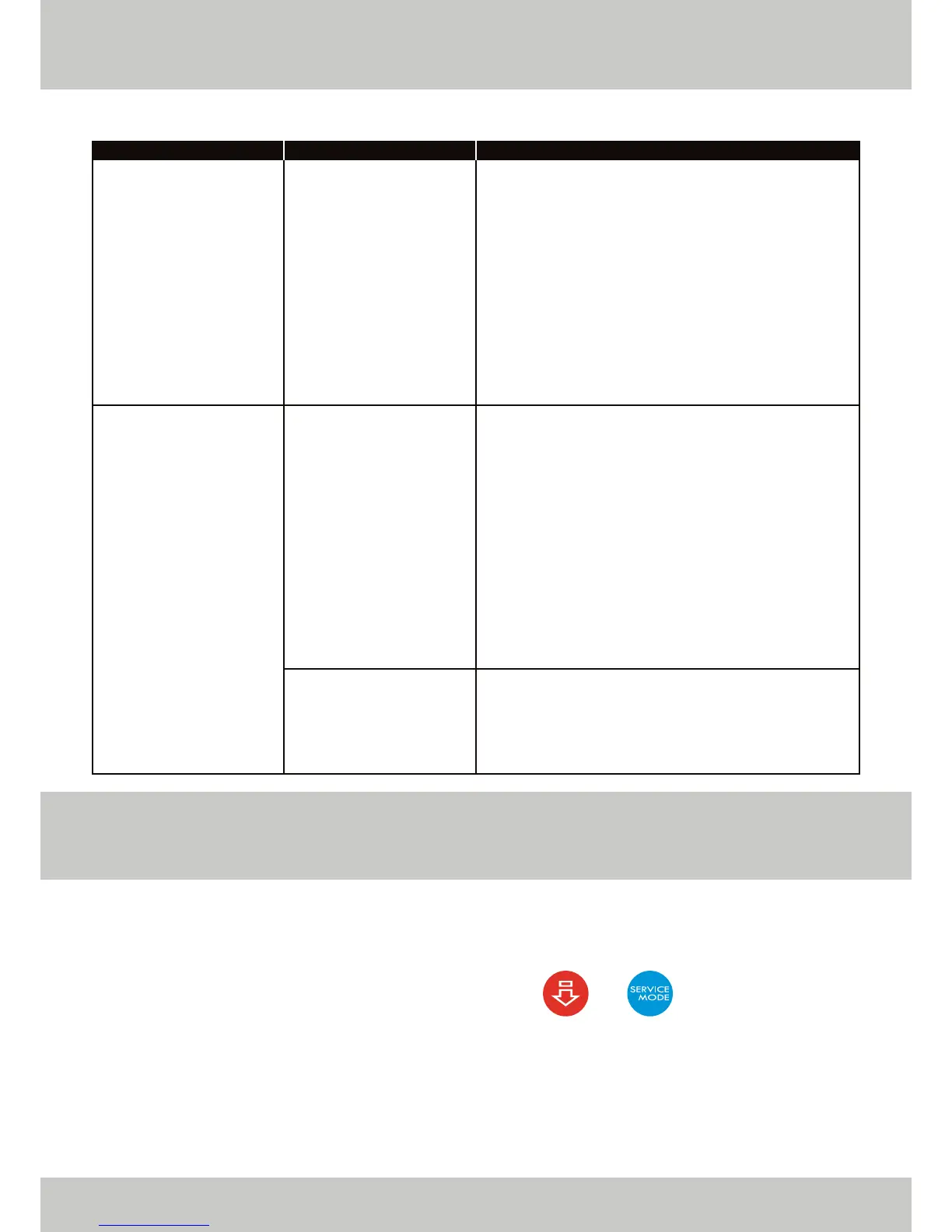
To put the unit into MANUAL OVERRIDE, press and hold both the and buttons simultaneously for
approximately 2 seconds.
Before operating this feature, it must be ensured that there is sufficient pressure in the system. MANUAL
OVERRIDE must not be employed if the unit has shown a potential leak condition or if there is insufficient
pressure in the system.
FAULT INDICATION
“SENSOR FAILURE” cont.
Water continuously passing
through the tundish to drain.
CAUSE
Incoming voltage instability.
Solenoid valve blocked.
Solenoid valve or double
non-return valve has failed.
RESOLUTION
The sensors use the voltage as a baseline to measure
pressure. If the incoming voltage supply to the unit is
fluctuating then this can cause the unit to go to “SENSOR
FAILURE”. If the pressure readings on the display are
fluctuating, or the voltage is unstable when measured with
a multimeter then there is likely an issue with the supply.
The unit can be powered from an alternative source or a
power suppressor can be fitted to try and stabilise the
incoming voltage to the unit.
In either case of “SENSOR FAILURE”, the Mikrofill 3 can be put
into MANUAL OVERRIDE to stop it from locking out any
equipment on-site (described in further detail below).
Over time either or both solenoid valves inside the unit can
become blocked up with limescale or debris and this can
affect their operation. The valves can be taken apart and
cleaned, which will most likely resolve the issue.
To diagnose which of the two valves is blocked, when the
unit is still passing to drain it should be powered off. If the unit
continues to pass then the normally closed solenoid valve in
the top left of the unit will require cleaning. If the unit stops
passing when powered off then the normally open solenoid
valve directly above the tundish will require cleaning.
For detailed instructions of how to access and successfully
clean either valve, please refer to pages 16 and 17 of this
technical documentation.
If cleaning the solenoid valves does not resolve the issue,
then this will mean that either the solenoid valve or double
non-return valve has failed and will require replacing.
For more information please contact the technical
department on 03452 60 60 20.


 To Next Page
 Loading...