EasyManua.ls Logo

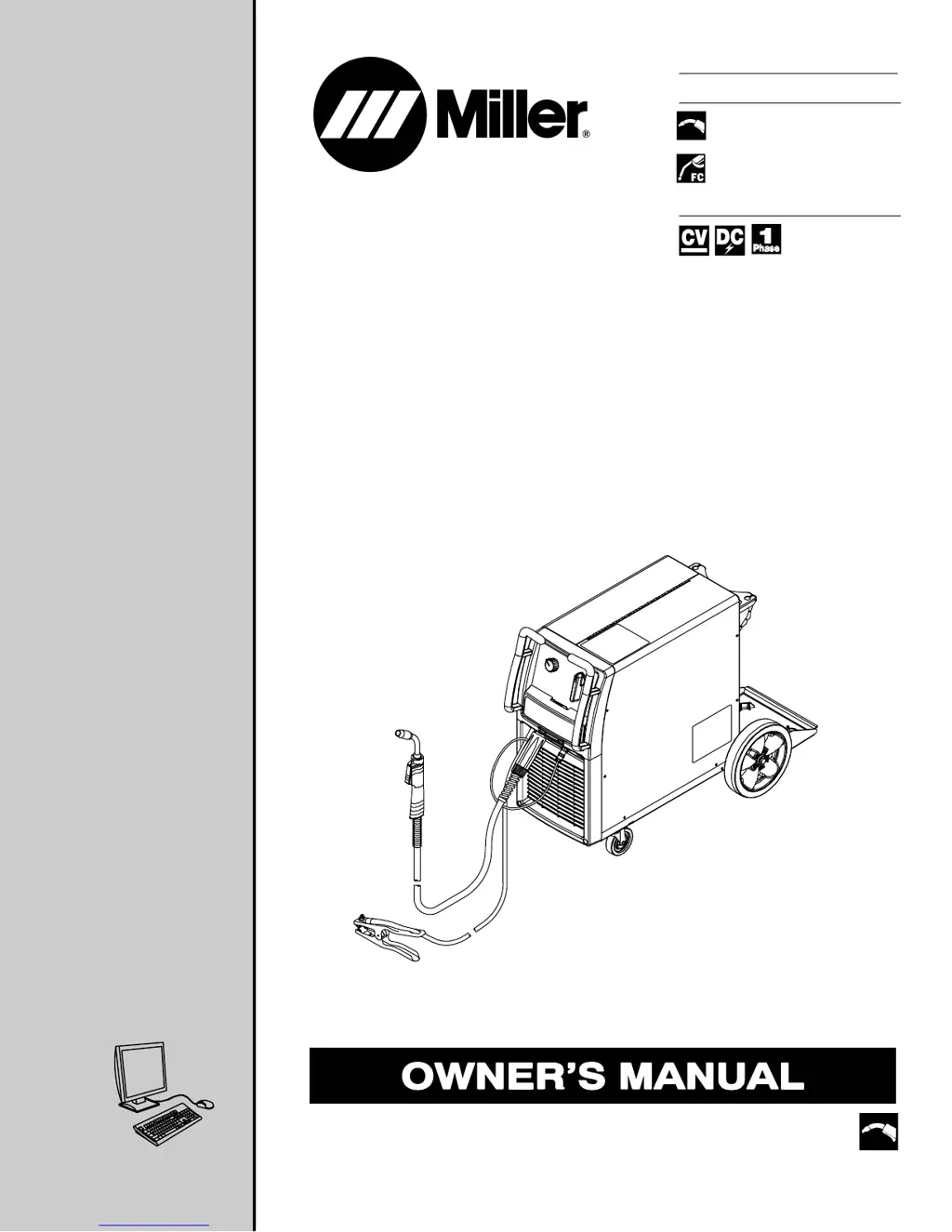
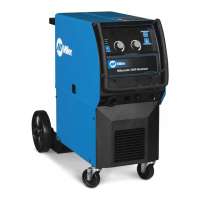
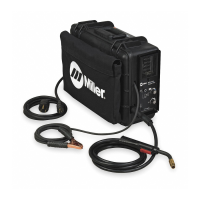
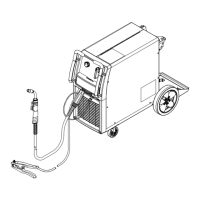
Miller Electric Millermatic 212 - User Manual

Miller Electric Millermatic 212
44 pages
Print Icon
To Next Page IconTo Next Page
Loading...
Processes
Description
Arc Welding Power Source
and Wire Feeder
OM-232 384C 2008−01
Visit our website at
www.MillerWelds.com
Millermatic 212
R
Flux Cored (FCAW) Welding
MIG (GMAW) Welding
File: MIG (GMAW)

Table of Contents

Other manuals for Miller Electric Millermatic 212

Questions and Answers

  • D
    David DavisJul 28, 2025
    Why is there no weld output and wire feed on my Miller Electric Millermatic 212?
    • C
      Christine ArnoldJul 28, 2025
      If your Miller Electric Welding System has no weld output and the wire isn't feeding, several things could be the cause. First, ensure the power cord is securely plugged into the receptacle. If that's not the issue, check the power switch and replace it if necessary. Also, inspect the building line fuse or circuit breaker and replace or reset if needed. Make sure the gun plug is securely in the receptacle, and repair any damaged leads or replace the trigger switch. Finally, if the thermostat TP1 or TP2 is open due to overheating, allow the fan to run until the unit cools down.
  • D
    david44Aug 1, 2025
    What to do if the electrode wire feeding stops during welding with my Miller Electric Millermatic 212?
    • E
      Eddie MitchellAug 1, 2025
      If the electrode wire stops feeding during welding with your Miller Electric Welding System, try these steps: Straighten the gun cable and replace any damaged parts. Adjust the drive roll pressure and readjust the hub tension. Replace the contact tip if it's blocked, and clean or replace the wire inlet guide or liner if they are dirty or plugged. Replace the drive roll if it's worn or slipping. Secure the gun plug in the receptacle, repair any leads, or replace the trigger switch. Check and clear any restrictions at the drive assembly and liner. If none of these steps work, have a Factory Authorized Service Agent check the drive motor.
  • R
    Ronald SmithAug 6, 2025
    How to fix low, high, or erratic wire speed on a Miller Electric Welding System?
    • K
      Kristy GillespieAug 6, 2025
      If you're experiencing low, high, or erratic wire speed with your Miller Electric Welding System, try the following: Readjust the front panel settings. Change to the correct size drive roll. Readjust the drive roll pressure. If necessary, replace the inlet guide, contact tip, and/or liner.
  • J
    jmartinAug 10, 2025
    What to do if my Miller Electric Millermatic 212 Welding System has no weld output but the wire feeds?
    • B
      bmooreAug 10, 2025
      If your Miller Electric Welding System has no weld output but the wire feeds, ensure the work clamp is connected to establish good metal-to-metal contact. You may also need to replace the contact tip.
  • R
    robertsstevenAug 15, 2025
    How to troubleshoot low weld output on a Miller Electric Millermatic 212 Welding System?
    • S
      spencerchelseyAug 15, 2025
      If your Miller Electric Welding System has low weld output, connect the unit to the proper input voltage or check for low line voltage.
  • K
    Kristen PaulAug 19, 2025
    Why is the over temperature light blinking rapidly on my Miller Electric Millermatic 212?
    • G
      gallagheralexanderAug 19, 2025
      If the over temperature light blinks rapidly on your Miller Electric Welding System, the gun trigger is closed or shorted when the unit power is turned on.
  • R
    Richard BookerAug 23, 2025
    What does it mean when the over temperature light blinks slowly on my Miller Electric Welding System?
    • E
      Edward JohnsonAug 23, 2025
      If the over temperature light blinks slowly on your Miller Electric Welding System, it indicates a malfunction in the wire drive system or drive motor overcurrent. Check for proper spool brake adjustment or obstructions in the wire feed system. Also, inspect the wire guides, gun liner, and contact tip.

Summary

Safety Precautions

Safety Symbol and Hazard Identification

Explains hazard symbols and the primary risks of arc welding.

Specific Welding Hazard Categories

Details dangers from fumes, gases, arc rays, fire, explosion, and other operational risks.

Additional Operational and Interference Hazards

Covers hazards related to installation, operation, maintenance, and interference issues.

Regulatory and Environmental Warnings

Provides California Proposition 65 warnings and EMF information.

Definitions

Welding Symbols and Definitions

Defines various symbols used for wire feed, output, duty cycle, and gas.

Installation

Power Source and MIG Gun Specifications

Provides specifications for the welding power source and MIG gun, including ratings and dimensions.

Duty Cycle and Volt-Ampere Curves

Explains duty cycle, overheating, and how to interpret volt-ampere curves.

Connecting Output Terminals and Work Cable

Details connecting weld cables to output terminals and installing the work clamp.

Optional Spool Gun and Polarity Setting

Covers connecting optional spool guns and setting polarity for different wire types.

Gas Supply Installation

Steps for connecting gas cylinders, regulators, and hoses for welding.

Wire Spool and Hub Tension Installation

Details how to install a wire spool and set the hub tension for proper feeding.

Jumper Links and Electrical Service Guide

Guides on setting jumper links for voltage and understanding electrical service requirements.

Location Selection and Power Connection

Guides on choosing a location and connecting the unit to the power supply.

Threading Welding Wire

Step-by-step instructions for feeding welding wire through the machine.

Operation

Understanding the Controls

Explains the function of the Voltage and Wire Speed controls and the Over Temp light.

Weld Parameter Chart

Provides recommended settings for different materials, wire types, and thicknesses.

MIG Welding Guidelines

Typical MIG Process Connections

Illustrates the basic connections for a MIG welding setup.

MIG Process Control Settings

Guidelines for setting wire size, speed, and voltage based on material thickness.

Welding Gun Holding and Positioning

Demonstrates correct gun angles and electrode extension for groove and fillet welds.

Factors Affecting Weld Bead Shape

Explains how gun angle, travel speed, and stickout influence weld bead shape.

Gun Movement and Weld Bead Characteristics

Covers gun movement techniques and identifies good/poor weld bead characteristics.

Troubleshooting Common Weld Defects

Addresses troubleshooting for excessive spatter and porosity in welds.

Troubleshooting Penetration and Fusion Issues

Provides solutions for excessive penetration, lack of penetration, and incomplete fusion.

Troubleshooting Bead Waviness and Distortion

Details troubleshooting for wavy weld beads and distortion during welding.

Shielding Gases and Equipment Troubleshooting

Lists common shielding gases and troubleshooting for welding equipment issues.

Parts List

Drive Roll and Wire Guide Kits

Lists drive roll and wire guide kits based on wire diameter and type.

True Blue Warranty Information

Owners Record and Service Information

Miller Electric Millermatic 212 Specifications

General IconGeneral
Input Phase1-Phase
Input Hz60 Hz
Output Amperage Range30 - 210 A
Wire Feed Speed50 - 700 IPM
Welding ProcessMIG
Wire Size Range0.023-0.045 in (0.6-1.2 mm)

Related product manuals