
 Need help?
Do you have a question about the Milwaukee 6016 and is the answer not in the manual?
Keep work area clean and well lit, avoid explosive atmospheres, and keep children and bystanders away.
Ensure proper grounding, avoid contact with grounded surfaces, protect from rain/wet conditions, and do not abuse the cord.
Stay alert, use safety equipment, avoid accidental starting, remove adjusting keys, do not overreach, dress properly, and use dust extraction.
Use correct tool, ensure switch works, disconnect before adjustments, store properly, maintain tools, keep cutting tools sharp, and use as intended.
Have power tool serviced by a qualified repair person using only identical replacement parts.
Hold by insulated surfaces, maintain labels, and be aware of dust hazards from chemicals like lead, silica, arsenic, and chromium.
Explains grounding for three-prong plug tools and double insulation for two-prong plug tools, referencing outlet types.
Details extension cord requirements, wire gauge based on amperage and length, and outdoor use considerations.
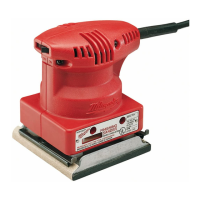
Instructions for attaching 1/4 sheet sandpaper using clamp lever and grip, ensuring it is drawn tight.
Details on how to use the punch plate for creating dust holes in sandpaper for dust collection.
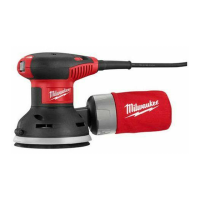
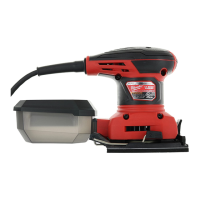
Explains how to attach, remove, and empty the dust bag for efficient dust pickup.
Guide to choosing abrasive grits for power sanding, recommending starting coarse and progressing to finer grits.
Steps for general sanding, including starting under load, slow strokes, and repeating with finer grits.
Procedure for using the sander to remove paint or varnish, including safety and technique tips.
Advice on sanding cabinets and doors, noting that grain direction is less critical due to circular motion.
Guidelines for regular maintenance, cleaning, and proper repair of the power tool.
Information on dust bag assembly and punch plate assembly, with catalog numbers.
Details of the five-year limited warranty, coverage, exclusions, and legal rights.



 To Next Page

 General