EasyManua.ls Logo

Mitsubishi Electric EHPT20Q-VM2EA - User Manual

Mitsubishi Electric EHPT20Q-VM2EA
81 pages
Print Icon
To Next Page IconTo Next Page
Loading...
CYLINDER UNIT
No.GCH15010
REVISED EDITION-A
[Model Name]
EHPT20Q-VM2EA
Cylinder Unit
SERVICE MANUAL
R744
CONTENTS
1. REFERENCE MANUAL
...................................
2
2. SAFETY NOTICES
..........................................
3
3. SPECIFICATIONS
............................................
4
4. PART NAMES AND FUNCTIONS
..................
5
5. OUTLINES AND DIMENSIONS
.......................
6
6. WIRING DIAGRAM
.........................................
8
7. FIELD WIRING
...............................................
11
8. WATER SYSTEM DIAGRAM
.........................
12
9. CONTROLS
...................................................
14
10. TROUBLESHOOTING
...................................
36
11. DISASSEMBLY PROCEDURE
......................
51
12. SERVICE AND MAINTENANCE
79
...................
PARTS CATALOG (GCB15010)
Note:
This manual describes service
data of cylinder unit only.
• RoHS compliant products
have <G> mark on the spec
name plate.
• Please void GCH15010.
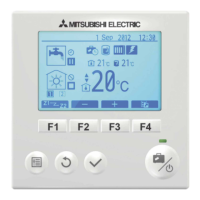
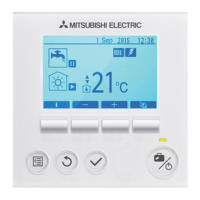
MAIN REMOTE
CONTROLLER
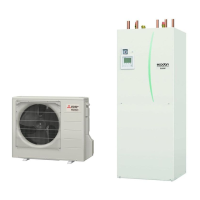
Cylinder Unit

Questions and Answers

  • V
    Virginia HollandAug 16, 2025
    Why is my Mitsubishi Electric EHPT20Q-VM2EA Heating System not reaching the set temperature?
    • K
      Katherine AndersonAug 16, 2025
      If the heating system isn't reaching the set temperature, first check if prohibit, schedule timer, or holiday mode is selected and adjust the settings as needed. Ensure the temperature sensor is in a suitable room. Also, check the heat pump. Inspect the booster heater thermostat and reset if safe. Examine the booster heater breaker and reset if safe. If the thermal cut-out tripped and cannot be reset, contact your Mitsubishi Electric dealer. Ensure the heat emitter surface area is adequate. Check the plumbing/wiring to the 3-way valve. If using wireless control, check/replace the battery.
  • D
    danielleandrewsAug 22, 2025
    How to fix a blank main remote controller display on my Mitsubishi Electric EHPT20Q-VM2EA?
    • C
      connieramosAug 22, 2025
      If the main remote controller display is blank, check LED2 on the FTC. If LED2 is lit, check for damage or contact failure of the main remote controller wiring. If LED2 is blinking, refer to No. 5 in the manual. If LED2 is not lit, refer to No. 4 in the manual. Check for disconnection between the main remote controller cable and the FTC control board.
  • A
    Adrian WilliamsonAug 25, 2025
    Why is there only cold water at the tap with my Mitsubishi Electric EHPT20Q-VM2EA?
    • S
      Shannon FritzAug 26, 2025
      If you're getting cold water at the tap, first make sure the DHW mode is operating and wait for the thermal store tank to reheat. Check if prohibit, schedule timer, or holiday mode are selected and change as appropriate. Check the heat pump. Check the booster heater thermostat and press reset if safe. Check the earth leakage circuit breaker for the booster heater and reset if safe. If the booster heater thermal cut-out has tripped and cannot be reset, contact your Mitsubishi Electric dealer. Check plumbing/wiring to 3-way valve. Open the air vent above pump A. Turn on the power/system. Replace flow sensor A. Increase the supply amount.
  • J
    Jonathan HigginsAug 28, 2025
    How to troubleshoot when LED2 on FTC is off on my Mitsubishi Electric EHPT20Q-VM2EA Heating System?
    • J
      jacob44Aug 28, 2025
      If LED2 on the FTC is off, check the voltage across the L and N terminals on the indoor power supply terminal block. Check for faulty wiring between the connectors. Check the FTC control board.
  • M
    Michael MitchellAug 31, 2025
    What does it mean when LED2 on FTC is blinking on my Mitsubishi Electric Heating System?
    • V
      vmccallAug 31, 2025
      If LED2 on the FTC is blinking, and LED1 is also blinking, check for faulty wiring between the FTC and the outdoor unit. If LED1 on the FTC is lit, check for faulty wiring in the main remote controller.
  • D
    Debra MerrittSep 3, 2025
    How to stop water leakage in Mitsubishi Electric EHPT20Q-VM2EA?
    • A
      Alexis BoydSep 3, 2025
      If you notice water leakage, tighten the connections of water circuit components as required. Refer to the PARTS CATALOG for expected part lifetimes and replace them as necessary.
  • D
    Dr. Allison ClarkSep 6, 2025
    Why does the main screen disappear quickly on my Mitsubishi Electric EHPT20Q-VM2EA Heating System?
    • R
      Ronnie CobbSep 6, 2025
      This is normal operation. The cylinder unit is applying updated settings made in the service menu. Normal operation will start shortly.
  • T
    Taylor CooperSep 9, 2025
    What to do if my Mitsubishi Electric Heating System has a non-reoccurring logged problem?
    • L
      Lance WoodsSep 9, 2025
      To address a non-reoccurring problem that is logged, first check for temporary causes of defects, such as the operation of safety devices on the refrigerant/water circuit including the compressor, poor wiring, electrical noise, etc. Re-check the symptom and the installation environment, weather conditions at the time of the fault, etc. Then, reset the error code logs, service the unit, and restart the system.
  • L
    laurenhernandezSep 10, 2025
    What to do if there is no water at the hot tap for my Mitsubishi Electric EHPT20Q-VM2EA?
    • F
      Frederick KnightSep 12, 2025
      If there's no water at the hot tap, first check and open the stop cock. If that's not the issue, isolate the water supply and clean the strainer.
  • I
    ipetersenSep 12, 2025
    What to do if my Mitsubishi Electric EHPT20Q-VM2EA has a non-reoccurring problem that is not logged?
    • A
      Amy WarnerSep 12, 2025
      To address a non-reoccurring problem that is not logged: 1. Recheck the abnormal symptom. 2. Identify the cause of the problem and take corrective action according to Table 10-5. 3. If no obvious problem can be found, continue to operate the unit.

Summary

REFERENCE MANUAL

OUTDOOR UNITS SERVICE MANUAL

Refers to the service manual for the outdoor unit, providing essential operational context.

SAFETY NOTICES

SPECIFICATIONS

PART NAMES AND FUNCTIONS

Component Parts EHPT20 Q-VM2 EA

Lists and identifies the various components within the EHPT20Q-VM2EA cylinder unit.

OUTLINES AND DIMENSIONS

Technical Drawings

Provides visual representations and dimensions of the unit's physical layout and external features.

Service access diagrams

Illustrates the required clearances around the unit for maintenance and service access.

WIRING DIAGRAM

Cylinder unit WIRING DIAGRAM EHPT20 Q-VM2 EA

Details the electrical connections and layout for the EHPT20Q-VM2EA cylinder unit.

Electrical Connection

Explains the procedures and safety precautions for making electrical connections to the unit.

DIP Switch Functions

Describes the configuration options available through the DIP switches on the FTC printed circuit board.

FIELD WIRING

WATER CIRCUIT DIAGRAM

Local system

Outlines system configurations and procedures for primary and secondary water circuits, including filling and draining.

CONTROLS

Main Controller

Introduces the main controller and its physical parts, guiding users through its interface.

Setting the Main Controller

Explains the process for initial setup and configuration of the main controller, including user and installer levels.

Main Settings Menu

Details the available settings accessible through the main controller's menu system.

Service Menu

Provides access to advanced functions and settings intended for service engineers, protected by a password.

Thermistor adjustment

Auxiliary settings

Heat source setting

Pump speed

Operation settings

Energy monitor settings

Running information

Thermistor reading

Summary of settings

Error history

Password protection

Manual reset

SD card

TROUBLESHOOTING

Troubleshooting

Offers a summary of self-diagnosis based on error codes and service procedures for identifying and rectifying faults.

Test Run

Outlines the essential checks and procedures to be performed before initiating a test run of the system.

Malfunction diagnosis method by main remote controller

Explains how to interpret error codes displayed on the main remote controller for diagnosing malfunctions.

Self diagnosis and action

Details specific error codes, their display conditions, possible causes, and recommended diagnostic actions.

Troubleshooting by inferior phenomena

Provides solutions for common fault symptoms that may not be indicated by specific error codes.

Annual Maintenance

Annual maintenance points

Lists key checks and tasks for performing annual servicing on the unit.

Checking component parts function

Test point diagram

DISASSEMBLY PROCEDURE

How to remove the front panel

Step-by-step guide for safely removing the front panel of the cylinder unit.

How to remove the main controller

Instructions for detaching the main controller unit from its housing and support.

How to remove the controller board

Details the process for disconnecting and removing the main controller circuit board.

How to remove the electrical parts

Guides on safely disconnecting and removing various electrical components.

How to remove the thermistor

Explains the procedure for removing thermistor sensors from the unit.

How to remove the Side panels (R,L)

Provides instructions for removing the left and right side panels of the unit.

How to remove the Rear panel

Details the steps for removing the rear panel of the cylinder unit.

How to remove water pump1 (primary circuit);pump valve

Step-by-step instructions for removing the primary water pump and its associated valve.

How to remove the water pump A (primary circuit)

Guides on safely removing the secondary water pump (pump A) from the primary circuit.

How to remove the strainer valve

Instructions for detaching and removing the strainer valve from the system.

How to remove the 3-WAY VALVE; 3-WAY VALVE MOTOR

Explains the procedure for removing the 3-way valve and its motor assembly.

How to remove the pressure relief valve; air vent; manometer

Guides on how to remove pressure relief valves, air vents, and manometers from the unit.

How to remove the flow sensor1 (primary circuit)

Details the process for removing the primary circuit flow sensor (Flow sensor 1).

How to remove the flow sensor B (primary circuit)

Provides instructions for removing the secondary primary circuit flow sensor (Flow sensor B).

How to remove the flow sensor A (Sanitary circuit)

Explains the procedure for removing the sanitary circuit flow sensor (Flow sensor A).

How to remove the HEX(Primary and Sanitary circuit)

Guides on how to safely remove the Heat Exchanger (HEX) for both primary and sanitary circuits.

How to remove the booster heater

Provides step-by-step instructions for removing the booster heater unit.

How to remove the thermostat

Details the process for safely removing the thermostat sensor from the unit.

SERVICE AND MAINTENANCE

Engineers Forms

Forms for engineers to record settings and maintenance activities, ensuring proper system configuration.

Commissioning; Field settings record sheet

A sheet to record initial settings and parameters during system commissioning for future reference.

Annual Maintenance Log Book

Cylinder unit maintenance record sheet

A log for recording maintenance checks and actions performed on the cylinder unit.

Outdoor heat pump unit maintenance record sheet

A log for recording maintenance activities performed on the outdoor heat pump unit.

Mitsubishi Electric EHPT20Q-VM2EA Specifications

General IconGeneral
BrandMitsubishi Electric
ModelEHPT20Q-VM2EA
CategoryHeating System
LanguageEnglish

Related product manuals