EasyManua.ls Logo

Mod CONTORTIONIST - User Manual

Mod CONTORTIONIST
11 pages
Print Icon
To Next Page IconTo Next Page
Loading...
1 Copyright © 2014 by modkitsdiy.com
Use these instructions to learn:
How to build an effects pedal for fuzz with non-selective frequency tripler.
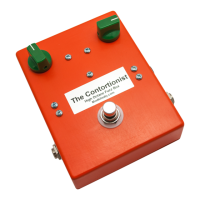
The Contortionist kit is a limited edition, all analog, high octane fuzz box. It produces fuzz with layered
octave overtones similar to those produced by an electronic-bow. The frequency multiplier circuitry creates
harmonics that swell and recede depending on gain setting, pick attack, neck position and pickup. This is a
high gain circuit that can put out up to 2 volts and will provide ample amounts of sustain.
THE CONTORTIONIST (K-990)
www.modkitsdiy.com
Warning: This circuit was designed for use with a 9 VDC power supply only.
TO
AMP
IN
FROM
GUITAR
OUT
Unplug when not in use
to save battery life.
The Contortionist
Modkitsdiy
.
com
OUTPUT
GAIN
High Octane Fuzz Box
9
VDC
CENTER
(-
)
ADAPTER
Question and Answer IconNeed help?

Do you have a question about the Mod CONTORTIONIST and is the answer not in the manual?

Mod CONTORTIONIST Specifications

General IconGeneral
BrandMod
ModelCONTORTIONIST
CategoryMusic Pedal
LanguageEnglish

Summary

The Contortionist Pedal Overview

Product Description and Features

Details the Contortionist fuzz box, its analog nature, layered octave overtones, and gain characteristics.

Power Supply Warning

Emphasizes that the circuit is designed exclusively for a 9 VDC power supply.

Soldering Techniques

Making Good Solder Joints

Guides on proper techniques for making reliable solder connections, including lead preparation and application.

De-Soldering Process

Explains the process of removing solder from components and connections using appropriate tools.

Assembly Instructions

Mounting Large Components

Instructions for mounting main components like potentiometers, jacks, and the footswitch onto the enclosure.

Wiring Large Components

Detailed steps for stripping, tinning, and connecting wires to various components and terminal points.

Mounting Components to Terminal Strips

Guidance on connecting capacitors, resistors, transistors, and battery connectors to terminal strips.

Finishing Up and Testing

Final steps including attaching knobs, powering up, and basic troubleshooting advice.

Related product manuals