
 Need help?
Do you have a question about the Monterey Boats 220 EX EXPLORER and is the answer not in the manual?
Guidelines for maintaining the boat's canvas and clear plastic components.
Instructions for cleaning and protecting acrylic and plexiglass surfaces.
Recommendations for cleaning and maintaining stainless steel components.
Best practices for cleaning, waxing, and protecting the boat's gelcoat surface.
Methods for cleaning and maintaining vinyl upholstery and other fabric elements.
Explanation of battery switch functions and operation for electrical systems.
Connects the battery to the electrical system for isolation and disconnect.
Manages battery connections for starting or accessory power.
Details on the fresh water tank's filter and pump operation.
Monthly tasks to keep the fresh water system clean and sanitary.
Procedures for emptying the holding tank at a dockside pump-out facility.
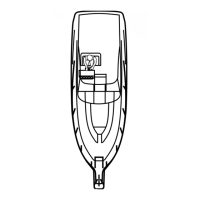
Diagram illustrating the general arrangement of the Explorer model.
How to adjust seat slide, tension, and lock the pedestal seating.
Understanding and complying with federal and state boating traffic laws.
Importance and location of safety labels on the craft.
Owner's duties regarding registration, licensing, and safe operation.
Essential safety gear required by federal and local laws for the boat.
Types and proper use of PFDs for onboard safety.
Requirements and proper use of marine-certified fire extinguishers.
Legal requirements for carrying and using distress signaling devices.
Additional gear that enhances safety and convenience during boating.
Procedures for reporting accidents and handling fires onboard.
Awareness and avoidance of common waterway hazards.
Precautions for operating in storms, fog, and other adverse weather.
Recognizing and understanding marine warning flags and markers.
Legal and safety implications of operating a boat while impaired.
Dangers of CO gas and how to ensure adequate ventilation.
Laws and supervision requirements for minors operating boats.
Ensuring passenger awareness and safety during boat operations.
Operator responsibilities for safe boating and compliance with regulations.
Key safety rules and precautions to follow while operating the boat.
Guidelines for safe and courteous participation in water sports.
Specific safety rules for skiing, tubing, and other towed activities.
Warning against the dangerous practice of teak surfing due to CO risks.
Boater's responsibility to protect the environment and waterways.
Adhering to noise limits and minimizing disturbance on waterways.
Understanding and managing boat wakes to avoid damage and injury.
Learning to recognize buoys and markers that guide navigation.
Identifying different shapes and types of navigational buoys.
Understanding markers for speed zones, restricted areas, and general info.
How to interpret red (starboard) and green (port) channel markers.
Recognizing markers indicating hazards that can be passed on all sides.
Rules for determining which vessel has priority in various situations.
Using audible signals to communicate intentions and warnings.
Identifying boats that have the right-of-way.
Identifying boats that must yield to vessels with the right-of-way.
Rules for vessels encountering each other at crossing paths.
Procedures for vessels approaching each other head-on.
Rules for the vessel that is overtaking another boat.
Acting to avoid collision when right-of-way is unclear or unavoidable.
Safety precautions and use of navigation lights during nighttime operation.
How the ventilation system prevents explosive vapor accumulation.
Operation and safety for the automatic fire suppression system.
Components and safety features of the boat's fuel system.
Function of the engine exhaust system and its components.
Types of engine lubrication systems and their maintenance.
How the engine's cooling system functions and seacock maintenance.
Overview of the boat's 12-volt DC electrical system.
Types of steering systems and their proper operation and maintenance.
Understanding and using the boat's gear shifter and throttle controls.
Operation of single-lever controls for shifting and throttling.
Identifying and operating various electrical control switches.
Disconnecting the boat's electrical system from the batteries.
Controlling the boat's running and anchor lights for nighttime visibility.
Activating the bilge pump to remove excess water from the boat.
Starting and stopping the boat's engine safely.
Understanding the boat's gauges and instrument readings.
Monitoring engine speed (RPM) for optimal operating range.
Tracking boat speed and monitoring fuel consumption.
Checking the amount of fuel remaining in the tank.
Monitoring the engine's cooling system water circulation.
Measuring engine tilt to optimize boat trim and performance.
Safe procedures for refueling the boat's fuel tank.
Precautions to prevent static sparks during refueling.
Step-by-step guide for starting the boat's engine.
Guidelines for shifting gears and operating the boat underway.
Responding to engine warning alarms to prevent damage.
Proper technique and maintenance for the boat's steering system.
Procedures for safely shutting down the boat's engine.
Techniques and precautions for safely docking the boat.
Understanding load distribution and its effect on boat trim.
Adjusting engine trim for optimal performance and efficiency.
Essential pre-operation checks for safe boating.
Using the "one third" rule for managing fuel reserves.
Safe procedures for boarding the boat.
Distributing weight for optimal boat trim and stability.
Understanding the boat's maximum person and load capacity.
Basic principles of steering and controlling the boat.
Care and flushing procedures for boats used in salt water.
Precautions for operating and storing the boat in freezing conditions.
Safe methods and precautions for towing disabled vessels.
Proper techniques for dropping and securing the anchor.
How to retrieve the anchor from the bottom.
Guidelines for achieving optimal boat performance.
Selection, care, and importance of the boat's propeller.
Guidelines and warnings regarding boat repairs and modifications.
Maintaining the boat's electrical components, including batteries.
Understanding and maintaining circuit protection devices.
Preventing galvanic and salt water corrosion on boat components.
Routine cleaning and upkeep for the boat's hull, upholstery, and canvas.
Best practices for maintaining the longevity and performance of boat canvas.
Cleaning and maintenance tips for boat carpet and windshields.
Procedures for cleaning the boat's bilge area.
Inspecting and maintaining fuel lines, vents, and filters.
Regular inspection and lubrication of the steering system.
A guide to diagnosing and resolving common mechanical and electrical issues.
Steps to prepare the boat for long-term storage.
Preparation steps while the boat remains in its water environment.
Procedures after removing the boat from the water for storage.
Steps to prepare the boat for use after a period of storage.
Safe methods for hoisting the boat out of the water.
Preventing the introduction of invasive aquatic species when trailering.
Understanding trailer classes based on gross vehicle weight.
Selecting and using the correct hitch for trailer and vehicle compatibility.
Importance and proper attachment of safety chains for trailering.
Requirements and operation of trailer brake systems.
Essential checks before and during trailer operation.
Techniques for safely backing a boat trailer.
Procedures for safely launching the boat from a trailer.
Procedures for safely loading the boat onto a trailer.
Warranty coverage for structural defects in the hull and deck.
Transferable warranty for structural hull/deck defects within ten years.
Warranty coverage for osmotic blisters on the hull's gelcoat.
Warranty for cosmetic defects in the exterior gelcoat surface.
Warranty for various non-structural parts like canvas and upholstery.
Exclusions from the manufacturer's limited warranties.
 General
| Brand | Monterey Boats |
|---|---|
| Model | 220 EX EXPLORER |
| Category | Boat |
| Language | English |


 To Next Page