The provided document is a service bulletin, not a device manual. It details a repair procedure for a specific issue with MotorGuide Tour Sonar Series Trolling Motors, specifically a leak in the transducer puck seal. Therefore, a comprehensive device description with technical specifications, usage, and maintenance features cannot be fully extracted from this document alone.
However, based on the information provided in the service bulletin, here's a description of the MotorGuide Tour Sonar Series Trolling Motors, focusing on aspects mentioned or implied by the bulletin:
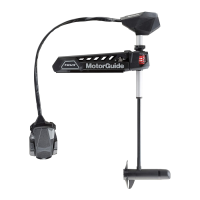
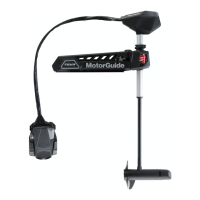
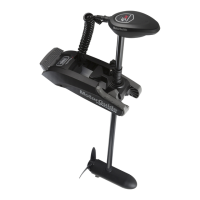
The MotorGuide Tour Sonar Series Trolling Motors are electric trolling motors designed for use on boats, featuring an integrated sonar transducer. These motors are part of the "Tour Edition" line, indicating a focus on performance and features for serious anglers. The primary function of these motors is to provide propulsion and steering for fishing boats, allowing for quiet and precise maneuvering, particularly in shallow waters or when approaching fishing spots. The integrated sonar transducer is a key feature, enabling anglers to detect underwater structures and fish directly from the trolling motor, streamlining the fishing experience by combining propulsion and fish-finding capabilities in one unit.
Key Features and Specifications (as implied or directly stated by the bulletin):
- Integrated Sonar Transducer: A central component of these motors is the "sonar puck," which houses the transducer. This integration simplifies installation and reduces clutter on the boat, as a separate transducer mounting is not required. The bulletin specifically addresses a manufacturing issue related to the "epoxy seal around the sonar puck," which can develop a leak path, leading to "water ingestion." This highlights the importance of the transducer's integrity to the motor's overall function.
- Magnet Housing: The sonar puck is housed within a "magnet housing." The service bulletin outlines a procedure for replacing this magnet housing due to the aforementioned leak issue. New magnet housings are identifiable by a "green/gray dot applied to the back of the transducer," indicating a design or manufacturing update to address the leak problem.
- Power Options: The bulletin lists various models with different power configurations, including:
- 36 volt, 105 lb. thrust
- 24 volt, 82 lb. thrust
- 24 volt, 70 lb. thrust
These specifications indicate that the Tour Sonar Series caters to different boat sizes and power requirements, offering varying levels of thrust for effective boat control.
- Component Structure: The repair procedure implies a modular design, with components such as:
- Brush Card: Mentioned as a component to inspect for "shorts or excessive brush wear," indicating a brushed motor design.
- SE Module: Referred to as the "SE module," which should be examined for "buildup of sludge around the pins" or "signs of water damage." This module likely controls various electronic functions of the motor, possibly including speed control or other advanced features.
- Armature: Another component to "check for shorts and opens," confirming the presence of an electric motor armature.
- Lower Unit: The bulletin refers to "disassembly and assembly instructions of the lower unit" from a service manual (90-MXC6032), indicating that the magnet housing and sonar puck are integral parts of the motor's lower unit assembly.
- Control and Operation: While not explicitly detailed, the mention of the SE module and brush card suggests electronic speed control and potentially other advanced operational features common in high-end trolling motors. The possibility of the SE module causing a "constant on or high speed condition" due to sludge buildup implies sophisticated electronic control.
Usage Features (implied by the bulletin's context):
- Fishing Application: The "Tour Sonar Series" name and the integration of sonar strongly suggest these motors are designed for serious fishing applications, where precise boat positioning and underwater visibility are crucial.
- Water Resistance: The entire premise of the service bulletin revolves around a water leak issue, highlighting the critical need for these motors to be water-resistant, especially in their lower unit where the sonar puck is located. The repair aims to restore this essential water integrity.
- Reliability: The bulletin's proactive approach to addressing a manufacturing defect underscores the manufacturer's intent to ensure the reliability of these motors for their customers.
Maintenance Features (as per the repair procedure):
- Specialized Repair: The repair of the sonar puck leak involves replacing the magnet housing, which is a factory-level repair. The bulletin explicitly states, "Do not attempt to service the magnet housing. Non-factory approved methods are unacceptable and claim will be denied." This indicates that certain repairs require specialized parts and procedures.
- Adhesive Use: The repair process involves the use of specific adhesives:
- Loctite 7649 Primer N: Applied to "column threads" to prepare them for threadlocker.
- Loctite 271 Threadlocker (red): Applied to the "first half of column threads" to secure components and prevent loosening.
- Torque Specifications: The column threads must be torqued to specific values (47.5 Nm, 35 lb. ft.), emphasizing the precision required for proper assembly and sealing.
- Component Inspection: The repair procedure includes inspecting other critical components like the brush card, SE module, and armature for damage, suggesting these are points of potential wear or failure that might be exacerbated by water ingress.
- Warranty Support: The bulletin outlines a comprehensive warranty claim process, including specific labor hours (1.8 hours) and flat rate codes (SB10, SB08, SB04, SB03) for various repairs, indicating a structured approach to after-sales service. Warranty coverage is also extended by one year for serviced motors, demonstrating a commitment to customer satisfaction.
In summary, the MotorGuide Tour Sonar Series Trolling Motors are advanced electric trolling motors with integrated sonar capabilities, designed for serious anglers. They feature robust power options and a modular construction, but require specialized repair procedures for issues like the sonar puck seal leak, emphasizing the importance of factory-approved service and specific maintenance protocols to ensure their water integrity and long-term performance.

 Need help?
 General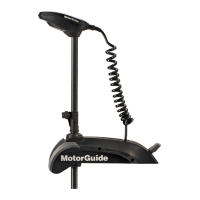


 To Next Page