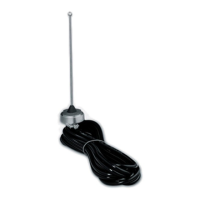
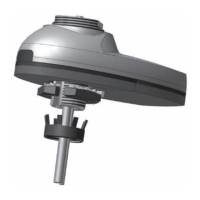
This document is an installation manual for VHF Vehicle Roof-Top Antennas, specifically models HAD4021A and HAD4022A, manufactured by Motorola Solutions, Inc. The manual provides instructions for installing these antennas on vehicles and includes important safety, compliance, and technical information.
Function Description
The antennas described are designed for use with mobile radios in a vehicle roof-top configuration. They serve to transmit and receive VHF radio signals, enabling communication for occupational use. The HAD4021A is a Unity Gain Quarter-Wave antenna, while the HAD4022A is a 3 dB 5/8th Wave antenna, which requires field tuning.
Important Technical Specifications
Antenna Models and Frequency Ranges:
- HAD4021A: Unity Gain Quarter-Wave, 136–174 MHz
- HAD4022A: 3 dB 5/8th Wave, 132–174 MHz (requires tuning)
Antenna Installation Requirements:
- Mounting Location: Primarily recommended for metal body vehicles at the center of the roof or center of the trunk deck.
- Standard metal passenger vehicles: Center roof or center trunk lid.
- Vans, pickups, and other light trucks (metal roofs): Center roof.
- Heavy duty equipment with metal roofs (heavy duty trucks, semi-tractors, heavy refuse trucks, cement mixer trucks): Center cab roof.
- Specialty vehicles (T-roofs, sun roofs, or convertibles): Center trunk lid (recommended only for transmitter output of less than 7 W).
- Roof Material: The antenna should be mounted on a flat metal roof with a thickness of 0.020 to 0.040 inches.
- Grounding: If mounted on the trunk lid, ensure the trunk lid is grounded by connecting grounding straps between the trunk lid and the vehicle chassis.
- Cable Routing:
- Must be easily routed to the radio.
- Must be routed separately and not in parallel to any other vehicle wiring or mobile radio cable wiring.
- DO NOT shorten the antenna lead-in cable to comply with FCC regulations.
- Interference Avoidance:
- Check the antenna location for electrical interference.
- Avoid mounting near any two metal pieces rubbing against each other (e.g., seat springs, shift levers, trunk and hood lids, exhaust pipes) as this can cause severe receiver interference.
- If the vehicle has an electronic anti-lock braking system (ABS), mount the antenna at the center of the roof or trunk lid and do not route the antenna cable near the ABS modulator box. Mount the radio as far away from the modulator box as physically possible to minimize interference.
- Minimum Separation: The mobile radio antenna must be installed at least one foot (30.48 cm) away from any other antenna on the vehicle.
- RF Safety: HAD4021A and HAD4022A must only be mounted on the roof to comply with RF Safety standards. Refer to the "Product Safety and RF Exposure Compliance" section for relevant transmitter output power and distances from occupants.
Tuning Specifications (HAD4022A only):
- VSWR: Less than 1.5:1 at the frequency of interest.
- Tuning Method: Trim the bottom portion of the rod (below the ferrule) according to the provided "Rod Cutting Chart" (Figure 11). Fine-tune with an in-line watt meter for minimum reflected power.
Usage Features
Installation Procedure Overview:
The installation involves drilling a 3/4-inch hole in the vehicle roof, securing the bushing assembly, routing the coaxial cable, and attaching the antenna.
Key Installation Steps:
- Location Selection: Choose a location as near the center of the roof as possible, avoiding obstructions.
- Hole Drilling: Drill a pilot hole, then a 3/4-inch hole from the top (outside) of the vehicle. For double roofs without a dome light, a second 3/4-inch hole may be required in the bottom roof section.
- Surface Preparation: Clean the roof metal around the hole to ensure good contact for the bushing assembly.
- Bushing Assembly:
- Remove burrs from the mounting hole.
- Thread the locking nut onto the bushing assembly a few times before installation to remove burrs.
- Insert the coaxial cable and route it between the roof and headlining to the radio.
- Apply silicone grease to the inner and outer threads of the locking nut, and to the rubber "O" ring washer and its groove.
- Insert the bushing assembly into the mounting hole, tilted slightly, ensuring the cable is pulled through.
- Hold the bushing assembly down and thread the locking nut onto it.
- Pull upward on the entire assembly to center it and seat it properly.
- Tighten the locking nut with a 15/16-inch open-end wrench until it bottoms firmly against the roof top, ensuring the rubber O-ring is fully compressed and the locking nut contacts the vehicle roof for proper antenna radiation pattern.
- Antenna Attachment:
- Apply silicone grease to the weatherproof rubber seal.
- Slide the rubber seal down around the locking nut.
- Position the antenna over the locking nut and secure the metal cap to the external threads of the locking nut.
- Tighten the metal cap by hand, then an additional 1/2 turn with a 10-inch adjustable or 1-inch open-end wrench, ensuring the antenna rod is perfectly vertical.
- Reassembly: Replace headlining and dome light if removed.
Connector Fabrication (Mini-UHF):
The manual details the assembly of a mini-UHF cable connector using a Motorola crimping tool (part number 66-80388A26).
- Trim the cable jacket, braided shielding, and dielectric to expose center wires (6 mm).
- Trim the jacket back an additional 10 mm.
- Insert the cable into the crimp and shell.
- Solder the gold-plated center pin to the center wires, ensuring no solder adheres to the outside of the pin.
- Insert the cable into the connector body, allowing braided shielding to extend outside.
- Push the shell forward until it rests on the connector body, compressing the braided shielding between the crimp and body.
- Use crimp area E of the crimping tool to form the crimp.
Maintenance Features
Tuning (HAD4022A only):
- The HAD4022A antenna requires trimming to tune it to the desired frequency range (132–174 MHz).
- Procedure: Unscrew setscrews, remove the rod, cut the bottom portion of the rod as per the "Rod Cutting Chart," re-insert the rod, and secure setscrews.
- Verification: Check and fine-tune with an in-line watt meter for minimum reflected power and VSWR less than 1.5:1.
General Maintenance Advice:
- Automatic Car Washes: Advise the radio owner to unscrew the upper antenna assembly from the base before entering an automatic car wash to prevent damage. Ensure only the upper section, not the locking nut, is removed. If the locking nut becomes loose, retighten it securely.
- No Tuning Required (HAD4021A): The HAD4021A is a wideband antenna and does not require tuning.
- Cable Integrity: DO NOT shorten the antenna lead-in cable.
- Silicone Grease: Apply silicone grease to the weatherproof rubber seal and locking nut threads during installation to ensure a proper seal.
- 10-inch adjustable wrench, or 1-inch open-end wrench
- 15/16-inch open-end wrench
- Antenna hole-cutting tool, Motorola RPX-4378A (or equivalent 01-80382A25 hole-cutting saw)
- Center punch
- Crimping tool 66-80388A26
- Hammer
- Large hand drill
- Pliers
- Round file
- Side cutters
- Soldering station & solder
- Silicone grease (supplied)
- Electrician's fishtape (optional, for cable routing)
Compliance and Safety
- Product Safety and RF Exposure Compliance: Users must read the operating instructions for safe usage in the "Product Safety and RF Exposure booklet" (Motorola Publication part number 6881095C99) enclosed with the radio.
- Occupational Use: The radio is restricted to occupational use only to satisfy FCC RF energy exposure requirements.
- FCC Regulations: Adherence to FCC regulations is required, including not shortening the antenna lead-in cable.
- Antenna Manufacturer/Supplier Requirements: Installation must comply with these requirements.
- Radio Installation Manual: Installation must follow instructions in the radio installation manual.

 Need help?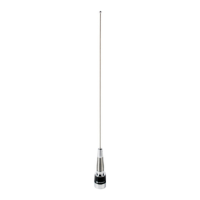

 To Next Page
 General