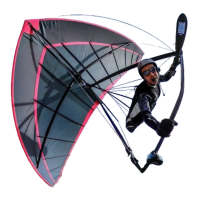
GECKO OWNERS MANUAL
Version 3 30
GLIDER CARE
General Hint: If you are replacing any components, keep the old one so that you can check the
dimensions of the new one when it arrives.
Post Flight
After coastal flying and particularly on sand dunes, the glider will be covered with a thin layer of salt
spray. Wipe down the tubes and wires with a towel or cloth. Clear sand out of the wing tips and
fittings so that it does not spread through the glider.
Storage
Keep the glider in its bag and store in a dry place out of the sun. It is best if the glider is stored on
padded racks where the air can circulate. Avoid leaving the glider on the floor or ground for any
length of time as this allows ground moisture to work its way in. Don’t keep the glider in air tight
tubes or bags; the slightest moisture trapped can cause mildew.
If you fly on the coast it is advisable to regularly flush your glider with fresh water. Leave the glider
open in the sun to dry COMPLETELY, including the inside of the bars, before packing away.
If the glider is damp after a day’s flying, dry it in the sun the next day. If this is not possible, place
the glider bag zipper down on your storage rack, open the zipper full length and release all the
glider ties. Loosen up the sail so that air can circulate as much as possible. Set-up and dry properly
on the first sunny day.
Sail Care
Avoid contact with any oils, solvents, caustic or acidic substances. This includes salt water, salty
sand, animal dungs, and preservative treatments such as Armour All. If the sail must be washed,
use fresh water. For stubborn stains a weak detergent may be used provided it is THOROUGHLY
rinsed from the sail cloth.
Sail materials are deteriorated by ultra violet light, keep the glider in its bag when not being flown
and out of the sun.
For small rips and tears on non-stressed areas, sticky-back sail repair tape can be used. A sail
maker should make any repairs to larger tears or damage on high-stress areas, such as along the
trailing edge and at sail mounting grommets.
Use the protective padding supplied when packing up your glider and check that no sail is caught
between metal fittings. Abrasion caused during transportation is common. Watch for rub spots on
the sail or frame and add padding or change you pack up method to stop them.
Battens
The battens usually hold their shape well unless there has been an incident or undue wind pressure
on the back. If reshaping is required, warm the tube first by rubbing and avoid over working the
tube.
Sand in the batten pockets abrades the pocket ends. When inserting battens wipe off dirt and sand.



 To Next Page