The KWIK DRAW UNIPHOS Airtester HP (Multiport Sampling) is a comprehensive compressed air monitoring set designed to determine the content of carbon monoxide, carbon dioxide, oil, and water vapor in respirable air from compressors and compressed gas cylinders. This device ensures that compressed air meets the quality requirements specified by EN Standard 12021 for respiratory equipment.
Function Description:
The Airtester HP operates by reducing the high pressure from compressed gas cylinders or compressor charging panels via a pressure reducer. The air to be sampled is then continuously drawn through a regulatory valve in a manifold. This manifold features four outlets, each designed to release gas at a fixed flow rate (0.3 l/min, 1.0 l/min, and 2.5 l/min). Detector tubes are inserted into these outlets, and the air flows through them for a specific duration. The length of the stain produced in the detector tube serves as an index of the concentration of the measured substance, which can be read directly from the tube's scale. This semi-quantitative method allows for the assessment of various contaminants.
Important Technical Specifications:
- Operation Medium: Air
- Maximum Pressure: 300 + 30 bar
- Flow Rates: 0.3, 1.0, and 2.5 l/min (specific to the appropriate manifold port for the required sample air volume)
- Weight (with case): 5 kg
- Dimensions (with case): Height = 120 mm; Width = 320 mm; Length = 420 mm
Measuring Ranges of Detector Tubes:
- Carbon Monoxide (CO) Detector Tubes:
- Range: 5 to 70 ppm
- Flow Rate: 0.3 l/min
- Measuring Time: 5 minutes
- Required Sampling Volume: 1.5 l
- Carbon Dioxide (CO₂) Detector Tubes:
- Range: 100 to 2000 ppm
- Flow Rate: 0.3 l/min
- Measuring Time: 5 minutes
- Required Sampling Volume: 1.5 l
- Oil Detector Tubes (Vapor + Mist):
- Detection of oil contents (vapor + mist)
- Flow Rate: 2.5 l/min
- Measuring Time: 24 minutes
- Required Sampling Volume: 60 l
- Indicates semi-quantitatively mineral and synthetic oils.
- Water Vapor (H₂O) Detector Tubes:
- Range 1: 20 to 160 mg/m³
- Flow Rate: 1 l/min
- Measuring Time: 5 minutes
- Required Sampling Volume: 5 l
- Range 2: 5 to 70 mg/m³
- Flow Rate: 1 l/min
- Measuring Time: 10 minutes
- Required Sampling Volume: 10 l
All specified values for detector tubes are based on air not under pressure and at room temperature and normal pressure.
EN 12021 Quality Requirements for Respirable Air:
- CO Content: Max. 15 ppm
- CO₂ Content: Max. 500 ppm
- Oil Content: Practically free of critical mineral oil content (typically less than 0.5 mg/m³)
- Water Content in Compressed Air Cylinders:
- Max. 50 mg/m³ at a charging pressure of 200 bar
- Max. 35 mg/m³ at a charging pressure of 300 bar
- Max. 25 mg/m³ of the air from the compressor
These water vapor content requirements apply to the specific equipment type (200 or 300 bar) and to all pressure levels below the maximum values. All maximum values are based on air not under pressure.
Usage Features:
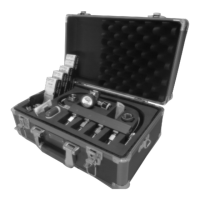
The Airtester HP kit comes in a robust case containing all necessary components for measurement. This includes the test device (pressure reducer, pressure gauge, manifold, flow meter, detector tube holder), adapters for compressor charging panels (300 or 200 bar), a timer, a device for breaking off detector tube tips, and packages of detector tubes for CO, CO₂, water vapor, and oil content. The standard case includes one package of each of the four types of detector tubes, with additional space for four spare packages.
Operating Instructions:
- Preparation for Measuring:
- Clean the valve of compressed gas cylinders or compressor charging connections with a brief burst of air.
- Select and connect the appropriate adapter for the compressor charging panel's maximum pressure (300 or 200 bar).
- Connect the pressure reducer to the compressed gas cylinder or compressor charging connection using the adapter.
- Insert and firmly fit the manifold nozzle onto the pressure reducer.
- Measuring on Compressed Air Cylinders:
- Slowly open the cylinder valve.
- The air flow rate through each manifold port can be confirmed using the provided flow meter.
- Insert the detector tube holders into the manifold ports.
- Flush the device for sufficient time to remove any other gases. For a clean and dry device, 2 minutes of flushing is sufficient. If the device's condition is unknown or if previous measurements showed higher values than permissible, flushing at 2 l/min must continue until two water vapor measurements, taken at approximately 15-minute intervals, yield identical results within the permissible accuracy range.
- Liquid/water droplets can only be removed by prolonged flushing with dry, possibly warm, air.
- Observe the arrow on the detector tube, which indicates the flow direction of the test air. The arrow must point away from the test device after insertion.
- Break off the detector tube tips at the air exit side.
- Insert the detector tube into the tube holder, with the broken-off end tightly inserted into the holder side away from the test device.
- Break off the other end of the detector tube (air entry side) and immediately insert the open tube tightly into the other end of the detector tube holder (close to the test device).
- Immediately start the timer for the time designated for the specific detector tube type.
- Remove CO, CO₂, and H₂O detector tubes after 5 minutes and read the values from the printed scale.
- Remove the oil detector tube after 24 minutes and read the values from the printed scale.
- Measuring on Compressors:
- Switch on the compressor.
- Wait until 200 or 300 bar are reached.
- Switch off the compressor.
- Slowly open the valve on the compressor.
- Flush the test device as described in the preparation section.
- Note: The measured water content from a compressor only corresponds to that of simultaneously charged cylinders or cylinders charged immediately after measuring if a pressure retaining valve is built into the compressor at the exit side of the drying cartridges. This also assumes that the cylinders to be charged are dry. The pressure retaining valve ensures that the pressure inside the compressor drops only insignificantly when cylinders are being charged. Compressors without a pressure retaining valve behind the filters may release water from the drying cartridge during sudden decompression when the charging connection is opened, leading to higher water content than measured on the compressor charging panel. MSA AUER compressors typically have a pressure retaining valve.
Maintenance Features:
- General Care: Given the importance of measurement accuracy, the test device must be handled with care. Dirt, especially at the high-pressure connection, must be avoided at all times.
- Cleaning: Flushing and cleaning of the test device should be performed as described in the operating instructions. After use, the test device should be stored in its case, and the high-pressure connection should be closed with a protective cap.
- Function Checks: Regular function checks are essential, and if erroneous measurements are suspected, further checks should be performed.
- Troubleshooting:
- If the hand wheel cannot be loosened while connected to a cylinder or compressor, check for pressure in the connection. Close the cylinder/compressor valve and release air from the test device.
- Leaks at the cylinder/compressor connection may be due to a defective gasket, which should be replaced.
- If the high-pressure gauge or detector tube holder is defective, they must be replaced.
- For other disorders, the device should be returned to UNIPHOS or an authorized service station for repair.
Part Numbers for Accessories and Spare Parts:
- Detector tubes CO-HP: D5085847
- Detector tubes CO₂-HP: D5085848
- Detector tubes H₂O-HP: D5085849
- Detector tubes Oil-HP Synth. (for mineral and synthetic oil testing): 10040887
- Pressure reducer with pressure gauge: D4074937
- Manifold: CR001444
- Gaskets-lifter: D4060241
- Detector tube holder: D4074058
- Timer: D5185020
- Tube tip breaking device: D5085012
- Case: D5185911
- Case insert: D5185931
- Flow meter: CR001452
(Note: Detector tube packages contain 10 pieces each.)

 Need help?
 General



 To Next Page