
 Need help?
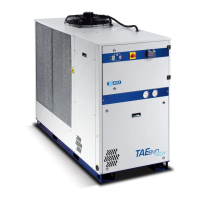
Do you have a question about the MTA TAEevo Tech 402 and is the answer not in the manual?
Procedure for starting and stopping the unit using the keypad.
How to view and reset alarms, excluding compressor thermal cut-outs.
General safety measures for handling and maintaining the unit.
Safety measures to follow during the unit's installation process.
Safety guidelines for operating the unit correctly and safely.
Safety advice for maintenance, including refrigerants and cleaning.
Guidelines for selecting a suitable installation location for the unit.
Measures to prevent freezing, including antifreeze recommendations.
Instructions for making all hydraulic connections to the unit.
Guidelines for connecting the unit to the main power supply.
Procedure for starting the unit from the keypad or digital input.
How to display, reset, and mute alarms, and general alarm information.
Details of high pressure and compressor thermal alarms for specific models.
Information on low pressure switch alarms and their reset procedures.
Details on anti-freeze alarms, reset procedures, and associated regulators.
Information on level sensor and flow meter alarms, including delays and stops.
Details of compressor thermal alarms, causes, and remedies.
Overview of parameter access levels and password protection.
Steps to access user, service, and manufacturer parameter levels.
Step-by-step guide to modifying parameter values.
Using the Hot Key for copying parameter maps to/from the control.
Managing compressor control, type selection, and proportional control.
Explains the function of each button on the controller interface.
Methods for starting and stopping the unit from the keypad or digital input.
How to view and change the setpoint value on the controller.
How to view alarm status and perform manual resets.
Overview of parameter access levels and password protection.
Procedures for disabling compressors for maintenance and resetting hours.
How to visualize and reset alarms, including compressor overload alarms.
Using the Hot Key for copying parameter maps to/from the control.
Details on low and high pressure switches and their trip/reset values.
Information on the level sensor, its function, and calibration.
General notes on performing maintenance tasks.
Essential operation for preventing freezing in the water circuit.
A schedule of routine maintenance tasks and their frequency.
Common problems, their causes, symptoms, and suggested remedies.
Analysis of potential risks during operation and maintenance of the unit.


 To Next Page
 General