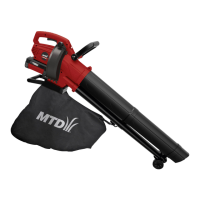
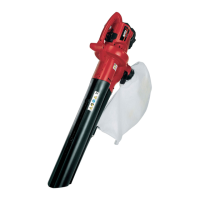
This document is an operator's manual for a Yard Machines Leaf Blower, Model Series 650, manufactured by MTD Products Inc. It provides comprehensive instructions for assembly, operation, maintenance, and troubleshooting, emphasizing safe practices throughout.
Function Description
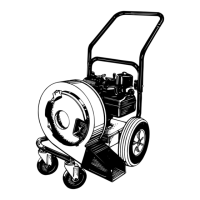
The Yard Machines Leaf Blower, Model Series 650, is a powerful, walk-behind outdoor power equipment designed primarily for blowing leaves and other light debris. It utilizes an internal combustion engine to generate a high-velocity air stream, allowing users to efficiently clear lawns, driveways, and other surfaces. The unit is designed for ease of use with features like height adjustment and a two-way discharge system, enabling the operator to direct the airflow either to the front or to the side of the unit.
Important Technical Specifications
While specific engine details (e.g., horsepower, displacement) are referred to in a separate engine manual, the leaf blower itself features a robust design. Key components include a blower housing assembly, an impeller (referred to as "revolving blades"), and a directional discharge chute. The unit is equipped with rear wheels (12x3) and swivel caster wheels (5" Dia x 1.25) for maneuverability. The handle system consists of an upper and lower handle, secured with curved head bolts, saddle washers, and handle knobs. The height adjustment crank allows for varying discharge chute heights. The manual highlights the importance of using SAE 30 oil for wheel lubrication and specifies a spark plug gap of .030". The fuel system requires gasoline, and the engine's exhaust system may require a spark arrester, especially in areas with specific regulations like California.
Usage Features
The leaf blower is designed for straightforward operation. Before starting, users must service the engine with gasoline and oil as per the separate engine manual. The starting procedure involves attaching the spark plug wire, moving the choke lever to the "CHOKE" position (for cold engines), setting the throttle control to "FAST," and then pulling the starter rope with a rapid, continuous, full arm stroke. Once the engine starts, the choke control is gradually moved to the "RUN" position. To stop the engine, the throttle control lever is moved to the "OFF" position. A key usage feature is the two-way discharge system, which can be adjusted by pushing down on the handle and swinging a door to direct the airflow either to the side or to the front. The height adjustment crank on the right-hand side allows operators to raise or lower the discharge chute, adapting to different terrain or debris conditions. The manual strongly advises against operating the unit without the directional discharge chute and plastic impeller guard properly affixed, as these are crucial for operator safety.
Maintenance Features
Regular maintenance is crucial for the leaf blower's performance and longevity. The manual outlines several key maintenance tasks:
- Lubrication: Rear wheels should be lubricated once a season with a few drops of SAE 30 oil. Engine lubrication instructions are detailed in the separate engine manual.
- Engine Maintenance: This includes maintaining engine oil levels, servicing the air cleaner every 25 hours (or more frequently under dusty conditions), and cleaning the spark plug and resetting its gap annually (or replacing it at the start of each mowing season).
- Cleaning: The engine and cooling system (blower housing area) should be cleaned regularly with a cloth or brush to ensure proper air circulation and prevent the buildup of grass, dirt, and combustible debris around the muffler.
- Fasteners: All nuts, bolts, and screws must be kept tight to ensure the equipment remains in safe working condition.
- Safety Devices: Safety devices should never be tampered with and their proper operation should be checked regularly.
- Storage: Before storing, the equipment should be thoroughly cleaned and wiped with an oiled rag to prevent rust. Engine storage instructions are in the separate engine manual. For compact storage, the upper handle can be folded toward the engine. The unit should be stored in a clean, dry area, away from corrosive materials and any open flames, sparks, or pilot lights (e.g., water heaters, furnaces).
The manual also includes a troubleshooting guide for common issues like the engine failing to start, running erratically, overheating, or idling poorly, providing potential causes and remedies. For repairs beyond minor adjustments, users are advised to contact an authorized service dealer. The document emphasizes safety with warnings about rotating blades, engine exhaust, and the handling of gasoline, stressing the importance of wearing safety glasses during operation and maintenance.


 To Next Page
 General