EasyManua.ls Logo

mycom 3225SSC - User Manual

Default Icon
172 pages
Print Icon
To Next Page IconTo Next Page
Loading...
2202MYJE-MY-C8-N_2018.02.
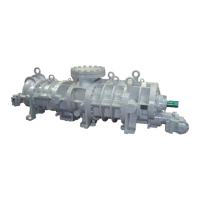
Compound 2-stage Screw Compressor
3225 * * C Instruction Manual
3225LLLC/3225LLMC/3225LLSC/3225LLC/3225LMC/3225LSC
3225MLC/3225MMC/3225MSC/3225SLC/3225SMC/3225SSC
CAUTION
Before operating, servicing, or inspecting this product, read this manual thoroughly to fully
understand the contents.
Keep this Instruction Manual in a safe, designated place for future reference whenever the
manual is needed.
Specifications of this product and contents of this manual are subject to change without
prior notice due to technical improvements, and the like.

Table of Contents

Questions and Answers

  • J
    Judy KingAug 23, 2025
    Why does my mycom Compressor stop immediately after startup?
    • L
      Lisa CampbellAug 25, 2025
      If your mycom Compressor stops immediately after starting, it could be due to insufficient refrigerant flow (check for leaks, stop them, and add refrigerant) or insufficient liquid supply (inspect the expansion valve and liquid supply strainer). Another cause could be heat exchange failure in the heat exchanger, so investigate the cause and take necessary actions. Lastly, the failure of a low pressure protection device, pressure sensor, or relay could be the reason, so identify and replace any defective devices.
  • K
    katieprattNov 8, 2025
    How to troubleshoot a mycom 3225SSC Compressor that does not start up?
    • M
      Miss Natasha LewisNov 8, 2025
      If the mycom Compressor does not start, several factors could be at play. It might be due to the power source being off, so you should use a check sheet for post-inspection actions. The main motor could have failed, so refer to the motor's operation manual for troubleshooting. The micro-switch might not be sensing capacity control, in which case you should replace it. Other potential causes include a defective capacity control oil supply line (readjust), leaks or clogs in piping or the solenoid valve (remove cause and check/replace oil), or a clogged pressure pipe (remove clogging and check/replace oil). Also check for oil pressure, cooling water circulation, clogs in the circulation route (remove the clogging), or issues with the compressor startup circuit (replace faulty components). Fin...
  • S
    Shelly SmithNov 15, 2025
    What to do if the mycom 3225SSC Compressor has low oil pressure?
    • T
      Todd BoyerNov 15, 2025
      If your mycom Compressor's oil pressure is low, it could be due to several reasons. The oil filter element might be clogged, so remove the clogging and check/replace the oil. There may be internal defects, so check for oil contamination and conduct vibration/noise diagnosis, overhauling the compressor if necessary. Other possible causes include insufficient oil in the oil separator (inspect the oil heater and relays), insufficient oil return due to refrigerant circulation issues (correct refrigerant circulation and return oil from the load-side heat exchanger), or clogs in the oil return passage (remove the causes and restore the system). Also, check for extensive oil leaks and address them and ensure the oil pressure detection function is working correctly by identifying and replacing any...
  • M
    morrisjustinDec 1, 2025
    What causes unusually high pressure in a mycom Compressor?
    • P
      priosDec 1, 2025
      If the pressure in your mycom Compressor is unusually high, it could stem from several issues. Heat exchange failure in the condenser might be the cause, so clean and wash it, possibly using chemical cleaning. Another potential cause is failure in the fan motor, thermo switch, water spraying pipes, or cooling water pumps, so identify and replace any defective devices. Faulty adjustment of cooling water or brine could also be to blame, so readjust the valve or investigate the cause if using an automatic control valve. Other causes of insufficient cooling water flow should be investigated, such as clogged filters, leaks in circulation routes, or frozen water supply routes. Deficiency in heat exchanger performance may also be a factor, so re-examine operating conditions or improve the install...

Summary

Chapter 1 Safety

1.1 Strict Requirements and Prohibitions

Do's and Don'ts for safe operation and maintenance.

1.4 Safety Devices

Details on safety devices for product protection.

Chapter 2 Compressor Specifications and Structure

2.3 Compressor Specifications

Detailed technical specifications of the compressor models.

2.3.2 Operation Limits

Specifies the operating limits for safe and efficient performance.

Chapter 3 Installation

3.1 General Precautions for Installation

Important safety and procedural guidelines before installation.

3.2 Installation Works

Detailed steps for installing the compressor.

3.2.5 Installation

Steps for physically installing the compressor.

3.2.7 Lubricating Oil Charge

Instructions for filling lubricating oil.

Chapter 4 Compressor and Package Unit Operation

4.1 Lubricating Oil (Refrigerant Oil)

Importance and management of lubricating oil.

4.2 Precautions for Operation

Important operational precautions for safe and efficient use.

Chapter 5 Maintenance and Inspection

5.1 Precautions for Maintenance and Inspection

Essential safety measures and precautions for maintenance.

5.2 Maintenance and Inspection List

List of maintenance and inspection items.

5.3 Compressor Disassembly Preparation

Steps and tools needed before disassembling the compressor.

5.3.3 Refrigerant Gas Recovery

Procedures for safely recovering refrigerant gas before disassembly.

5.4 Disassembly and Inspection

General approach to disassembly and inspection.

5.4.12 Thrust Bearing Block

Disassembly of the thrust bearing block.

5.4.13 High-stage Rotors and Main Rotor Casing

Procedures for removing and inspecting high-stage rotors and casing.

5.5 Reassembly

General guidelines for reassembly.

5.5.4 Installing the Rotors

Steps for correctly installing the compressor rotors.

5.5.8 Thrust Bearing Block

Reassembly of the thrust bearing block.

5.5.8.1 End Clearance Measurement

Measuring the end clearance of the rotor shaft.

5.5.8.2 End Clearance Adjustment Procedure

How to adjust the end clearance if it's out of specification.

5.5.8.3 Tightening after Finishing the End Clearance Adjustment

Final tightening steps after end clearance adjustment.

Chapter 6 Troubleshooting

01: Compressor does not start up

Common causes and solutions when the compressor fails to start.

02: Compressor stops immediately after startup

Troubleshooting steps for compressors that stop shortly after startup.

04: Low oil pressure (low lubricating oil supply pressure)

Troubleshooting low oil pressure symptoms.

06: Unusually high pressure (abnormal discharge pressure)

Diagnosing and fixing abnormal discharge pressure.

07: Discharge temperature is abnormally high.

Troubleshooting high discharge temperature issues.

mycom 3225SSC Specifications

General IconGeneral
Brandmycom
Model3225SSC
CategoryCompressor
LanguageEnglish

Related product manuals