Need help?
Do you have a question about the Nady Systems DM 70 and is the answer not in the manual?
Guides on connecting the microphone via XLR or 1/4" and mounting it on a stand.
Explains proximity effect and strategies to minimize acoustic feedback during live use.
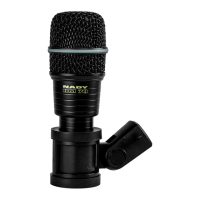
The Nady DM Series Microphones, encompassing the DM 70 and DM 80 models, are professional-grade dynamic microphones designed for capturing high-quality audio from drums, percussion instruments, brass, and woodwinds. These microphones are particularly well-suited for live performances and studio recording environments where close-miking is essential. Their robust design allows them to handle extremely high sound pressure levels (SPL) without introducing distortion, ensuring clear and accurate sound reproduction even from the loudest sources.
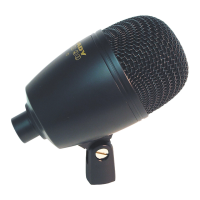
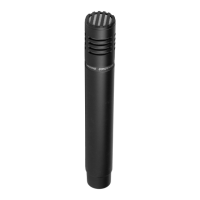
The DM 70 is specifically engineered as a snare drum microphone, but its versatility extends to close-miking toms, all types of percussion, brass instruments, and woodwinds. It is designed to capture the intricate details and punch of these instruments with precision. The DM 80, on the other hand, is a kick drum microphone, featuring an extended low-end response that is specially tailored for bass drums and other large-diameter drums. This specialized frequency response ensures that the deep, resonant tones of kick drums are captured with full impact and clarity.
Both models utilize a unidirectional cardioid polar pattern, a key feature that allows for effective close-miking while minimizing bleed-through from other instruments on a drum kit or stage. This pattern ensures that the microphone primarily picks up sound from the source directly in front of it, rejecting unwanted off-axis sounds. This characteristic is particularly beneficial in live settings where multiple instruments are in close proximity, helping to maintain a clean and focused sound mix. The cardioid pattern also plays a crucial role in minimizing acoustic feedback, a common issue in live sound reinforcement. By focusing on the desired sound source and rejecting sounds from the rear, the DM Series microphones significantly reduce the likelihood of feedback, even in noisy ambient conditions with high sound pressure levels from PA and monitor speakers.
The microphones are built with a transformerless moving-coil dynamic design, which contributes to enhanced bass response and fast transient response. This design ensures that the microphones can accurately capture the quick attacks and decays of percussive instruments, delivering a punchy and clear sound. The use of a neodymium element in the cartridge provides maximum output, contributing to the microphone's ability to handle high SPLs without distortion.
For connectivity, the DM Series microphones feature a gold-plated XLR connector, which ensures maximum conductivity and a reliable connection to audio equipment. They can be easily integrated into any standard mixer, powered mixer/amplifier, or mic preamp using either an XLR to XLR or XLR to 1/4" phone plug low impedance cable. The female XLR end connects to the microphone, while the male XLR or 1/4" phone plug connects to the audio equipment.
Mounting the DM Series microphones is straightforward, as they come with an integral mic holder mount. This mount can be attached to any standard microphone stand. Depending on the threading of the mic stand, a threaded adapter on the mic holder may need to be removed for proper fit. The microphones also feature an incredibly small, low-profile design, which makes them minimally visible on stage and allows for versatile close-miking placement around drum kits and other instruments. This discreet design is a significant advantage in professional settings where aesthetics are important.
When using the DM Series microphones, users should be aware of the proximity effect, which is an increase in bass response when the microphone is placed close to the instrument. This effect can be either desirable or undesirable depending on the specific application and desired sound. Experimenting with the microphone's position relative to the audio source is encouraged to achieve optimal results.
To further minimize feedback in live stage use, several techniques can be employed in conjunction with the microphone's inherent feedback rejection capabilities. These include experimenting with mic positions relative to speakers, decreasing speaker volume when possible, and adjusting the equalization of the microphone audio with the mixer.
The construction of the DM Series microphones emphasizes durability and reliability. They feature an all-metal construction, ensuring they can withstand the rigors of professional use. A special rubber shockmount mic holder is incorporated to minimize floor vibration pick-up, further enhancing sound quality by preventing unwanted low-frequency rumble. The handle is made of die-cast zinc, and the ballscreen is steel mesh, providing robust protection for the internal components.
Proper care and maintenance are essential to ensure the longevity and optimal performance of the DM Series microphones. They should never be dropped or subjected to extreme shock, and it is recommended to store them in a padded case during transport to protect them from damage. The microphones should be kept away from extremely high temperatures (above 140°F or 60°C) and high humidity. Prolonged exposure to direct sunlight should also be avoided. When using the microphones outdoors, it is crucial to prevent them from getting wet. After use in high-moisture environments, such as stage performances, the microphone should be wiped off with a dry cloth and allowed to air dry completely. It is important not to store the unit in a closed space, such as a plastic bag, until all moisture has evaporated, as this can lead to moisture damage. Adhering to these maintenance guidelines will help preserve the microphone's performance and extend its lifespan.
 General
| Type | Dynamic |
|---|---|
| Polar Pattern | Cardioid |
| Impedance | 600 Ohms |
| Connector | XLR |
| Color | Black |

 To Next Page