EasyManua.ls Logo

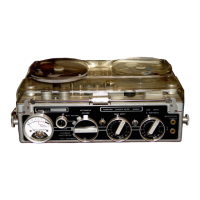
Nagra III - Tension Pulley and Tape Path; Microphone Input and Level Meter

Nagra III
32 pages
Print Icon
To Next Page IconTo Next Page
To Previous Page IconTo Previous Page
Loading...
Page
2
curve
is
always
excellent
and
varies
little
from
tape
to
tape.
At
this
speed
the
tape
is
little
affected
by
repeated
play
-
backs.
Another
advantage
is
that
editing
is
easy,
and
that
a
suitable
machine
operating
at
this
speed
can
usually
be
found
in
studios
for
play-
back
of
recordings.
19,05
cm/sec.
==
7.
5"/sec.
CCIR
Equalization
Standard
This
is
the
normal
speed
for
the
general
uses
of
the
Nagra
in
studios
working
with
the
CCIR
standards.
Where
this
is
not
necessary,
the
following
position
will
be
preferred:
19,05
cm/sec.
==
7.5"/sec.
Ampex
Equalization
Standard
This
is
a
better
standard,
as
the
modulation
noise,
medium
range
distortions
and
tape
backgr'ound
noise
are
reduced
considerably.
9,525
cm/sec.
=
3.75"/sec.
This
speed
is
for
use
where
high
quality
is
not
required
and
tape
economy
is
important.
One
hour
recording
time
can
be
obtained
with
the
use
of
5
11
reels
and
using
extra
thin
tape
or
two
hour's
with
7"
reels.
2)
Tension
Pulley
This
pulley
is
movable
and
operates
a
brake
on
the
spool,
ensuring
constant
tape
tension.
3)
Microphone
Input
The
microphone
should
have
an
impedance
of
50
or
200
ohms.
This
input
socket
on
the
Nagra
is
Cannon
type
XLR
3-42.
The
plug
on
the
microphone
cable
is
Cannon
type
XLR
3-11C.
Contact
No.1
is
earth
and
2
and
3
are
the
microphone
connections.
The
input
is
symmetrical
and
floating,
there
being
no
connection
between
primary
and
earth.
4)
Shoulder
Strap
Button
For
the
attachment
of
a
shoulder
strap
or
ever
ready
case
a
small
set
screw
is
fitted
for
safety
in
the
nut
(3
mm.
Set
screw
,
for
Allen
key
to
DIN
913:
a
key
0.050"
(1.
27
mm)
is
provided).
5)
Modulation
Level
Meter
The
upper
scale
on
the
meter
is
for
measuring
the
input
level
(on
Test
or
on
Record),
and
the
output
level
to
the
line
on
Hi-Fi
play-back.
Normally
the
pointer
will
not
reach
the
black
segment
between
0
and
+2db,
which
is
the
region
of
over
modulation.
The
recorder
has
a
safety
factor
of
about
6
db,
so
that
an
occasional
accidental
incursion
into
this
region
is
of
no
consequence.
The
level
control
should
be
adjusted
so
that
the
pointer
only
reaches
the
black
zone
on
the
loudest
parts
of
the
recording.
6)
Battery
Indicator
The
lower
scale
of
the
meter
is
for
checking
the
state
of
the
batteries.
The
meter
is
connected
to
the
batteries
when
the
selector
switch
indicates
"Play-
back
and
Batteries
Meter",
that
is,
when
playing
back
on
the
internal
loud-
speaker.
The
pointer
should
lie
in
the
marked
segment
when
the
batteries
are
in
working
condition.
This
indication
leaves
a
good
factor
of
safety
when