46
S07 START & RUNNING
ENGINE STARTED
NOTE !
To insure adequate lubrication, operate engine at or below
1200 rpm with no load for 1-2 minutes. Extend this period
to 2–4 minutes at freezing or sub-zero temperatures.
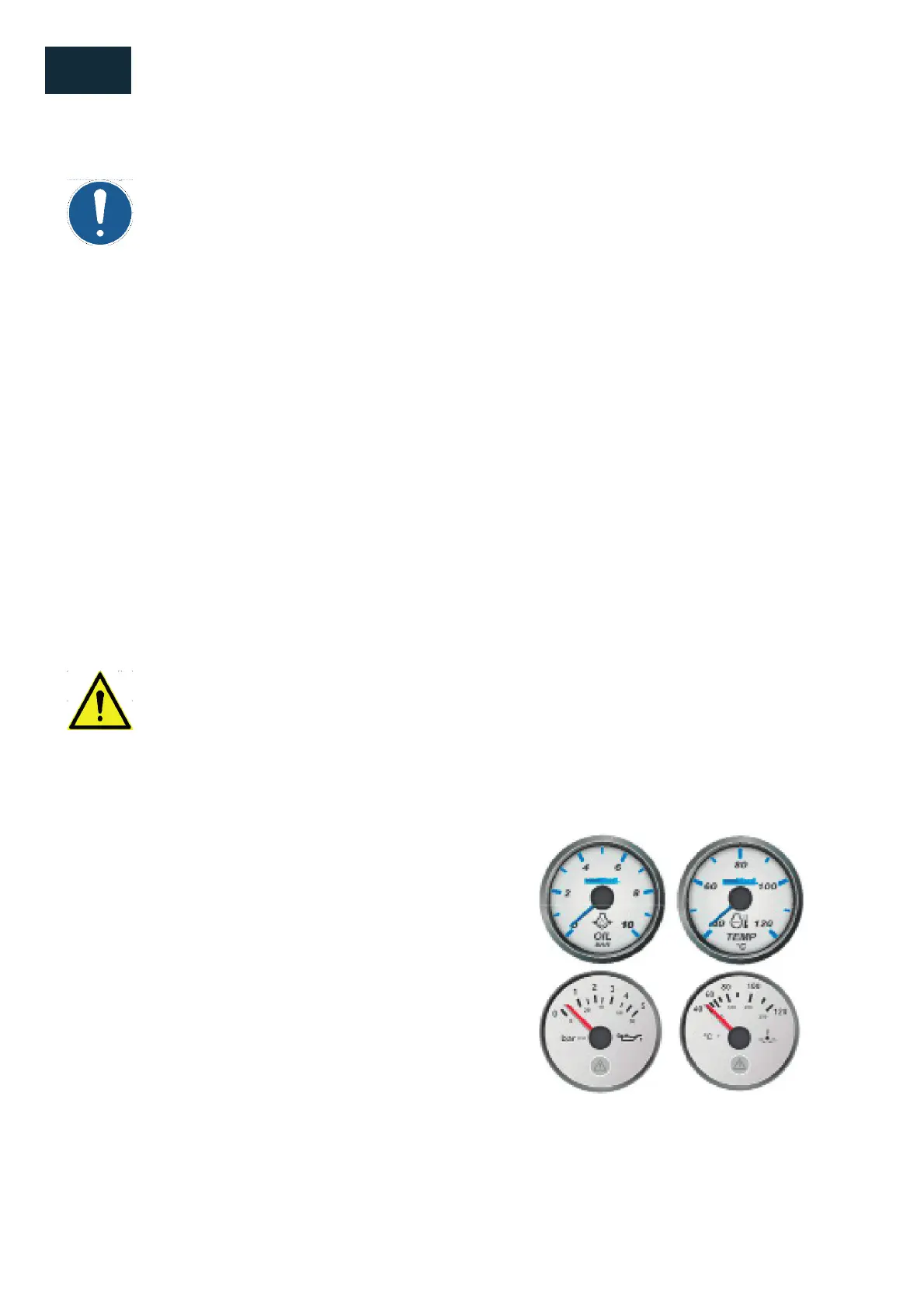
1. Check oil pressure gauge as soon as engine starts.
If gauge needle does not level up to minimum oil
pressure specification within 5 seconds, stop the
engine and determine the cause.
2. Watch coolant temperature gauge. Do not place
engine under full load until properly warmed up.
It is a good practice to operate the engine under a lighter
load and at lower speeds than normal for the first few
minutes after start-up.
STARTING WITH BOOSTER BATTERIES
CAUTION !
Make sure to use batteries with the same rated voltage as
the engine’s system voltage. On an engine with a two pole
electrical system, connect the other end of the jumper
cable to the negative pole (-) of the booster battery.
1. Connect the jumper cable to the positive pole (+) of
the flat battery, then to the positive pole (+) of the
booster battery.
2. Connect the jumper cable to the negative pole (-) of
the booster battery. Connect the other end to a bolt
of the engine block.
Start the engine following the starting procedure:
3. Let the engine run at idle for few minutes to charge
the battery.
4. Stop the engine and remove the cables in the exact
reverse order from installation.
ENGINE RELUCTANT TO START
If a water lift (water lock) muffler is installed on the
exhaust line, excessive cranking could cause seawater
to enter the cylinders and damage the engine. To start
engine, reduce starting attempts to three and if not OK,
undertake to do this:
1. Close the seacock to avoid filling the muffler with
water.
2. Try to start the engine by following the regular starting
procedure.
3. When the engine does start, stop the engine
immediately and turn off the switch.
4. Re-open the seacock and restart the engine.
IDLING ENGINE
Avoid excessive engine idling as it may cause the coolant
temperature to fall below its normal range. This, in turn,
causes crankcase oil dilution, due to incomplete fuel
combustion, and permits formation of gummy deposits
on valves, pistons, and piston rings. It also promotes
rapid accumulation of engine sludge and unburned fuel in
the exhaust system.
Once an engine is warmed to normal operating
temperatures, engine should be idled at slow idle speed.
Slow idle speed for engine is set at the factory. If an
engine is left idling for more than 5 minutes, stop and
restart later.
Above: typical temperature and pressure Type 5 and 4 gauges


 To Next Page
 Loading...