Need help?
Do you have a question about the Narada 12NDT190 and is the answer not in the manual?
Essential safety guidelines for handling and operating batteries, including fire prevention and personal protection.
Details about product features such as long life, seal performance, and discharge capabilities.
Lists primary applications for the battery series, like telecom, UPS, and power systems.
Provides a table listing different battery models, their specifications, and physical dimensions.
Shows diagrams and specifications for battery terminal types.
Explains the chemical reactions and operational principle of lead-acid batteries.
Describes how battery performance is evaluated based on discharge voltage and time.
Presents detailed discharge data tables for various battery types under different conditions.
Illustrates battery voltage and capacity changes during charging over time.
Provides data on battery internal resistance and short circuit current at 25°C.
Details optimal temperature, humidity, and ventilation requirements for battery operation.
Explains battery capacity, rated vs. actual, and factors affecting it.
Explains the relationship between ambient temperature, battery capacity, and lifespan.
Guides on setting floating voltage for optimal battery condition and lifespan.
Details the process and voltage requirements for equalization charging.
Outlines conditions and methods for equalization and regular battery charging.
Covers battery self-discharge, storage temperature, and supplemental charging.
Outlines instruments, tools, and tasks for monthly, quarterly, yearly, and three-year maintenance.
Lists critical precautions regarding insufficient charge, overcharge, temperature, and discharge.
The Narada Acme range of Valve Regulated Sealed Lead Acid (VRLA) batteries, featuring a front access design, is a robust power solution detailed in this operation manual (Version 4.2). These batteries are engineered for long life and reliable performance, making them suitable for various critical applications.
The Narada Acme series batteries operate on the principle of lead-acid chemical reactions. During discharge, lead (Pb) and lead dioxide (PbO2) react with sulfuric acid (H2SO4) to form lead sulfate (PbSO4) and water (H2O). The charging process reverses this reaction. A key feature of the Acme series is its sealed structure, achieved through a "barren-liquor" design and AGM (Absorbent Glass Mat) separator. This design creates a path between the positive and negative plates, allowing oxygen generated at the positive plate to diffuse to the negative plate and recombine quickly into water. Special alloy grids are used to increase the hydrogen over-potential gassing on the negative plate, preventing hydrogen generation and enabling the sealed, maintenance-free operation. This recombination efficiency reaches 99%, eliminating acid spillage and equipment erosion.
The Acme series offers a range of models with varying capacities and dimensions. For instance, the 12NDT26 model has a 12V nominal voltage and a 10-hour rated capacity (C10) of 26Ah, measuring 250mm (Length) x 97mm (Width) x 148.5mm (Height) and weighing 9.3Kg. Larger models like the 12NDT190 have a 12V nominal voltage and a 10-hour rated capacity of 190Ah, with dimensions of 558mm (Length) x 125mm (Width) x 316mm (Height) and a weight of 60.5Kg. The internal resistance, a dynamic nonlinear parameter, varies by model and is lowest when the battery is fully charged. For example, the 12NDT26 has an internal resistance of 10.3 mΩ, while the 12NDT190S has 4.276 mΩ. Corresponding short-circuit currents range from 1218A for the 12NDT26 to 3200A for the 12NDT180/12NDT190.
The optimal operating temperature for Acme series batteries is 15℃~25℃. They can discharge in temperatures ranging from -40℃ to 50℃, charge from -20℃ to 50℃, and be stored from -20℃ to 40℃. Ambient humidity should be ≤95%. The recommended floating voltage at 25℃ is 13.5V/block, with a temperature compensation factor of -18mV/℃/block. Equalization charging voltage at 25℃ is 14.1V/block, with a compensation factor of -30mV/℃/block.
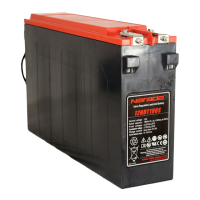
The Acme range is primarily designed for telecom standby systems, UPS systems, and power systems. Its unique rack-line dimension design, created by Narada in China, features a long and narrow construction for good heat dispersion. Both positive and negative posts are located on one side of the battery, facilitating monitoring and maintenance. Flexible connectors are available to meet client demands, and the system incorporates a patent gas collecting system.
The batteries boast excellent high-rate discharge performance due to cross-wall welding between cells, which minimizes internal resistance, and a superior grid radiates style design. Patent paste technology and optional copper core cables or copper bars further enhance performance.
Proper charging is crucial for battery longevity. The manual provides detailed charge performance curves and guidelines for both floating and equalization charging. Equalization charging is recommended if more than two batteries in a group have a voltage under 13.0V, or after more than three months of floating operation. The recommended method is constant current charging (not exceeding 0.2C10A) until the average voltage reaches 14.1V/block (at 25℃), followed by constant voltage charging at 14.1V/block for 24 hours. Fast charging is an option for immediate full charge, with a limit current not larger than 0.2C10A and a charge voltage of 14.1V/block (at 25℃). Full charge is indicated when the charging time reaches 18-24 hours (shorter for less deep discharges) or when the charge current remains constant for three continuous hours under constant voltage.
Storage guidelines emphasize the importance of ambient temperature, as it affects the self-discharge rate. The recommended storage temperature range is 5℃ to 30℃ in a clean, ventilated, and dry environment. Supplemental charging is required if the open circuit voltage drops below 12.6V/block, with maximum storage periods of 3 months above 30℃ and 6 months below 30℃ before a refresh charge is needed. All batteries should be fully charged before storage.
The manual outlines a comprehensive maintenance schedule to ensure optimal performance and extend battery life.
Monthly Maintenance:
Quarterly Maintenance:
Yearly Maintenance:
Three-year Maintenance:
The manual highlights several critical precautions:
Safety instructions include warnings against smoking or open flames near batteries, using organic solvents for cleaning, and removing battery components due to the presence of electrolyte. Battery replacement should only be performed by trained service engineers using insulated tools, and local regulations for disposal must be followed. The product has passed UL Safe authentication.
 General
| Brand | Narada |
|---|---|
| Model | 12NDT190 |
| Category | Camera Accessories |
| Language | English |


 To Next Page