2. At the LOADER prompt, access the special drivers specifically designed for system-level diagnostics to
function properly:
boot_diags
3. Select Scan System from the displayed menu to enable running the diagnostics tests.
4. Select Test Memory from the displayed menu.
5. Proceed based on the result of the preceding step:
◦ If the test failed, correct the failure, and then rerun the test.
◦ If the test reported no failures, select Reboot from the menu to reboot the system.
Step 6: Return the failed part to NetApp
After you replace the part, you can return the failed part to NetApp, as described in the RMA instructions
shipped with the kit. Contact technical support at
NetApp Support, 888-463-8277 (North America), 00-800-44-
638277 (Europe), or +800-800-80-800 (Asia/Pacific) if you need the RMA number or additional help with the
replacement procedure.
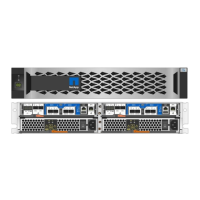
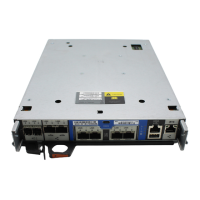
Replace a PCIe card - AFF A800
To replace a PCIe card, you must disconnect the cables from the cards, remove the SFP
and QSFP modules from the cards before removing the riser, reinstall the riser, and then
reinstall the SFP and QSFP modules before cabling the cards.
• You can use this procedure with all versions of ONTAP supported by your system
• All other components in the system must be functioning properly; if not, you must contact technical support.
Step 1: Shut down the impaired controller
Shut down or take over the impaired controller using the appropriate procedure for your configuration.
Option 1: Most configurations
To shut down the impaired controller, you must determine the status of the controller and, if necessary, take
over the controller so that the healthy controller continues to serve data from the impaired controller storage.
About this task
If you have a cluster with more than two nodes, it must be in quorum. If the cluster is not in quorum or a healthy
controller shows false for eligibility and health, you must correct the issue before shutting down the impaired
controller; see the
Administration overview with the CLI.
Steps
1. If AutoSupport is enabled, suppress automatic case creation by invoking an AutoSupport message:
system node autosupport invoke -node * -type all -message
MAINT=number_of_hours_downh
The following AutoSupport message suppresses automatic case creation for two hours: cluster1:*>
system node autosupport invoke -node * -type all -message MAINT=2h
2.
Disable automatic giveback from the console of the healthy controller:
storage failover modify
–node local -auto-giveback false
3. Take the impaired controller to the LOADER prompt:
1022


 To Next Page
 Loading...