
 Need help?
Do you have a question about the NETGEAR Nighthawk X6S R8000P and is the answer not in the manual?
Lists the router, Ethernet cable, and power adapter included for initial setup.
Guides users on orienting the router antennas to 90 degrees for optimal WiFi performance.
Instructions for restarting the modem and connecting it to the router's yellow Internet port.
Explains how to connect devices to the router's WiFi network using the provided SSID and password.
Information on downloading free NETGEAR apps for enhanced router management and features.
Details the NETGEAR genie app for personal dashboard, control, and remote network management.
Describes ReadySHARE Vault for automatic backup and ReadyCLOUD for secure cloud access to USB storage.
Guidance on visiting NETGEAR support website for registration, help, manuals, and community forums.
Links to EU Declaration of Conformity and general regulatory compliance information for the product.
This document provides a quick start guide for the Nighthawk X6S AC4000 Tri-Band WiFi Router, model R8000P, outlining its setup, connection, and key features.
The Nighthawk X6S AC4000 Tri-Band WiFi Router is designed to provide a robust and high-performance wireless network for homes and small offices. Its primary function is to create a WiFi network, allowing multiple devices to connect to the internet wirelessly. The "Tri-Band" designation indicates that the router operates on three distinct WiFi bands, typically one 2.4 GHz band and two 5 GHz bands. This configuration helps to distribute network traffic more efficiently, reducing congestion and improving overall performance, especially in environments with many connected devices or high-bandwidth activities like streaming and gaming. The "AC4000" refers to the theoretical maximum combined speed of the router across all its bands, indicating its capability for very fast data transfer rates.
The router acts as the central hub for your home network, connecting to your internet service provider's modem and then broadcasting a WiFi signal. It manages the flow of data between your connected devices (computers, smartphones, tablets, smart home devices, etc.) and the internet. By supporting multiple bands, it can assign devices to the least congested band, ensuring optimal speed and reliability for each connection. For instance, older devices or those further away might connect to the 2.4 GHz band for better range, while newer, closer devices requiring higher speeds can utilize the 5 GHz bands.
Beyond basic internet connectivity, the Nighthawk X6S offers advanced networking features. It includes multiple Ethernet ports for wired connections, which are ideal for devices that require stable, high-speed connections, such as desktop computers, gaming consoles, or network-attached storage (NAS) devices. The router also supports USB connectivity, allowing users to connect external storage devices (like USB hard drives) to create a network-accessible storage solution. This enables file sharing across the network and can be used for centralized backups.
Setting up the Nighthawk X6S router is designed to be straightforward. The quick start guide emphasizes a simple, step-by-step process.
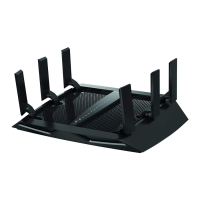
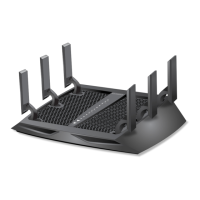
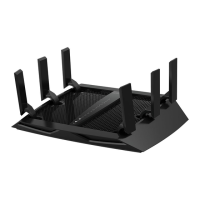
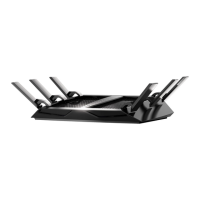
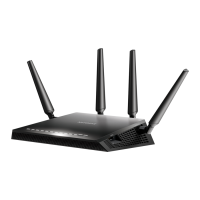
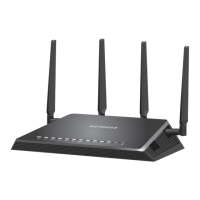
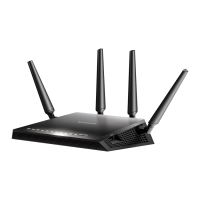
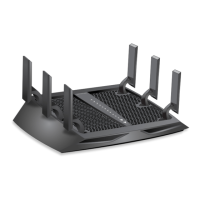
Antenna Positioning: For optimal WiFi performance, the router features multiple external antennas that should be positioned at a 90-degree angle. This helps to maximize signal coverage and strength throughout your home.
Modem Connection: The first step in connecting the router involves restarting your existing modem. This often includes unplugging it, removing and replacing any backup battery, and then plugging it back in. Once the modem is ready, an Ethernet cable is used to connect the modem's Ethernet port to the router's dedicated yellow "Internet" port. This establishes the physical link between your internet service and the router. For users whose internet connection does not require a separate modem, the main Ethernet cable from the internet service directly connects to the router's yellow Internet port.
Power Connection: After connecting to the modem, the router is powered on using the provided power adapter. The router's Power LED indicates its status, initially lighting amber and then turning white when it is ready for operation.
WiFi Connection: Once the router is powered on and ready, users can connect their WiFi-enabled devices. Each router comes with a preassigned WiFi network name (SSID) and a network key (password), which are typically found on a label on the router itself. Users access their device's WiFi connection manager, select the router's SSID, and enter the password to establish a wireless connection.
Initial Configuration: After connecting to the WiFi, users are instructed to launch a web browser. The router is designed to automatically display an installation assistant. If it doesn't, users can manually navigate to www.routerlogin.net. For initial login, the default username is "admin" and the default password is "password." The installation assistant guides users through the remaining setup steps, which may include customizing network settings, updating firmware, and setting up security features. The Internet LED on the router lights solid white once it successfully connects to the internet.
Wired Connections: For devices requiring a more stable or faster connection than WiFi, the router provides multiple Gigabit Ethernet LAN ports. These ports allow direct wired connections to computers, gaming consoles, smart TVs, or other network devices.
USB Storage: The router includes USB ports (typically USB 3.0 for faster data transfer) that allow users to connect external USB storage devices. This feature, often supported by NETGEAR's ReadySHARE® functionality, transforms the router into a basic network-attached storage (NAS) device. Users can then access files on the connected USB drive from any device on their network, facilitating centralized file storage and sharing.
While the document primarily focuses on initial setup, it also hints at ongoing management and support features that contribute to the router's maintenance and user experience.
NETGEAR Genie App: The NETGEAR genie® app is highlighted as a personal dashboard for monitoring, controlling, and repairing the home network. This app provides a user-friendly interface for managing router settings, viewing connected devices, checking network status, and troubleshooting common issues. Its remote access capability allows users to manage their network even when they are away from home, which is useful for tasks like pausing internet access for specific devices or checking network security.
ReadySHARE® Vault: This feature is described as free software for automatic backup of Windows computers to a USB hard drive connected to the router. This provides a convenient way to maintain backups of important data without needing a separate backup server or cloud service, enhancing data security and recovery options.
ReadyCLOUD®: This app offers personal and secure cloud access to USB storage connected to the router, anytime and anywhere. This extends the utility of the USB storage feature by allowing users to access their files remotely, essentially creating a personal cloud storage solution. This is a valuable maintenance feature for ensuring access to important documents or media files while on the go.
Online Support Resources: NETGEAR provides comprehensive online support resources. Users can visit www.netgear.com/support to register their product, get help, access the latest downloads (which often include firmware updates for improved performance and security), and view user manuals. The support website also hosts a community forum where users can interact, share solutions, and get advice from other users or NETGEAR representatives. Using official NETGEAR support resources is recommended for reliable assistance.
Firmware Updates: Although not explicitly detailed in the quick start guide, routers like the Nighthawk X6S regularly receive firmware updates. These updates are crucial for maintaining the router's security, fixing bugs, and introducing new features or performance enhancements. The NETGEAR genie app or the router's web interface typically provides notifications and tools for applying these updates, ensuring the router operates with the latest software.
Regulatory Compliance: The document points to resources for regulatory compliance information and EU Declaration of Conformity, which are important for ensuring the device meets safety and environmental standards. While not a direct maintenance feature, it assures users of the product's adherence to necessary regulations.
In summary, the Nighthawk X6S AC4000 Tri-Band WiFi Router is a powerful networking device designed for ease of use and high performance. Its tri-band architecture, multiple antennas, and Gigabit Ethernet ports ensure robust connectivity. The integration of USB storage features with ReadySHARE® and ReadyCLOUD® adds significant value by enabling network-attached storage and personal cloud capabilities. Supported by the NETGEAR genie app and extensive online resources, the router offers a comprehensive solution for managing and maintaining a modern home network.
 General
| RAM | 512MB |
|---|---|
| Flash Memory | 128MB |
| USB Ports | 1 x USB 3.0, 1 x USB 2.0 |
| Antenna | 6 external antennas |
| Beamforming | Yes |
| MU-MIMO | Yes |
| Dynamic QoS | Yes |
| Smart Connect | Yes |
| VPN Support | Yes |
| Guest Network | Yes |
| Parental Controls | Yes |
| WiFi Technology | Tri-Band WiFi |
| WiFi Speed | Up to 4Gbps |
| Wireless Standard | 802.11ac |
| Frequency Band | 2.4GHz, 5GHz |
| Processor | 1.8GHz dual-core processor |
| Ethernet Ports | 1 WAN & 4 LAN Gigabit Ethernet ports |

 To Next Page