Mobile Home
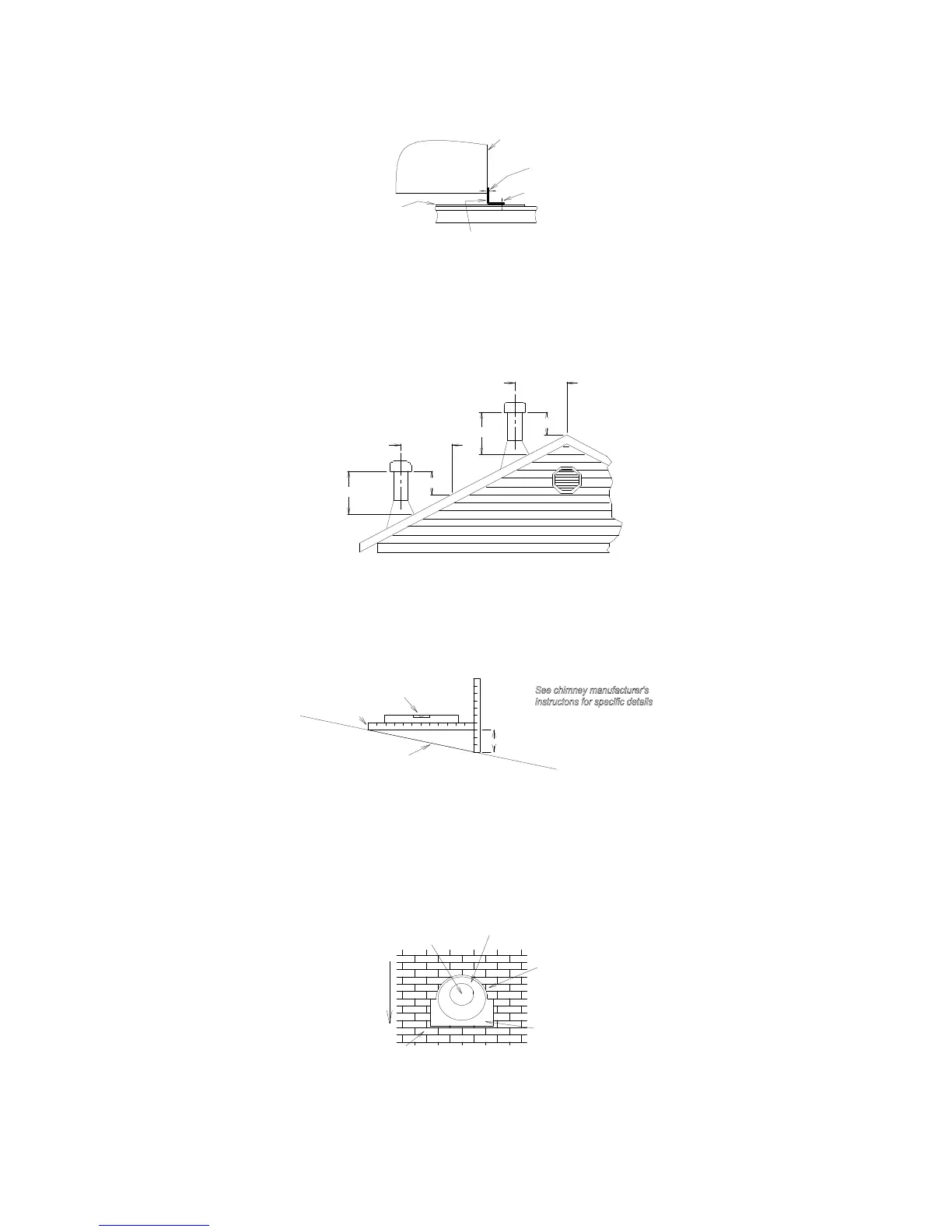
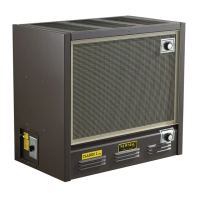
Heater
Sheet metal screws
Rear of heater
Wood screws
Steel bracket
Floor
Stoveboard
FLOOR ANCHOR INSTALLATION AS SEEN FROM SIDE
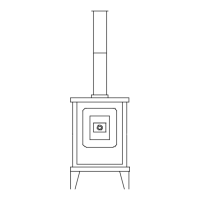
11. Use chimney connector or stovepipe adapter JM586ASE for connecting approved pipe between chimney and cast
flue collar on top of heater.
12. Install chimney length as required.
NOTE: The chimney must be at least 3 feet above the highest point where it passes through the roof of the building
and not less than 2 feet above the highest roof surface or structure within 10 feet horizontally. Not more than 8” of
chimney cap above the top of the flue may be considered in computing this height.
Min 10 ft
Min 3 ft
Min 2 ft
Min 3 ft
0 to 10 ft
Min 2 ft
BASIC RULE FOR CHIMNEY TERMINATION HEIGHTS ABOVE ROOF
13. Install roof flashing (JSC6 ATC, AFA, AF2, or AF3 - USA), (JM6 ATC, F1, or F2 – Canada), storm collar and rain
cap.
a. Ensure that you have the proper roof flashing; check your roof pitch using a level and two rulers.
Level
12" rule
Roof
Pitch 3/12
ROOF PITCH
See the manufacturer’s catalog and instructions for flashing and pitch recommendations.
b. Slide a Roof Flashing suitable to your roof slope over the chimney. Place the top edge of flashing plate under
the shingles. Tighten the roof-flashing band around the chimney.
NOTE: At the top edge of the flashing plate, lift the shingles and nail the plate to the roof deck. Then cement
shingles to plate with suitable waterproof mastic.
Chimney roof flashing
Roof shingles
Shingles over flashing
Flashing over shingles
Direction of slope
water runoff
Chimney opening
Roof cement as required
ROOF FLASHING



 To Next Page