Need help?
Do you have a question about the Niles HD8R and is the answer not in the manual?
This document is an installation and operation guide for Niles High Definition In-Wall Loudspeakers, specifically models HD5, HD6, HD8, and HD8.3. These speakers are designed for superior sonic quality, aiming to reproduce subtle nuances in music and powerful action in movies. They are suitable for both new construction and existing homes, offering a three-stage installation system that allows for parts to be installed at different construction phases.
Niles High Definition In-Wall Loudspeakers are designed to deliver high-fidelity audio discreetly within a wall or ceiling. They feature advanced technology components to ensure accurate and dynamic sound reproduction. The speakers are part of a system that includes a speaker kit and a corresponding bracket kit for installation.
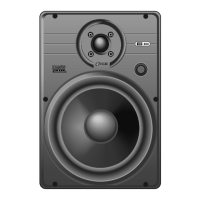
The core of the speaker's performance lies in its custom-designed components. The woofers are injection-molded with TCC™ (Talc, Carbon, and Ceramic) material, combined with a Butyl Rubber Surround. This material choice provides extreme stiffness and light weight, crucial for accurate and dynamic bass response. The woofers also incorporate a vented pole piece, which enhances bass linearity and improves midrange damping and clarity. A custom debris screen protects the woofer from foreign objects.
The tweeters are 1-inch Teteron Tri-laminate designs. This tri-laminate structure consists of an inner textile layer for the dome, a high damping layer to suppress unwanted resonances, and an outer urethane layer for added stiffness and to prevent breakup modes. This design aims to produce a transparently clear, sweet, and natural-sounding treble with extended frequency response. The tweeter is housed in a precision adjustment mechanism, allowing installers to accurately position it after installation for optimal performance, minimizing diffraction distortion often associated with traditional pivoting tweeters.
The speaker baffle itself is engineered with Antiresonant Wave Bracing. This design incorporates specially molded ribs that increase the baffle's rigidity and raise its resonant frequency. This helps to reduce "out-of-phase" cancellation and ensures that bass tones remain rich and dynamic by shifting vibration modes away from low-bass canceling frequencies.
For enhanced control and customization, the speakers feature front-mounted Bass and Treble controls on the baffle. These controls enable instant fine-tuning of the audio after installation, helping to compensate for less-than-perfect speaker placement or unique room acoustics.
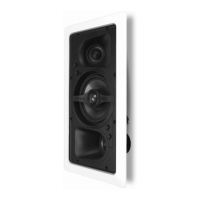
The mounting system is a key feature, designed for an "Absolutely Flush to the Wall" appearance. It powerfully clamps the frame to the bracket, sandwiching the wall material uniformly around the frame. This prevents shadows or gaps between the wall and the frame and stiffens the surrounding drywall, minimizing resonance.
The speakers are also designed to accommodate a Niles MS-110 MicroSensor®, a miniature infrared sensor. The speaker baffle has a dedicated locator for this sensor, allowing it to be installed discreetly behind the aluminum grille. This minimizes wall clutter and enables remote control of equipment from up to 15 feet away (or 9-15 feet when placed behind the grille).
The Niles HD In-Wall Loudspeakers offer several features that enhance their usability and integration into various audio systems and home environments.
Installation Flexibility: The three-stage installation system is a significant advantage, particularly for new construction. In Stage One (before drywall), the bracket and wings are installed, and the wall cavity can be insulated. In Stage Two (before paint), the frame is screwed to the bracket, and the rustproof aluminum grilles can be provided to the painter for matching the room's decor. Finally, the speaker baffle is installed after construction is complete, protecting the valuable speaker from theft or damage during the building process. For existing walls, a retrofit installation is made simple with a supplied template for accurate hole cutting and a mounting system that secures the bracket to the frame, sandwiching the drywall.
Speaker Placement Considerations: The guide provides detailed advice on speaker placement for both critical listening and home theater rear applications. For critical listening, it emphasizes placing speakers equidistant from the listening spot and at least half the listening distance apart to maintain a pleasant stereo image. For home theater, it suggests spacing left and right main speakers farther apart for a "bigger than life" sound, while also considering the "good placement zone" for music. The "Boundary Effect" is explained, advising users to keep speakers at least two or three feet from room boundaries if tone controls are neutral, to avoid excessive boominess. For varying listening positions, especially in larger rooms or commercial settings, adding multiple pairs of speakers is recommended to create a more consistent sound ambiance and avoid "hot spots" of loud sound. For home theater rear applications, techniques like mounting speakers high in the wall or near corners to create reflections are suggested to simulate an array of speakers, enhancing the "surround" effect.
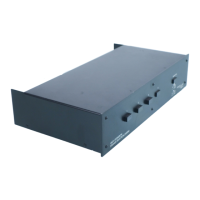
Volume Control Integration: For multiroom systems, the guide strongly recommends incorporating local volume controls for convenience. Niles offers a range of in-wall volume controls in various styles (Standard or Decora®) that connect in line with the speakers.
Wiring Guidance: The manual provides clear instructions on speaker wire selection, recommending 16 or 18 gauge stranded wire for runs up to 80 feet, and 14 gauge for longer runs up to 200 feet. It also highlights the importance of using CL-2 or CL-3 jacketed wire for in-wall runs to comply with fire prevention codes. For existing walls, detailed steps are provided for concealing speaker wire, including using a coat hanger to check for obstructions and drilling techniques. It also advises on avoiding electrical cables to prevent hum and suggests routes through attics, basements, or even behind baseboards and doorjambs.
IR Sensor Integration: The speaker baffle includes a locator for the Niles MS110 MicroSensor®, allowing for discreet integration of infrared remote control capabilities. This means users can control their audio/video equipment by pointing their remote at the speaker, minimizing visible wall clutter.
Adjustable Tweeter: The precision adjustment mechanism of the tweeter allows users to fine-tune the direction of high frequencies after installation. This is done by rotating the tweeter housing (with indexed "clicks" for equal adjustment between speakers) and pivoting it to achieve the desired angle, optimizing sound for the listening area.
Bass and Treble Controls: The front-mounted Bass and Treble controls offer approximately 3dB of reduction in 1dB steps. This allows users to compensate for room acoustics, such as placing speakers near boundaries (Bass Cut) or in rooms with highly reflective surfaces (Treble Cut), ensuring optimal sound balance.
Speaker Phase Test: A simple test is provided to ensure speakers are "in-phase," which is crucial for rich bass and overall sound quality. By playing mono music and reversing connections on one amplifier channel, users can identify the correct phasing by listening for richer bass and louder sound.
The Niles HD In-Wall Loudspeakers are designed with durability and ease of maintenance in mind, ensuring long-term performance and aesthetic appeal.
Moisture Resistant Construction: The speakers are built to withstand high moisture environments. The drivers are impervious to moisture, the grille is made of powder-coated aluminum, and all exposed hardware is stainless steel. This makes them suitable for use in bathrooms, kitchens, or covered outdoor areas, though direct contact with water should be avoided as they are not waterproof.
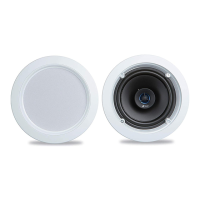
Paintable Grilles: The aluminum grilles are designed to be painted to match the surrounding wall or ceiling color. The factory powder coat acts as an ideal primer. The guide provides specific instructions for painting, recommending thin coats of spray paint or thinned paint with an applicator to avoid filling the hundreds of precisely sized perforations, which are crucial for the grille's acoustically transparent quality.
Easy Speaker Removal: Should the speaker need to be removed for maintenance or upgrade, the guide provides clear steps. After removing the grille, two small screwdrivers or needle-nose pliers can be used to release the snaps holding the speaker baffle to the frame. This design allows for easy removal without damaging the frame.
Cleaning: The speakers can be cleaned with a dampened soft cloth or paper towel. For speakers mounted high on a wall or ceiling, a broom can be used to gently brush off dust and debris, maintaining their appearance and acoustic performance.
Robust Mounting System: The mounting system is designed for secure installation. In new construction, the bracket is screwed to the studs, and the frame is then screwed to the bracket. For existing walls, the bracket slips behind the drywall and is secured to the frame, sandwiching the drywall. This robust system ensures the speaker remains flush and stable over time. For ceiling installations or in earthquake zones, additional sheet metal screws are provided to secure the baffle to the frame, enhancing safety and stability.
 General
| Type | In-Ceiling |
|---|---|
| Impedance | 8 Ohms |
| Woofer Size | 8 inches |
| Woofer Cone Material | Polypropylene |
| Sensitivity | 90dB |
| Tweeter | 1 inch |
| Frequency Response | 45Hz - 21kHz +/-3dB |


 To Next Page