
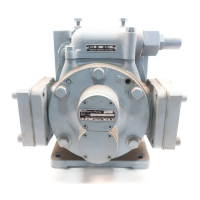
Do you have a question about the Nippon Oil Pump Trochoid Pump and is the answer not in the manual?
| Brand | Nippon Oil Pump |
|---|---|
| Model | Trochoid Pump |
| Category | Water Pump |
| Language | English |
Covers essential safety equipment, measures, and warnings for pump operation to prevent injury and damage.
Details general pump installation, placement relative to oil level, and consultation for out-of-range usage.
Specifies mounting orientation for different configurations and suitable installation site conditions, avoiding environmental hazards.
Covers tightening torque, sealing, pipe supports, and pressure gauge installation for secure pipe connections.
Emphasizes pipe cleaning before connection, material suitability, and checking internal diameters for optimal flow.
Details selection of suction pipes, managing fluid velocity, pressure resistance, and preventing air/foam entry.
Recommends selecting discharge pipes wide enough for fluid flow at 3m/s or less to ensure efficiency.
Advises installing suction filters (150-mesh) for removing debris and ensuring pump longevity and performance.
Instructions on checking pump rotation, connections, oil supply, and wiring before starting operation.
Guidance on performing initial pump tests, including dry runs, priming procedures, and confirming motor direction.
Procedures for daily pre-start checks, focusing on oil leaks, abnormal noise, and heating.
Recommends annual inspections to ensure correct operation, potentially at manufacturer's facility.
Advises on keeping spare parts, regular oil changes, and handling stored motors for optimal performance.
Outlines warranty terms, coverage limitations, and conditions for faults outside specifications or customer modifications.
Guides selection based on required flow rate and pressure, referring to catalogs and respecting motor ratings.
Explains relief valve settings, types (internal/external return), and operational precautions for safety and control.
Details suitable fluids, self-lubrication, and precautions for specific liquids like fuel oil or coolant.
Specifies operational temperature limits for pumps and motors, and risks associated with exceeding these ranges.
Defines permissible oil temperature ranges, operating pressure limits, and temperature gaps between pump and oil.
Lists viscosity limits for different pump series and describes effects of viscosity on required power and performance.
Explains fixed rotation, setting motor direction per nameplate, and consequences of incorrect rotation on oil seals.
Advises on selecting motors with adequate power margin, considering oil viscosity, temperature, and performance curves.
Stresses matching power supply voltage and frequency to motor specifications to prevent damage or performance issues.
Guides motor selection based on installation environment, recommending outdoor or explosion-proof types as needed.
Describes different drive methods (motor types, power sources) and emphasizes shaft alignment within 0.05mm TIR.
Sets suction head and pressure limits, and notes factors affecting suction capability like discharge resistance and air entry.
Lists possible causes and remedies for insufficient flow or pressure, including cavitation, blockages, and incorrect rotation.
Details causes and solutions for oil leaks, focusing on oil seal issues related to rotation, temperature, and material compatibility.
Explains causes like overloading or power issues, and how to reset breakers or address motor/power supply problems.
Covers causes like high suction resistance, viscosity, or misalignment, and their remedies for abnormal pump noise.
Loading...