[ Edit: 2012/ 4/ 9 Model: E26-A ]
1-12 Safety — seats, seat belts and supplemental restraint system
. If the seat belt in the position where a child
restraint system is installed requires a lock-
ing clip or another locking device and if it is
not used, injuries could result from a child
restraint system tipping over during normal
vehicle braking or cornering.
. After attaching a child restraint system, test
it before you place the child in it. Tilt it from
side to side. Try to tug it forward and check if
it is held securely in place. The child restraint
system should not move more than 25 mm (1
in). If the restraint is not secure, tighten the
belt as necessary, or install the restraint in
another seat and test it again.
. Check the child restraint system in your
vehicle to be sure that it is compatible with
the vehicle’s seat belt system.
. If a child restraint system is not anchored
properly, the risk of a child being injured in a
collision or a sudden stop greatly increases.
. Improper use of a child restraint system can
increase the risk or severity of injury for both
the child and other occupants in the vehicle.
. Always use an appropriate child restraint
system. An improperly installed child re-
straint system could lead to serious injury
or death in an accident.
. When the child restraint system is not in use,
keep it secured with a seat belt to prevent it
from being thrown around in case of a
sudden stop or accident.
NISSAN recommends that infants and small children
be seated in a child restraint system. You should
choose a child restraint system that fits your vehicle
and always follow the manufacturer’s instructions for
installation and use. In addition, there are many types
of child restraint systems available for larger children
that should be used for maximum protection.
CAUTION:
Remember that a child restraint system left in a
closed vehicle can become very hot. Check the
seating surface and buckles before placing your
child in a child restraint system.
INSTALLATION OF CHILD RESTRAINT
SYSTEM
GUID-43D48CD3-4654-4B0F-B5C0-7EAC8A35AF4C
Installation on rear seats - three-point type
seat belts without automatic locking mode
GUID-CAC0CBED-BC54-4913-B029-99607306BC66
WARNING:
The direction of the child restraint system
depends on the type of the child restraint system
and the size of the child.
Front-facing:
GUID-896AA31A-81D 0-4E9B-81ED-1F58D53AA854
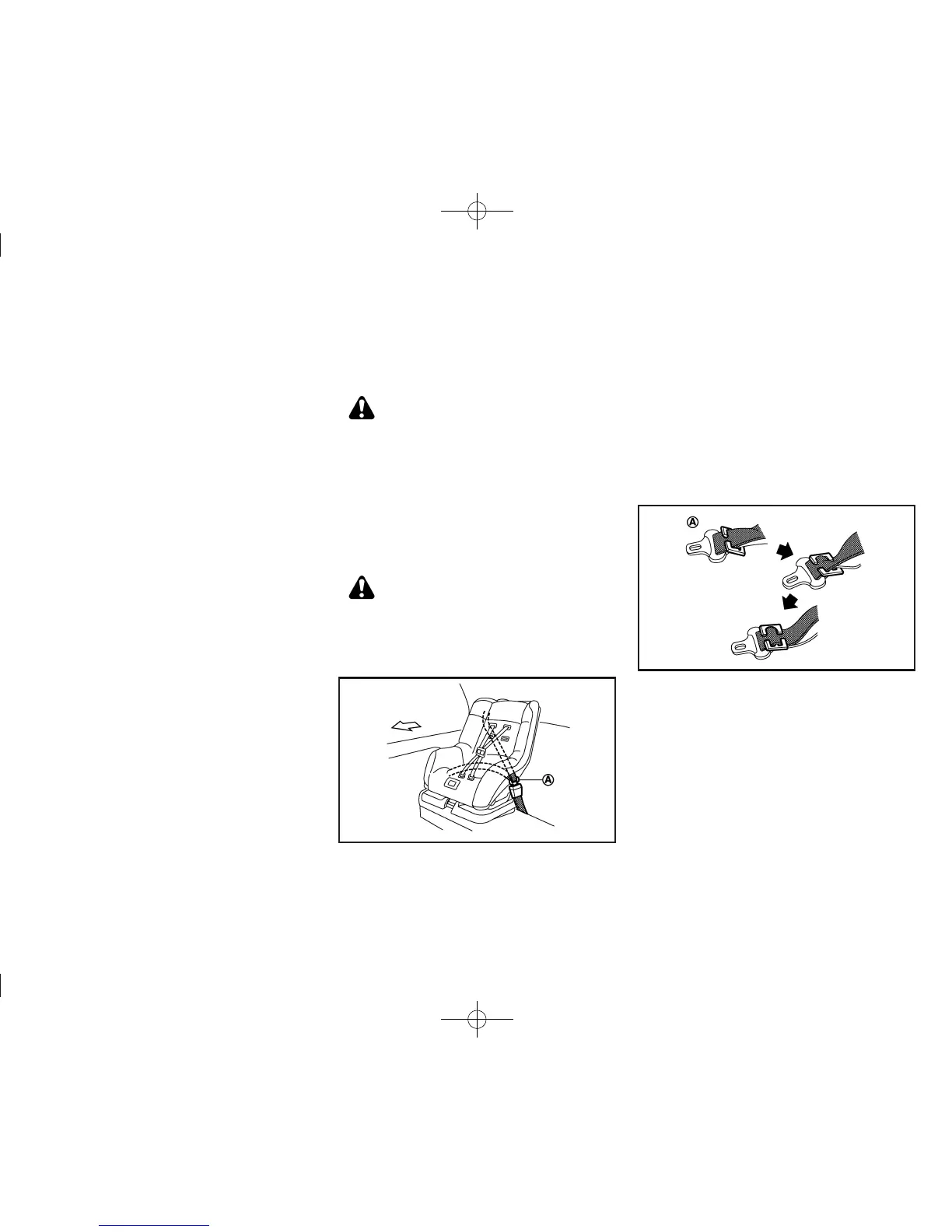
SSS0374A
When you install a front-facing child restraint system
on the rear seat, follow these steps:
1. Position the front-facing child restraint system on
the rear seat.
Always follow the child restraint system manufac-
turer’s instructions for installation and use.
2. Route the seat belt tongue through the child
restraint system and insert it into the buckle until
you hear and feel the latch engage.
SSS0513
To prevent slack in the lap belt, it is necessary to
secure the shoulder belt in place with a locking
clip
*
A
. Use the locking clip or another locking
device attached to the child restraint system.
Be sure to follow the child restraint system
manufacturer’s instructions for belt routing.
3. Test the child restraint system before you place
the child in it. Tilt it from side to side. Try to tug it
forward and check if it is held securely in place.
4. Make sure that the child restraint system is
properly secured prior to each use.


 To Next Page
 Loading...