
 Need help?
Do you have a question about the Nittan CKLD-KPT2 and is the answer not in the manual?
Explains danger, warning, caution markings and provides general safety rules for safe operation.
Details specific warnings regarding wet conditions, temperature limits, humidity, modification, and correct wiring polarity.
Provides important notes on installation procedures, operational switch settings, and cleaning recommendations for the detector.
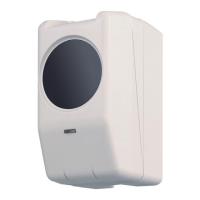
Identifies and illustrates the various parts of the Transmitter unit, including indicators, lenses, and adjustment controls.
Identifies and illustrates the various parts of the Receiver unit, including indicators, switches, and adjustment controls.
Details the process of fixing the mounting base to the wall and attaching the detector unit securely.
Explains how to open and hold the detector cover, fasten the fixing screw, and includes a critical warning about the status switch.
Presents a wiring example, connection requirements for remote stations and control panels, and notes on polarity sensitivity.
Describes the function of Collimation Dials X and Y for adjusting the light axis in vertical and horizontal directions.
Outlines the step-by-step process for adjusting the light axis of both the Transmitter and Receiver units.
Details initial steps including status switch setting, powering up, and selecting the distance range for the detector.
Guides the user on adjusting the Light Intensity Adjustment Volume based on indicator feedback for optimal performance.
Explains how to interpret the light intensity indicators, finalize the adjustment, and the detector's initialization sequence.
Covers monitoring operational voltage and the procedure for re-adjustment if the detector cover is left open.
Lists the detector's sensitivity levels and response times correlated with the distance between the transmitter and receiver.
Details the method for performing activation and non-activation tests using specific filters based on the distance.
Explains the detector's self-compensation for light intensity changes and outlines common fault causes and countermeasures.
Describes how the detector's sensitivity is adjusted automatically when received light intensity drops, potentially triggering an alarm.
Explains the capability for remote testing via a Remote Station and refers to its specific operation manual for details.
Provides essential information regarding the proper cleaning of detector lenses to maintain performance.
Details the meaning of the Receiver's Light Intensity and Alarm indicators in various operational states.
Lists comprehensive technical details of the detector including electrical, environmental, and physical characteristics.
 General
| Technology | Photoelectric |
|---|---|
| Power source | Battery |
| Alarm Sound Level | 85dB at 3m |
| Operating Humidity | 0 to 95%RH, non-condensing |
| Standards Compliance | EN 14604:2005 |

 To Next Page

