The Nokia 110 (2022) is a mobile phone designed for essential communication and basic entertainment. This user guide provides instructions for setting up, using, and maintaining the device, ensuring safe and optimal performance.
Function Description
The Nokia 110 (2022) serves primarily as a communication device, enabling users to make and receive calls and send text messages. It supports dual SIM cards, allowing users to manage two different phone numbers simultaneously. The phone also includes a camera for taking photos and recording videos, a music player for MP3 files, and an FM radio for listening to broadcasts. Additional utilities include an alarm clock, calendar, and calculator, enhancing its functionality for daily use. The device is designed to be user-friendly with a physical keypad and a clear display.
Usage Features
Getting Started:
To begin using your Nokia 110 (2022), you'll first need to set it up. This involves opening the back cover, inserting the SIM card(s), and optionally a memory card. The phone supports mini SIM cards. If you have a second SIM, you can insert it into the SIM2 slot. Both SIM cards are available when the device is idle, but if one is active (e.g., during a call), the other may be temporarily unavailable. For models TA-1434 and TA-1467, you can insert a microSD memory card by sliding the holder to the right, placing the card, closing the holder, and sliding it left to lock. For models TA-1441, TA-1442, and TA-1467, the memory card slides directly into its slot. Always ensure the battery is removed before inserting or removing SIM or memory cards. After inserting the cards and battery, replace the back cover. To switch on the phone, press and hold the power/end key.
Charging the Phone:
The battery comes partially charged from the factory but should be fully recharged before first use. Connect the charger to a wall outlet, then to the phone. Once charging is complete, disconnect the charger from the phone first, then from the wall outlet. If the battery is completely discharged, it may take a few minutes for the charging indicator to appear. USB charging is also an option if a wall outlet is unavailable, though its efficiency can vary.
Keypad Usage:
The phone features a physical keypad for navigation and input.
- Menu Access: From the home screen, select "Menu" to view available apps and features.
- Navigation: Use the scroll key (up, down, left, or right) to navigate through apps and features. Press the scroll key to open a selected item.
- Return to Home: Press the end key to go back to the home screen.
- Volume Control: During a call or while listening to the radio, scroll left or right to adjust the volume.
- Flashlight: To turn on the flashlight, press the scroll key up twice from the home screen. To turn it off, scroll up once. Avoid shining the light directly into anyone's eyes.
- Locking/Unlocking Keypad: To prevent accidental key presses, lock the keypad by selecting "Go to" > "Lock keypad." To unlock, press the end key and select "Unlock."
- Text Input: Press a key repeatedly to cycle through characters. Press '0' for a space. Use the asterisk key for special characters or punctuation marks (or press and hold '#' if predictive text is enabled). Press '#' repeatedly to switch between character cases. Press and hold a number key to type a number.
- Making a Call: Type the phone number, then press the call key. For international calls, press '*' twice to type '+'. If prompted, select the desired SIM. Press the end key to end a call.
- Answering a Call: Press the call key.
- Adding a Contact: Select "Menu" > "Contacts" > "Add contact." Choose where to save the contact (e.g., phone memory or SIM), enter the name and number, then select "OK."
- Saving from Call Log: From "Menu" > "Call log" (Missed calls, Received calls, or Dialled numbers), scroll to the desired number, select "Opt." > "Save," choose a save location, add the contact's name, verify the number, and select "OK."
- Calling a Contact: From "Menu" > "Contacts," select "Names," scroll to the contact, and press the call key.
- Sending Messages: Select "Menu" > "Messages" > "Create message." Write your message. Select "Opt." > "Send." Type a phone number or select "Search" to choose a recipient from your contacts. Select "OK." If using a dual-SIM phone, you may need to select which SIM to use for sending.
Personalizing Your Phone:
- Change Tones: Select "Menu" > "Settings" > "Tone settings." Choose the tone type and, if applicable, the SIM card. Scroll to the desired tone and select "OK."
- Change Wallpaper: Select "Menu" > "Settings" > "Display settings" > "Wallpaper." Choose a wallpaper and its position on the home screen.
- Show Date and Time: Select "Menu" > "Settings" > "Time settings" > "Display of time and date" > "Show clock." For automatic time updates, set "Auto-update of date and time" to "on" (a restart may be needed). You can also set the phone to show time in idle mode via "Menu" > "Settings" > "Display settings" > "Standby screen" > "On."
- Profiles: The phone offers various profiles (e.g., silent, loud) for different situations. Select "Menu" > "Settings" > "Profiles," choose a profile, and select "Personalise" to adjust ringtones, volume, message sounds, and more.
- Add Shortcuts: The "Go to" option on the home screen provides quick access to apps and settings. To customize these shortcuts, select "Menu" > "Settings" > "Go to settings." Select "Select options," scroll to each desired shortcut, and select "Mark." Then select "Done" > "Yes" to save. You can also reorganize the list by selecting "Organise," choosing an item, selecting "Move," and positioning it. Select "Back" > "OK" to save changes.
Camera:
- Taking a Photo: Select "Menu" > "Camera." Scroll up or down to zoom. Select "Capture" to take the photo. To view the photo, select "Menu" > "Gallery" > "Captured photo."
- Recording a Video: Select "Menu" > "Camera" and scroll to the video camera icon. Select the record icon to start recording, and the stop icon to stop. To view the video, select "Menu" > "Gallery" > "Recorded videos."
Music:
- Music Player: Store MP3 files on a memory card to use the music player. Select "Menu" > "Music player." Select "Opt." > "All songs" to view saved music. Scroll to a song and select "Play." Adjust volume by scrolling left or right. To set a song as a ringtone, select "Opt." > "Use as ringtone."
- FM Radio: Select "Menu" > "Radio." Select "OK" to search for available stations. Scroll left or right for volume, and up or down to change stations. To save a station, select "Opt." > "Save channel," name it, and choose a location. Press the corresponding number key on the keypad to switch to a saved station. Select "Stop" to close the radio.
Clock, Calendar, and Calculator:
- Alarm Clock: Select "Menu" > "Alarms" > "Set alarms." Select an alarm, use the scroll key to set the time, and select "OK." To set repeating alarms, select the alarm, then "Repeat alarm," scroll to the desired days, select "Mark," then "Done" > "Yes."
- Calendar: Select "Menu" > "Calendar." Scroll to a date, and select "Opt." > "Add reminder." Enter the event name, select "OK," and choose whether to add an alarm, then "OK."
- Calculator: Select "Menu" > "Calculator." Enter the first number, use the scroll key to select the operation, and enter the second number. Select "Equals" for the result. Select "Clear" to clear the fields.
Maintenance Features
Emptying Your Phone:
- Restore Factory Settings: You can restore the phone to its original factory settings. Be aware that this process will erase all data saved in the phone memory and all personalizations. If you are disposing of your phone, it is your responsibility to remove all private content. To perform a factory reset, type *#7370# on the home screen. If prompted, enter your security code. The default security code is 12345, but it is recommended to change it for privacy. To change the security code, select "Menu" > "Settings" > "Security settings" > "Change access codes" > "Change security code." Enter the default code, then create a new 5-8 digit code. Remember this new code, as HMD Global cannot bypass it.
- General Safety: Always read the "Product and safety information" section before using the device. Follow local laws and regulations.
- Restricted Areas: Switch off the device in areas where mobile phone use is prohibited or may cause interference or danger (e.g., aircraft, hospitals, near medical equipment, fuel, chemicals, or blasting areas).
- Road Safety: Prioritize road safety. Obey all local laws and keep your hands free while driving.
- Interference: All wireless devices can be susceptible to interference, which may affect performance.
- Authorized Service: Only authorized personnel should install or repair this product.
- Batteries, Chargers, and Accessories: Use only batteries, chargers, and accessories approved by HMD Global Oy for this device. Incompatible products may cause damage.
- Keep Device Dry: Protect your device from moisture. Precipitation, humidity, and liquids can corrode electronic circuits.
- Device Care:
- Avoid dusty or dirty areas.
- Do not store in high or cold temperatures, as extreme temperatures can damage the device or battery.
- Do not open the device unless instructed in the user guide.
- Unauthorized modifications can damage the device and violate regulations.
- Avoid dropping, knocking, or shaking the device.
- Use a soft, clean, dry cloth for cleaning.
- Do not paint the device.
- Keep away from magnets or magnetic fields.
- Back up important data in multiple locations.
- If the device feels warm during extended operation, it's usually normal. The device may automatically adjust performance or shut down to prevent overheating. If issues persist, take it to an authorized service facility.
- Removable Battery: If your device has a removable battery, use only original rechargeable batteries. Batteries have a limited lifespan; replace them when talk and standby times significantly decrease. Always switch off the device and unplug the charger before removing the battery. Avoid short-circuiting the battery with metallic objects.
- Non-Removable Battery: If your device has a non-removable battery, do not attempt to remove it yourself, as this may damage the device. Take it to an authorized service facility for replacement when its performance degrades.
- Charging Practices: Unplug the charger once the device is fully charged; continuous charging should not exceed 12 hours. Unused, fully charged batteries will lose charge over time.
- Temperature Guidelines: For optimal performance, keep the battery between 15°C and 25°C (59°F and 77°F). Extreme temperatures reduce battery capacity and lifetime. Cold temperatures can cause rapid battery drain and device shutdown.
- Disposal: Obey local regulations for battery disposal. Recycle when possible and do not dispose of batteries as household waste.
- Battery Safety: Do not expose the battery to extremely low air pressure or high temperatures (e.g., fire), as this can cause explosion or leakage. Do not dismantle, cut, crush, bend, puncture, or damage the battery. If a battery leaks, avoid contact with skin or eyes; flush affected areas with water and seek medical help. Do not modify, insert foreign objects, or immerse the battery in liquids. Damaged batteries may explode.
- Charger Safety: Use the battery and charger only for their intended purposes. Improper use or unapproved accessories can pose fire, explosion, or other hazards, and may void warranties. Do not use damaged batteries or chargers. Charge indoors only. Avoid charging during lightning storms. If a charger is not included, use the data cable (if included) and a USB power adapter compliant with USB 1.1 and applicable safety standards. Pull the plug, not the cord, when disconnecting.
Small Children:
The device and its accessories are not toys and contain small parts. Keep them out of reach of small children.
Medical Devices:
Radio transmitting equipment can interfere with inadequately shielded medical devices. Consult a physician or device manufacturer to assess shielding.
Implanted Medical Devices:
To avoid interference, maintain a minimum separation of 15.3 cm (6 inches) between the wireless device and implanted medical devices (e.g., pacemakers).
- Keep the device more than 15.3 cm from the medical device.
- Do not carry the device in a breast pocket.
- Hold the device to the ear opposite the medical device.
- Switch off the device if interference is suspected.
- Follow manufacturer directions for the implanted device.
Consult your healthcare provider for questions.
Hearing:
Using a headset can affect your awareness of outside sounds. Do not use a headset in situations where it could endanger your safety. Some wireless devices may interfere with hearing aids.
Protect from Harmful Content:
Your device can be exposed to viruses and other harmful content. Be cautious when opening messages, as they may contain malicious software.
Vehicles:
Radio signals can affect improperly installed or inadequately shielded electronic systems in vehicles. Consult your vehicle manufacturer for information. Only authorized personnel should install the device in a vehicle. Regularly check that all wireless equipment is properly mounted and operating. Do not store or carry flammable or explosive materials with the device, or place the device in the airbag deployment area.
Potentially Explosive Environments:
Switch off the device in potentially explosive environments (e.g., near gasoline pumps, chemical plants, blasting operations). These areas may not be clearly marked but typically include places where you are advised to switch off your engine, below deck on boats, chemical transfer/storage facilities, and areas with chemicals or particles in the air. Check with vehicle manufacturers using liquefied petroleum gas if the device can be safely used.
This mobile device meets RF exposure guidelines. It is a radio transmitter and receiver designed not to exceed exposure limits recommended by ICNIRP, which incorporates safety margins. The Specific Absorption Rate (SAR) limit for mobile devices is 2.0 W/kg averaged over 10 grams of tissue. SAR tests are performed with the device in standard operating positions at its highest certified power level. The device meets RF exposure guidelines when used against the head or at least 1.5 cm (5/8 inch) from the body. If a carry case or belt clip is used for body-worn operation, it should not contain metal and should maintain the stated separation distance.
Good network connection is needed for data/message transmission. Sending may be delayed until a connection is available. Follow separation distance instructions until transmission is complete. SAR values are usually below stated limits during general use due to automatic power reduction for system efficiency and interference minimization. Device models may have different versions and SAR values. Component and design changes can affect SAR values. For more info, visit www.sar-tick.com. Mobile devices may transmit even when not making a voice call. The WHO states current scientific information does not indicate a need for special precautions but recommends limiting usage or using hands-free kits to reduce exposure. For more info, visit the WHO website. Refer to www.nokia.com/phones/sar for the maximum SAR value.
Digital Rights Management:
Obey all laws and respect privacy and copyrights when using this device. Copyright protection may restrict copying, modifying, or transferring content.
Copyrights and Other Notices:
Product, feature, app, and service availability may vary by region. Contact your dealer or service provider for details. The device may contain commodities, technology, or software subject to export laws. The document contents are provided "as is" without warranties. HMD Global reserves the right to revise or withdraw the document without prior notice. HMD Global is not responsible for third-party app functionality or support. Downloading content may involve large data transfers, incurring charges from your service provider. Features and specifications are subject to change. HMD Global Privacy Policy applies to device use. HMD Global Oy is the exclusive licensee of the Nokia brand. Nokia is a registered trademark of Nokia Corporation. This product includes open source software; for notices and permissions, select *#6774# on the home screen.

 Need help?
 General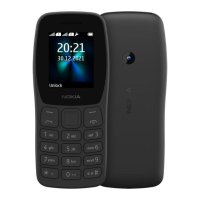

 To Next Page