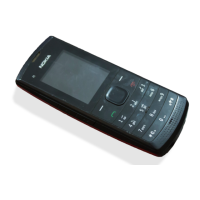
The Nokia X1-00 (RM-732 / RM-733) and Nokia X1-01 (RM-713) are mobile phones designed for basic communication and entertainment. This service manual provides comprehensive information for Level 1 and 2 workshop technicians, covering service, maintenance, and repair procedures.
Function Description:
These devices are primarily mobile phones, offering core telephony functions. They are designed for ease of use with a physical keypad and a color display. A key feature is the inclusion of a 3.5 mm AV connector, allowing for the use of standard headphones and potentially other audio accessories. Stereo FM radio is integrated, providing entertainment on the go without requiring an internet connection. Furthermore, the phones support MicroSD cards up to 16GB, enabling users to expand storage for music, photos, or other files. The Nokia X1-00 is a single SIM version, while the Nokia X1-01 is a dual SIM variant, allowing users to manage two different phone numbers or networks simultaneously.
Important Technical Specifications:
- Models: Nokia X1-00 (RM-732 / RM-733) and Nokia X1-01 (RM-713).
- Bands:
- RM-732: EGSM 900/1800
- RM-733: EGSM 850/1900
- RM-713: EGSM 900/1800
- Display: 128x160 TFT display, offering a clear visual interface for its class.
- Operating System: S30 system Base 9, a proprietary Nokia platform known for its simplicity and efficiency.
- Connections:
- 3.5 mm AV connector
- Stereo FM radio
- MicroSD card support (up to 16GB)
- Battery: Utilizes the BL-5J battery pack.
- BL-5J 1320 mAh:
- Talk time (GSM-A): 7 hours (RM-732/RM-733 and RM-713)
- Standby (GSM-A): 1170 hours (RM-732/RM-733), 785 hours (RM-713)
- BL-5J 1430 mAh:
- Talk time (GSM-A): 7.5 hours (RM-732/RM-733 and RM-713)
- Standby (GSM-A): 1267 hours (RM-732/RM-733), 850 hours (RM-713)
- Note on Talk/Standby Times: These times are dependent on network parameters and phone settings, indicating that actual usage may vary.
Usage Features:
The devices are designed for straightforward mobile phone usage. The physical keypad allows for tactile input, which can be preferred by some users over touchscreens. The color display provides a basic but functional visual experience. The inclusion of an FM radio and MicroSD card support enhances the entertainment capabilities, allowing users to listen to radio or their own music files. The dual SIM capability of the Nokia X1-01 is a significant advantage for users who need to manage multiple phone numbers, such as for work and personal use, or when traveling internationally to take advantage of different network rates. The durable design, as implied by the maintenance guidelines, suggests a robust device suitable for everyday use.
Maintenance Features:
The service manual emphasizes several key aspects of maintenance and care to ensure the longevity and proper functioning of the device:
- ESD Protection: Strict adherence to ESD (Electrostatic Discharge) protection protocols is required when servicing the phone, especially when covers are removed or electronic parts are handled. This includes working at an anti-static workstation, wearing an anti-static wrist strap, and storing ESD-sensitive parts in metallized protective bags.
- Approved Components: Only approved components, as specified in the parts list, should be used for servicing.
- Correct Re-fitting: All components, modules, screws, insulators, cables, and wires must be correctly re-fitted after servicing to ensure proper operation and safety.
- Environmental Care: Users are advised to keep the phone dry, avoid dusty/dirty areas, and protect it from extreme temperatures (hot or cold) to prevent damage to electronic circuits, batteries, and plastic components.
- Physical Handling: Rough handling, dropping, knocking, or shaking the phone should be avoided to prevent damage to internal circuit boards.
- Cleaning: Harsh chemicals, cleaning solvents, or strong detergents are not recommended for cleaning the phone. Painting the phone is also discouraged as it can clog moving parts.
- Battery Care:
- A new battery reaches full performance after two or three complete charge/discharge cycles.
- Use only approved batteries and chargers.
- Avoid overcharging; unplug the charger when not in use.
- Do not short-circuit the battery terminals.
- Store the battery within recommended temperature ranges (15°C to 25°C / 59°F to 77°F).
- Dispose of batteries according to local regulations, not as household waste or in fire.
- Software Update: Users are advised to check for the latest version of flash software available on Nokia Online to ensure optimal performance and security.
- Disassembly Instructions: The manual provides detailed, step-by-step instructions for disassembly, including the use of specific tools like the Nokia Standard Toolkit (v2), SRT-6, and SS-93. It also highlights critical steps like protecting the A-COVER with a protective film and discarding used screws.
- Assembly Hints: Specific torque values (17 Ncm and 15 Ncm) are provided for tightening Torx+ size 4 screws during assembly, indicating a focus on precise and correct reassembly. Instructions for correctly inserting and activating adhesive for components like the IHF speaker and earpiece are also included.
- Solder Components: The manual explicitly states that solder components are "Not included," suggesting that most repairs involve modular component replacement rather than intricate soldering work at this service level.

 Need help?
 General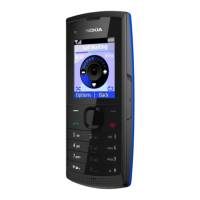

 To Next Page