
 Need help?
Do you have a question about the Noritz NRCR111DV and is the answer not in the manual?
Explains the meaning of DANGER, WARNING, CAUTION, and NOTICE symbols for hazard levels.
Warns about explosion risk from flammable liquids and their vapors stored near the appliance.
Warns about scalding hazards from hot water over 125°F (52°C), especially for children and the elderly.
Stresses the importance of the intake/exhaust pipe to prevent CO poisoning and fire.
Covers safety procedures for gas leaks, manual ignition, handling gas valves, and water-damaged units.
Details required clearances for indoor/outdoor installation and locations to avoid.
Warns against storing combustibles near the heater and prohibits installation in RVs or boats.
Emphasizes matching supplied gas and electrical ratings to the unit's specifications.
States that installation and service must be performed by qualified professionals.
Advises on avoiding hair spray/aerosols, dust, and not touching power cords with wet hands.
Informs about potential chemical substances in the product linked to health risks.
Advises against drinking appliance water, cleaning filters, and treating hard water for warranty.
Details how to clean and protect the remote controller from damage.
Provides guidance on preventing freeze damage to the unit and pipes, especially during long periods of disuse.
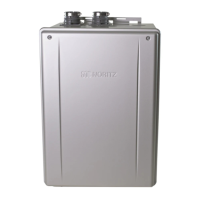
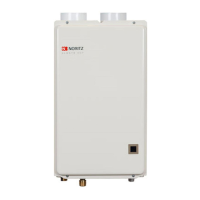
Identifies and illustrates key parts of the water heater unit for indoor/outdoor installation.
Explains the process and normal occurrence of condensate discharge and white steam emission.
Details the functions of buttons, indicators, and displays on the remote controller.
Describes how to set a maximum temperature limit to prevent excessively hot water.
Explains how to disable or enable button press sounds on the remote controller.
Details how to configure the alarm to indicate when a tub is full based on volume.
Provides instructions on how to manually turn the auto-recirculation feature on or off.
Explains that freeze protection requires continuous power and how to drain if unplugged.
Suggests insulation, heat tape, or other methods for protecting pipes outside the unit.
Step-by-step guide on how to manually drain water from the heater for storage or freeze prevention.
Instructions for draining the water heater using the remote controller's functions.
Advises annual inspection by a qualified technician for safe and efficient operation.
Lists specific checks for air intake, exhaust vent, sounds, leaks, and drain blockage.
Instructions for cleaning the unit's exterior surface with a wet cloth and detergent.
Guidelines for cleaning the remote controller surface without causing damage.
Details on how to clean the water filter in the drain valves to ensure proper operation.
Addresses problems like the unit not igniting or failing to ignite after attempting.
Covers problems with the POWER indicator, temperature changes after power loss, and remote surface damage.
Diagnoses why hot water might not be available or is too hot/not hot enough.
Addresses issues with incorrect temperature, fluctuations, and low activation flow rates.
Discusses long hot water delivery times and problems with auto-recirculation activation.
Explains normal operational sounds, turbid water, blue water, and condensate discharge.
Lists common error codes (11, 63, 90) and their causes and recommended actions.
Covers additional error codes (99, C1#) and general troubleshooting contacts.
Details information needed when contacting Noritz for service and potential rejection criteria.
Explains the process, parts, and precautions for converting the gas type of the water heater.
Outlines the warranty coverage, conditions, and exclusions for the product.
Details the specific warranty durations for different components and labor.
Explains the process for making a warranty claim and Noritz's responsibilities.
Lists specific conditions and causes that will void the warranty or are not covered.
States disclaimers of other warranties and limitations on liability and remedies.
Instructions and contact information for registering the product warranty.
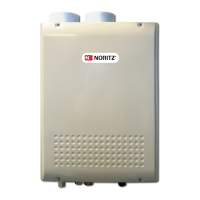
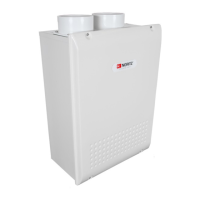
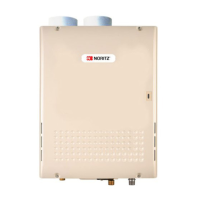
This document describes the Noritz Condensing Tankless Gas Water Heater, specifically models NRCR111DV (GQ-C3260WXQ-FF US) and NRCR92DV (GQ-C2660WXQ-FF US). This owner's guide provides essential information for safe operation, maintenance, and troubleshooting of the appliance, which is designed for residential or manufactured home applications.
The Noritz Condensing Tankless Gas Water Heater is an appliance that provides on-demand hot water. Unlike traditional tank water heaters, it heats water directly as it flows through the unit, eliminating the need for a storage tank. This design offers several advantages, including continuous hot water supply and energy efficiency. The "condensing" aspect refers to its use of a secondary heat exchanger to recover heat from exhaust gases, leading to higher efficiency and the production of condensate, which is discharged through a drain pipe.
A key feature of these models is the Auto-Recirculation Mode. This system circulates and warms up hot water in the pipes, allowing for more instant hot water delivery with less water waste. The water heater learns the user's hot water usage patterns and automatically operates recirculation based on these patterns from the next day. This intelligent feature adapts to household routines, providing convenience and efficiency. However, it's noted that if the unit is left on and hot water is not used for more than 3 days, the stored recirculation operation will reset as an energy-saving measure. The Auto-Recirculation Mode does not operate when using On-Demand Mode, and users can manually stop the recirculation operation if desired.
The appliance is equipped with an ignition device that automatically lights the burner, meaning there is no pilot light to manually ignite. It is crucial not to attempt to light the burner by hand.
Initial Operation: Before first use, several steps must be followed: opening the water supply valve, opening a hot water fixture/faucet to confirm water availability, closing the fixture, opening the gas supply valve, and finally, turning on the power. Safety warnings emphasize not touching the power cord with wet hands during this process.
Setting Hot Water Temperature: The hot water temperature is set using the Remote Controller (RC-7651M-A). The POWER button turns the water heater ON/OFF. Once on, the PRIORITY indicator is displayed, showing the previously set hot water supply temperature. Users can adjust the temperature using the ▲/▼ buttons. It's important to note that displayed temperatures are approximate and may vary based on external factors like season or piping length. For safety, a high-temperature warning (blinking display and tone) will occur if the temperature is set to 125°F (55°C) or higher. The manual recommends a setting of 120°F (50°C) or less for most residential applications to prevent scalding.
Customizable Settings:
Preventing Damage from Freezing: The water heater includes an automatic freeze prevention heater and pump. Freezing is prevented as long as the power plug is connected to the wall outlet, regardless of whether the unit is ON or OFF. However, extreme cold temperatures (below -30°F/-35°C for outdoor combustion air supply or -4°F/-20°C for indoor combustion air supply) may require additional measures. In such cases, it is recommended to turn off the unit, close the gas supply valve, and keep a small stream of hot water running from a fixture (approximately 0.1 gallon/minute or 0.2 inches thick). If the unit will be unused for a long period, draining the water completely is advised, preferably with isolation valves installed.
Regular Maintenance: Periodic check and maintenance should be performed once a year by a qualified service technician to ensure safe and efficient operation. The manual recommends making arrangements with a service contractor. Before performing any maintenance, users are warned to turn off the unit and allow it to cool to prevent burns or scalding.
Checks during Maintenance:
Water Drain Valve (with Water Filter): The water drain valve, which includes a water filter, should be cleaned regularly. If clogged with debris, it can impede hot water flow or cause the unit to deliver cold water. To clean, users must close the hot water, water supply, and hot water return valves, then remove the water drain valves (with a bucket ready as approximately 0.85 gallons of water will drain). The water filters should be cleaned with a brush under running water, then reattached. It's crucial not to lose the O-ring during this process. After reattaching, open the valves and check for leaks.
Water Heater Exterior: The outside surface of the water heater should be wiped with a wet cloth and dried. A neutral detergent can be used for stains. If an external condensate neutralizer is installed, its neutralizing agent will require periodic replacement according to the manufacturer's instructions.
Remote Controller: The surface of the Remote Controller should be wiped with a wet cloth. Avoid using chlorine-based, acidic, alkaline detergents, organic solvents, or Melamin Sponge, as these can cause discoloration, deformation, scratches, or cracks. While water resistant, the Remote Controller is not waterproof and should be kept as dry as possible.
Water Quality and Maintenance: For homes with hard water, periodic flushing of the heat exchanger is necessary to prevent scale build-up, which can damage the unit. The water heater may have an automatic service reminder ("C1#" code) that indicates when flushing is needed. Water quality exceeding specified maximum allowable levels for contaminants like total hardness, aluminum, chloride, copper, iron, manganese, pH, total dissolved solids, zinc, sulfate, and residual chlorine can void the warranty. Water softeners or scale inhibitors are recommended in areas with poor water quality.
Troubleshooting: The manual provides a comprehensive troubleshooting section for common issues such as the water heater not igniting, power indicator not lighting up, temperature changes after power failure, plastic surface damage on the remote controller, lack of hot water, slow hot water delivery, water being too hot or not hot enough, cold water from a single fixture, temperature fluctuations, and flow meter alarm issues. It also addresses error codes displayed on the Remote Controller, providing causes and recommended actions, often advising to contact Noritz America Technical Support if issues persist.
Follow-up Service: For repairs, users are instructed to first consult the troubleshooting section. If the problem remains, contact Noritz America Technical Support, providing the model, date of purchase, detailed problem description (including error codes), contact information, and desired service date. The warranty information, including registration details, is provided, emphasizing the importance of proper installation and adherence to usage instructions for warranty coverage. Noritz stocks repair and maintenance parts for 12 years for the Heat Exchanger and 10 years for other parts from the original installation date. Gas conversion kits are available for different gas types, requiring installation by a qualified service agency and verification of proper gas pressure and operation.
 General
| Category | Water Heater |
|---|---|
| Type | Tankless |
| Fuel Type | Natural Gas |
| Voltage | 120 V |
| Heat Exchanger | Copper |
| Built-in Recirculation | Yes |
| Venting | Direct Vent |
| Minimum BTU Input | 15, 000 |
| Temperature Range | 100°F - 140°F |
| Ignition | Electronic |



 To Next Page
