EasyManua.ls Logo

Nortek WSH3BE - User Manual

Nortek WSH3BE
4 pages
Print Icon
To Next Page IconTo Next Page
Loading...
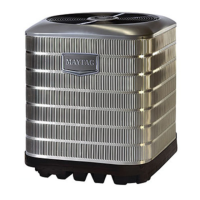
Split System Heat Pump
USER’S MANUAL
IMPORTANT SAFETY INFORMATION
WARNING:
To avoid possible equipment damage, fire,
or death, the following instructions must be
observed regarding unit maintenance and
operational procedures.
Please read all information in this manual thoroughly
and become familiar with the capabilities and use of your
appliance before attempting to operate or maintain this
unit. Pay attention to all safety warnings and any other
special notes highlighted in the manual. Safety markings
are used frequently throughout this manual to designate a
degree or level of seriousness and should not be ignored.
WARNING indicates a potentially hazardous situation
that if not avoided, could result in personal injury or death.
CAUTION indicates a potentially hazardous situation that
if not avoided, may result in minor or moderate injury or
property damage.
Keep this literature where you have easy access to it in
the future. If a problem occurs, check the instructions and
follow recommendations given. If these suggestions don’t
eliminate your problem, call your servicing contractor. Do
not attempt to service this unit yourself!
Under no circumstances should the appliance owner attempt to install and/or service this
equipment. Some local codes require licensed installation / service personnel for this
type of equipment. Improper service, adjustment, or maintenance may cause explosion,
fire, electrical shock or other hazardous conditions which may result in personal injury or
property damage.
Read these instructions thoroughly before using the equipment. Follow all precautions and
warnings contained within these instructions and on the unit.
Improper installation, adjustment, alteration, service, or maintenance can cause personal
injury or property damage. Refer to this manual. For assistance or additional information,
consult a qualified installer or service agency.
Do not store or use gasoline or other flammable vapors and liquids in the vicinity of this or
any other appliance.
DO NOT DESTROY. PLEASE READ CAREFULLY AND KEEP IN A SAFE PLACE FOR FUTURE REFERENCE.
WARNING:
!
To achieve optimum performance and minimize
equipment failure, it is recommended that periodic
maintenance be performed on this unit. The ability
to properly perform maintenance on this equipment
requires certain mechanical skills and tools. Please
consult your dealer for maintenance information and
availability of maintenance contracts.
The area around the cooling unit a must be kept clear
and free of combustible materials, gasoline, and other
flammable vapors and liquids. Do not store or use
flammable items such as paint, varnish, or strippers
in the vicinity of the unit.
Do not use the area around the unit as a storage area.
This area must be kept clean and clear of loose or
exposed insulation materials. Examine the unit’s area
when it is installed or when insulation is added, since
some insulation materials may be combustible.
Do not use this appliance if any part has been under
water. Immediately call a qualified service technician to
inspect the unit and to replace any part of the control
system and any gas control which has been under
water.
Familiarize yourself with the controls that shut off the
electrical power to the unit. If the unit needs to be shut
down for an extended period of time, turn off electrical
power at the circuit breaker. For your safety always turn
off the electrical power before performing service or
maintenance on the unit
Question and Answer IconNeed help?

Do you have a question about the Nortek WSH3BE and is the answer not in the manual?

Overview

This document is a user's manual for a Split System Heat Pump, providing essential information for its safe and efficient operation and maintenance.

Function Description:

The Split System Heat Pump is an all-weather comfort-control appliance designed to heat and cool a home year-round, offering energy-saving comfort. It operates on the principle that heat is always present in the air, even at temperatures below freezing. In heating mode, the heat pump absorbs available heat energy from outside the home using refrigerant and then exhausts it inside, effectively "moving" heat rather than generating it. For example, at 47°F (8°C) outdoor temperature, it can deliver approximately 3.5 units of heat energy per unit of electrical energy consumed, significantly more efficient than conventional heating systems which produce only 1 unit of heat energy per unit of electrical energy. In colder temperatures, it functions like an air conditioner in reverse. During summer, the heat pump reverses the flow of the heat-absorbing refrigerant to become an energy-efficient central air conditioner, absorbing excess heat energy from inside the home and exhausting it outside. The unit features Adaptive Demand Defrost, which monitors ambient and coil temperatures to regulate the defrost function. During defrost, the outdoor condenser fan and compressor turn off initially, then the compressor turns on to heat the outdoor coil, melting ice and snow. Water vapor may rise from the outdoor unit during this process.

Important Technical Specifications:

The manual does not explicitly list detailed technical specifications such as BTU ratings, power consumption, or refrigerant type, but it emphasizes the use of liquid and gaseous refrigerant under pressure. It also mentions that the unit is AHRI Certified™ to Standard 210/240 for Unitary Small HP, indicating compliance with industry performance standards.
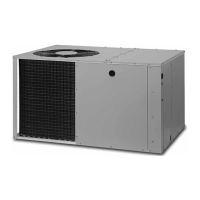
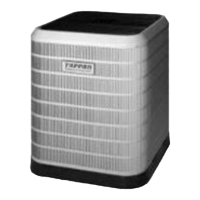
Usage Features:

  • Thermostat Control: The heat pump's operation is controlled via a digital thermostat. Users can set the system mode to COOL, HEAT, AUTO, or EM HT (Emergency Heat) and the fan mode to AUTO or ON.
  • Cooling Operation: To cool, set the system mode to COOL or AUTO and fan mode to AUTO, then set the desired temperature. The outdoor fan, compressor, and blower motor will cycle on and off to maintain the indoor temperature.
  • Heating Operation: To heat, set the system mode to HEAT or AUTO and fan mode to AUTO, then set the desired temperature. The compressor, outdoor fan, and blower motor will cycle on and off to maintain the indoor temperature.
  • Automatic Cooling & Heating: For automatic operation, set the system mode to AUTO and fan mode to AUTO, then set the desired heating and cooling temperature levels. The unit will automatically switch between heating and cooling modes as needed.
  • Continuous Indoor Blower: The indoor blower can be set to run continuously by changing the fan mode to ON, useful for circulating air to equalize temperature imbalances.
  • Emergency Heat (EM HT/AUX HT): This mode is a backup heating option for use if a problem is suspected with the heat pump. In this mode, the compressor and outdoor fan are locked off, and supplemental electric resistance heating is used. Sustained use of emergency heat will increase electric utility costs.
  • Defrost Operation: During cold weather heating, the outdoor unit will automatically defrost itself. The unit's Adaptive Demand Defrost system monitors ambient and coil temperatures to regulate this function.
  • Protective Timer Circuit: If the temperature is re-adjusted, or the system mode is reset, or after a power interruption, a protective timer circuit holds the compressor and outdoor fan off for approximately three minutes before restarting.
  • Troubleshooting: Before calling a technician, users are advised to check thermostat settings, circuit breakers, air filters, and ensure the unit is clean and unobstructed.

Maintenance Features:

  • Periodic Maintenance: To achieve optimum performance and minimize equipment failure, periodic maintenance is recommended. This requires certain mechanical skills and tools, and users are advised to consult their dealer for maintenance information and contracts.
  • Safety Precautions:
    • Disconnect all electrical power to the unit before performing any maintenance or service to prevent electrical shock, personal injury, or death. The unit may have more than one electrical supply.
    • Do not touch internal electrical components while cleaning.
    • The heat pump contains liquid and gaseous refrigerant under pressure; installation and servicing should only be attempted by qualified, trained personnel.
    • Keep the area around the unit clear and free of combustible materials, gasoline, and other flammable vapors and liquids. Do not store flammable items near the unit.
    • Do not use the area around the unit as a storage area. Keep it clean and clear of loose or exposed insulation materials, as some may be combustible.
    • Do not use the appliance if any part has been under water; call a qualified service technician for inspection and replacement of damaged parts.
  • Regular Cleaning:
    • Keep the outdoor unit clean. Hose it off periodically and keep unit fins clear of leaves and grass clippings. Be careful not to damage the aluminum fins. Clean the outdoor coil and fins with a mild detergent and water, then rinse thoroughly.
    • Keep the outdoor unit clear of obstructions like twigs, sticks, tall plants, or shrubs to ensure proper airflow.
    • Inspect the condensate drain and outdoor coil at the beginning of each cooling season and remove any debris.
    • Annually inspect the physical support of the unit for soundness (no sagging, cracks, gaps).
  • Air Filters:
    • Never operate the unit without a filter in the return air system to prevent dust and lint buildup on internal components, which can lead to loss of efficiency, equipment damage, and fire risk.
    • Inspect and clean or replace air filters at the beginning of each heating and cooling season, or more frequently if required. Clogged filters can cause airflow problems and reduce efficiency.
    • Always replace disposable filters with the same size dimensional filters.
  • Warranty Information: A warranty certificate with full details is included with the equipment. The manufacturer is not responsible for costs related to improper setup, installation, adjustments, or operating procedures by the user. Examples of non-warranty service calls include correcting wiring problems, resetting circuit breakers, or adjusting/calibrating the thermostat.

Nortek WSH3BE Specifications

General IconGeneral
BrandNortek
ModelWSH3BE
CategoryHeat Pump
LanguageEnglish

Related product manuals