Shandong Nuoman Engineering Machinery Co.,Ltd
Business Room, No. 7, Zhongshan West Road, Gulou Street Office, Yanzhou Dist., Jining, Shandong, CN
TEL/Fax:+8618266821667 Whatsapp/Wechat:+8618266821667
2. Turn off the engine at all times
when filling with fuel. Avoid spilling
and over-filling of fuel.
3. Smoking is prohibited while fuelling
and handling the battery! Keep
sparks and fire away from the fuel
tank and battery. Flammable gases
escape from the battery, especially
during charging.
4. Do not use or charge the refillable
type battery if the fluid level is
below the LOWER (lower limit level)
mark. Otherwise, the battery
component parts may prematurely
deteriorate, which may shorten the
battery's service life or cause an
explosion. Check the fluid level
regularly and add distilled water as
required so that the fluid level is
between the UPPER and LOWER
levels.
5. Read and follow "STARTING WITH
AN AUXILIARY BATTERY" in
"OPERATION OF THE ENGINE",
when starting with an auxiliary
battery.
6. To avoid short-circuiting the battery,
always remove the earth cable first
and attach the plus cable first.
7. Keep a first-aid box and a fire
extinguisher at hand at all times.
8. Do not open the radiator cap before
the radiator has cooled down
sufficiently.
First loosen the cap to the first stop
and allow the system enough time
to release the remaining pressure.
Then loosen the cap completely.
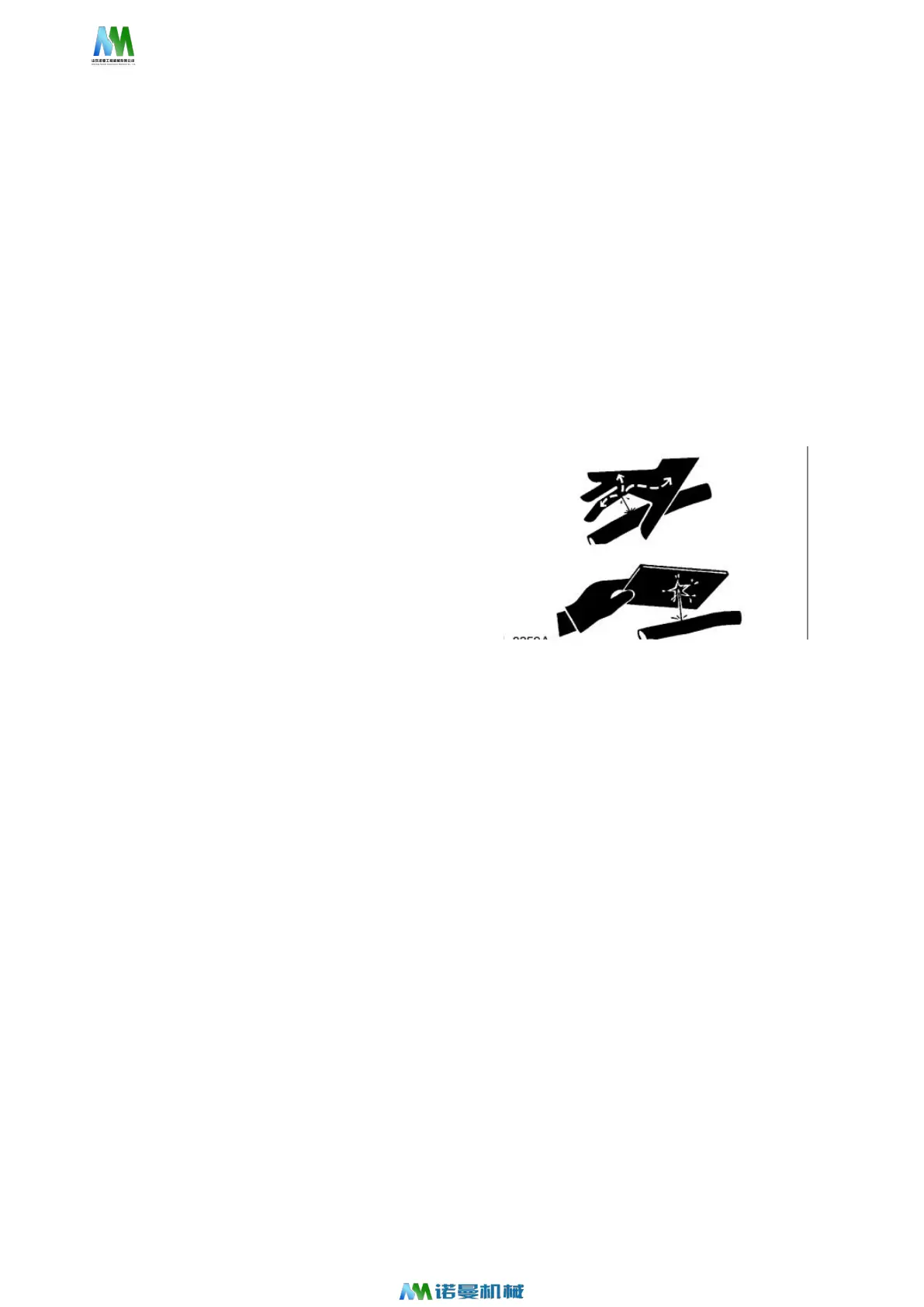
9. Leaking hydraulic fluid has enough
pressure to penetrate the skin and
cause serious injuries. Leakages
from pin holes can be totally
invisible. Do not use the bare hand
for checking on possible leakages.
Always use a piece of wood or
cardboard. It is strongly
recommended you use a face mask
or eye protection.
Should injuries occur with leaking
hydraulic fluid, contact a doctor
immediately. This fluid can cause
gangrene or serious allergic
reactions.
10. To avoid leakage of battery acid
which contains heavy metals, do not
throw the battery away.
11. Observe all laws and regulations
concerning the disposal of used oil,
coolants, solvents, hydraulic fluids,
battery acids and batteries.
12. To avoid fire, do not heat the
hydraulic components (tanks, pipes,
hoses, cylinders) before they have
been drained and washed.
13. Use a face mask or eye protection
to protect the eyes and respiratory
system against dust and other
foreign particles.


 To Next Page