This document is a user manual for Ocean Rodeo kites, providing essential information for safe and effective use, assembly, maintenance, and tuning.
Function Description:
Ocean Rodeo kites are designed for kiteboarding, a sport that involves using a large kite to propel a rider across water on a board. The manual emphasizes that it is not an instruction manual for kiteboarding itself, but rather a guide for the safe operation and care of Ocean Rodeo kites. The kites feature a single-point speed inflate/deflate system for quick and easy inflation. They are designed with various tuning options to adjust turning speed, power input, and depower range to suit different riding styles and conditions.
Important Technical Specifications:
- Kite Models: FLITE, PRODIGY, RAZOR, ROAM.
- Kite Sizes: Available in various sizes (e.g., 5m, 7m, 8m, 9.5m, 10m, 12m, 14m, 14.5m, 17m) to accommodate different rider weights, wind conditions, and board types (Twin Tip, Surf Board, Foil Board).
- Control System: All 2018 and newer Ocean Rodeo kites utilize a single front line flag out system for maximum depower when the trim loop release is activated. Older control bars (2017 or older) require OR Bar Bridle Adapters for compatibility.
- Line Lengths: Optimum line lengths range from 15m to 25m. Shorter lines (e.g., 17m) increase turn response and reduce the power window, while longer lines (e.g., 22-25m) decrease turn response but increase the power window, offering more power, loftier jumps, and improved light wind riding. 20m is noted as a good overall length.
- Pigtails: Front and back flying lines should have pigtails of the same length (20cm). For 2018 kites, front attachments have loops and back attachments have knots, matching industry standards.
- Bridle System: The kites feature line bridles supporting the front line attachments and two back line attachments at the wingtip. The wingtip bridle has two attachment knots (E and F) for adjusting power input.
Usage Features:
- Site Selection: Crucial for safety, requiring no power lines within three line lengths (100 meters) of the beach, no trees within one line length (30 meters), and freedom from beach obstructions (logs, boulders, seaweed). Ideal conditions include side shore wind, smooth/steady moderate wind (8-15 knots), wide sandy beach, shallow water close to shore, and a clear bottom free of rocks/corals/seaweeds.
- Kite Assembly:
- Select an obstruction-free area larger than the kite's span.
- Unroll the kite and attach the pump leash.
- Ensure the lower (dump) valve is fully closed and the upper (inflate) valve is open.
- Connect the pump and inflate until the leading edge is firm. Avoid over-inflation.
- Secure the kite with an "anchor" (sand, gravel, weight bag) before inflation.
- Pump slowly during first inflation to ensure the inner bladder fills all strut corners.
- After inflation, close the top cap "snug" and pinch clamps to seal off the struts, isolating air.
- To deflate, unscrew the top cap and then the lower cap of the dump valve.
- When storing, screw both caps in place to prevent damage.
- Line Management:
- Lay out lines after the kite is pumped and the rider is geared up.
- Place the loose end of lines near the leading edge tube and unwind upwind.
- Identify and separate front and back lines from the bar to the kite.
- Physically separate left front/rear and right front/rear lines before attaching.
- Attach flying lines to the kite using a larks head connection.
- For 2017 or older Ocean Rodeo control bars, use OR Bar Bridle Adapters.
- Store lines by re-winding in a figure-8 pattern around bar ends to prevent twisting.
- Avoid knots in flying lines as they create weak points.
- Kite Tuning:
- Line Lengths: All lines must be of equal length when measured from the bar to the end of the lines, with the center line un-cleated and fully extended.
- Wingtips: Ensure wingtips are parallel for optimal flight. Inward-angled wingtips indicate shorter rear lines, leading to stalling.
- Turning Speed (Back Lines): Moving the back line bridle towards the trailing edge (A) increases turning input and decreases bar pressure. Moving it forward (B) slows turn input and increases bar pressure.
- Power Input (Wingtips): Connecting to knot E allows for more depower (suitable for novice riders). Connecting to knot F provides more power (suitable for advanced riders).
- Razor Tuning Options: Moving the bridle attachment back (C) decreases depower range and bar pressure, providing maximum slack for unhooked tricks. Moving it forward (D) increases depower range and bar pressure, providing maximum power delivery.
Maintenance Features:
- Storage: Keep the kite out of direct sunlight when not in use.
- Deflation: Deflate the leading edge and roll the kite when left on the beach to prevent flutter damage.
- Drying: Dry the kite thoroughly after use to prevent mildew and color bleeding.
- Rinsing: Rinse the kite with fresh water after extended use in saltwater.
- Inspection:
- Check the inside of the leading edge tube (where the canopy material sews on) for debris like rocks.
- Regularly inspect the kite for small tears, loose stitching, and general wear. Repair as soon as possible.
- Check bridles and pulleys for wear and rinse them to remove salt and sand.
- Heat Warning: Be aware of heat in vehicles if storing the kite with struts inflated, as excessive heat can damage valves on the kite bladder.
- Warranty: All standard Ocean Rodeo products come with a One Year Warranty on workmanship and materials for the original purchaser. This warranty covers repair or replacement at Ocean Rodeo's option and does not cover damage from normal wear and tear, fading, misuse, negligence (punctures, sun exposure, seam failure from over-inflation, damage in waves/shore break), or unauthorized repairs. Factory seconds and discounted products carry no warranty.
- Satisfaction Guarantee: Ocean Rodeo offers an unconditional 60-Day Satisfaction Guarantee. Unsatisfied customers can return the product to the original point of purchase for a full refund within the first 60 days. This offer is valid only with participating retailers, current season product, and for the original purchaser. Online orders' refunds do not include shipping charges. This offer is for non-professional users; professional buyers (fleets/schools) should contact Ocean Rodeo directly. Repeated use of this offer for "demo" purposes will result in disqualification from future returns.

 Need help?
 General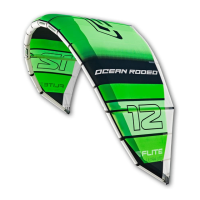

 To Next Page