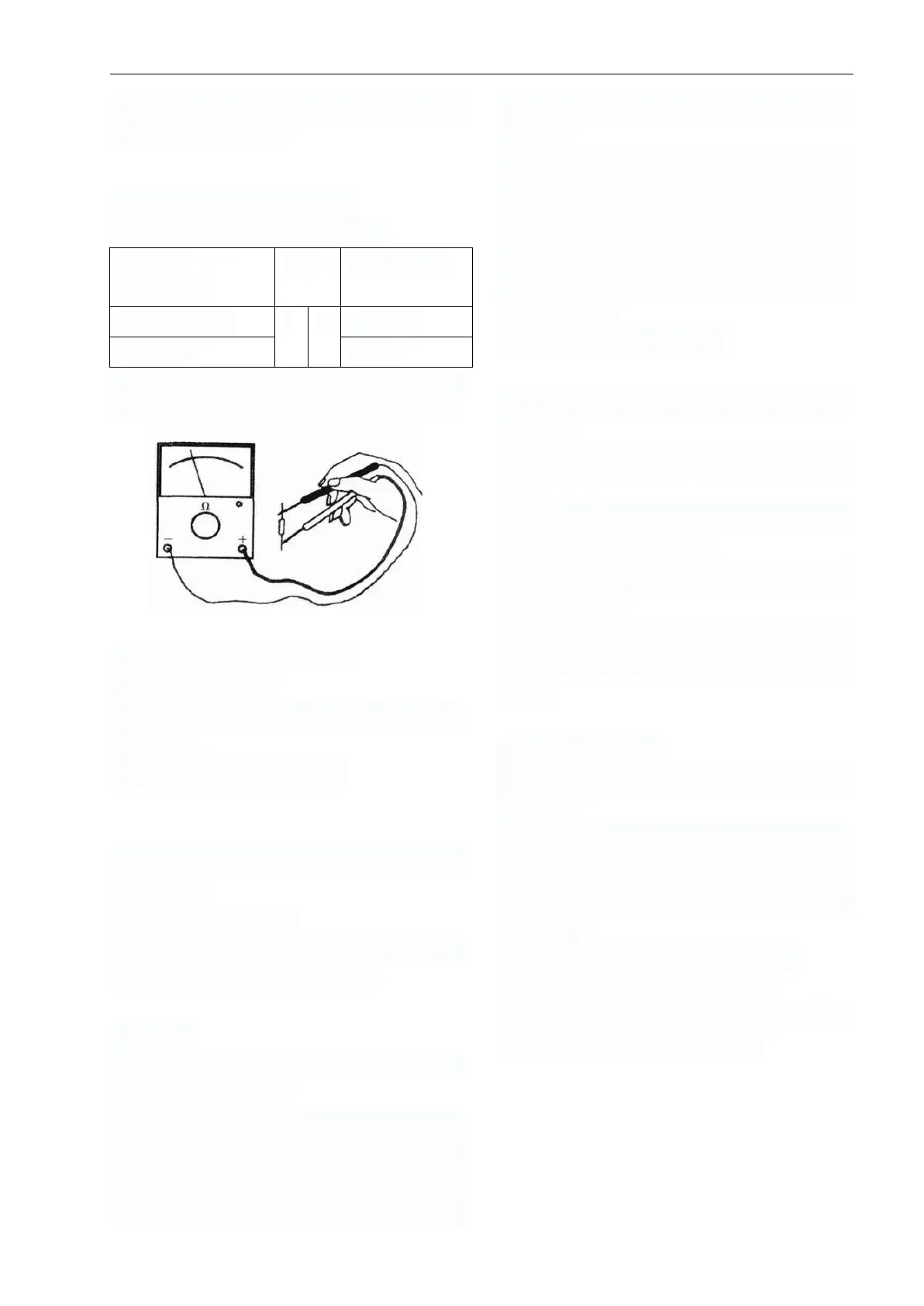
If switch is defective, replace with a new one.
If switch tests good, check wiring harness.
Remove
Disconnect switch connectors.
Drain brake system.
Unscrew brake light switch from master
cylinder.
Catch spilled fluid with a rag.
Installation
For installation, reverse the removal
procedure.
Bleed the brake system
Check for leaks and make sure the brakes
operate normally before driving.
BRAKE HOSE
Inspection
Brake hose should be inspected frequently
for leaks an damages.
Check if the hoses are crushed or damaged.
Any deformation can restrict the proper
flow of fluid and cause braking problems.
Check hoses for cracking scrapes. This
damage can cause hose failure under
pressure.
When hoses are removed or disconnected,
cleanliness must be observed. Clean all
joints and connections before disassembly.
New hoses should be cleand with brake
fluid before installation to remove any
contamination.
Replace any defective parts.
Removal
Before removing any hoses, drain brake
system.
Remove all necessary parts to reach the
hoses.
Thoroughly clean the are around the joints
that will be disconnected.
Place a pan under the joint that will be
disconnected.
Disconnect any retaining clips or brackets
holding the hose and remove the defective
parts.
Installation
Install the new hose.
Make sure the piece will not rub against any
other part.
When there is a banjo fitting securing the
hose to the caliper or to the master cylinder,
always replace the sealing washers with
new ones.
Install any retaining clips or brackets.
Refill and bleed the brake system.
Check for leaks and make sure the brakes
operate normally before driving.



 To Next Page