This document describes a range of asynchronous and synchronous electric motors, focusing on their installation, usage, and maintenance. The motors are designed for various industrial applications and are available in different configurations, including 3-phase asynchronous motors and permanent magnet synchronous motors.
Function Description:
The motors are designed to convert electrical energy into mechanical energy, providing rotational power for industrial machinery. They are available in both asynchronous (induction) and synchronous (permanent magnet) types, offering different performance characteristics suitable for various applications. The asynchronous motors typically operate based on the principle of electromagnetic induction, while synchronous motors utilize permanent magnets in the rotor to achieve precise speed and position control. Some models are equipped with cooling systems (air-cooled or liquid-cooled) to manage heat dissipation, especially under continuous or heavy-duty operation. Many motors also include integrated features such as transducers (encoders/resolvers) for speed and position feedback, and brakes for controlled stopping and holding.
Important Technical Specifications:
The manual covers a wide range of motor sizes and types, with specific models identified by codes such as QL, HQLa, QSR, LTS, MTS, and QCA.
- Power Range: Varies significantly across models, from smaller units (e.g., QCAVS 40-71A, MT 63-315) to larger industrial motors (e.g., HQL/HQLa/QSR 355).
- Cooling Systems: Includes both air-cooled (fan-cooled, IP23S) and liquid-cooled configurations. Liquid-cooled motors often feature a cooling circuit with specific requirements for the cooling liquid (e.g., water + Tyfocor solution) and temperature ranges (e.g., input liquid temperature 18°C - 22°C, output liquid temperature 28°C - 32°C).
- Insulation Class: Typically F or H, indicating the maximum permissible operating temperature of the winding.
- Protection Class (IP): Ranges from IP23S (for air-cooled motors with open ventilation) to higher IP ratings (e.g., IP54 or IP55) for motors designed for more demanding environmental conditions, providing protection against dust and water ingress.
- Transducers: Various types of encoders and resolvers are supported, with specifications for pulses per revolution (e.g., 1024, 2048, 4096 ppr) and output signals (TTL/HTL, SinCos).
- Brakes: Available in different types (e.g., Type R, Rr, K) with specific braking torques and adjustment procedures for the airgap (e.g., 0.2-0.5 mm).
- Vibration Levels: Compliant with IEC 60034-14 standards, with different vibration grades (e.g., N, R, S, A) depending on motor speed and application.
- Noise Levels: Measured in LwA dB(A) according to IEC 60034-9 standards.
- Electrical Connections: Detailed diagrams for terminal box connections, power supply, and transducer wiring are provided.
Usage Features:
- Installation: Emphasizes proper mounting, alignment, and connection to the load and power supply. Specific instructions are given for different mounting types (e.g., IM B3, IM B5, IM V1) and for connecting flexible couplings, thrust bearings, and reaction arms.
- Start-up: Requires pre-start inspections, including checking electrical connections, grounding, and ensuring proper cooling. For motors with brakes, it's crucial to ensure the brake is supplied with power and unlocked before rotation.
- Operation: The motors are designed for continuous operation within specified temperature and load limits. Liquid-cooled motors require monitoring of the cooling liquid's temperature and flow.
- Environmental Conditions: The manual specifies permissible ambient temperatures (e.g., -15°C to +40°C) and humidity levels. For dusty, humid, or chemically aggressive environments, higher IP protection classes and appropriate cooling systems are recommended.
- Troubleshooting: Provides a comprehensive list of potential malfunctions, probable causes (e.g., missing phase, incorrect wiring, clogged filters, overheating), and recommended remedies.
Maintenance Features:
- Regular Inspections: Recommended every 6 months, including checking windings, cooling channels, and overall motor condition. The frequency of cleaning depends on environmental conditions and motor usage.
- Cleaning: Instructions for cleaning windings (especially for IP23S motors) to remove dry residues (dust) and oily substances. This involves vacuuming, blowing with compressed air, and using suitable non-toxic, non-flammable solvents.
- Bearing Replacement: Detailed procedure for replacing bearings, including rotor removal, bearing extraction using specialized tools, and warm assembly of new bearings. Emphasizes using bearings of the same type and dimension and avoiding damage to insulated surfaces.
- Brake Maintenance: Procedures for adjusting the airgap (e.g., 0.2-0.5 mm) and braking torque, as well as replacing worn friction material. Lubrication of internal brake parts is strictly prohibited.
- Transducer Maintenance: Instructions for disassembling and reassembling transducers (encoders/resolvers), highlighting the sensitivity of electronic circuits to electrostatic discharges.
- Disassembly/Assembly: General guidelines for disassembling and reassembling motor components, emphasizing the need for skilled personnel, proper tools, and adherence to safety regulations. It warns against unauthorized disassembly of permanent magnet synchronous motors due to strong magnetic forces.
- Spare Parts: Recommends using original spare parts from the manufacturer to ensure proper functioning and maintain warranty.
- Disposal: Provides a list of materials used in the motor for proper disposal and recycling at the end of its life cycle.

 Need help?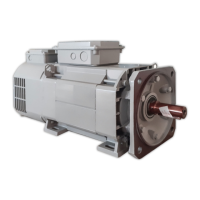

 To Next Page
 General