Input Sensitivity / Jumpers
The latest version of the Cali76 features a set of jumpers that
give the user control over the sensitivity of the unit.
Should you prefer to have the input/gain control set very low,
it could be worth experimenting with the jumper arr an gemen t
shown in figure 3. This will almost certainly help users to
obtain more rotational resolution in a pro-audio set-up, where
signals are relatively large.
Moving t he jumper progressively right will result in more
input attenuation and less sensitivity.
Power Requirements:
Battery vs. Supply Operation
The transformer-circuitry consumes a relatively large amount
of supply-current and makes battery operation simply not
viable. For this reason a unique battery-mode of operation
shuts down the transformer circuitry to preserve battery life.
In tr an s for mer -mode, the extra current is put to u s e by the
Class-A transistor output-stage, in order to drive problematic
loads with ease (such as l on g cable runs as well as the low-
impedance inputs of some vintage studio equipment).
Just as importantly, the extra curr en t-dr i ve can be used to
push the output-transformer into saturation. This generates
frequency-dependant harmonics and subtle overdrive.
Unfortunately, a standard 9V battery just couldn't supply this
level of current for l on g enough to be practical, as the user
would need to change batteri es every few hours to main tai n
optimum results. For this reason we decided to opt for an
automatic system that shuts-down the transformer board
when a low-voltage supply is detected and so this applies to
external supplies as well as internal battery-usage.
At low voltages, the signal is "diverted" arou n d the
transformer circuitry via a high-quality relay.
The transformer automatically switches in and out arou n d
12V. Using a supply with a voltage in this regi on should be
avoided as it may result in the p edal intermittently switchi n g
between transformer-enabled and transformer-bypass modes.
Power Requirements:
General Considerations
The internal 9V battery w i l l provide good-quality operation for
approximately 50 hours. After this time the user may choose
to fit a fresh battery. Thi s can be don e easily by removing the
four screws from the base of the enclosu r e. From here the
new battery just clips into place. Be careful not to knock any
of the components on the circuit-board.
Alternatively, an external supply can be used. A high quality
regulated supply shoul d be chosen to avoid damage from
voltage-surges and other over-voltage conditions. The
connector shoul d be the 2.1mm type with the centre-pi n
"Wired-Negative".
For best performance, the pedal should be powered from an
18V supply. This will increase the headroom, allowing cleaner
processing of conventiona l guitar signals. Th i s will also permit
the use of hotter source signals, such as active guitar pickups.
A PSU with a current rating of at least 200mA is preferable,
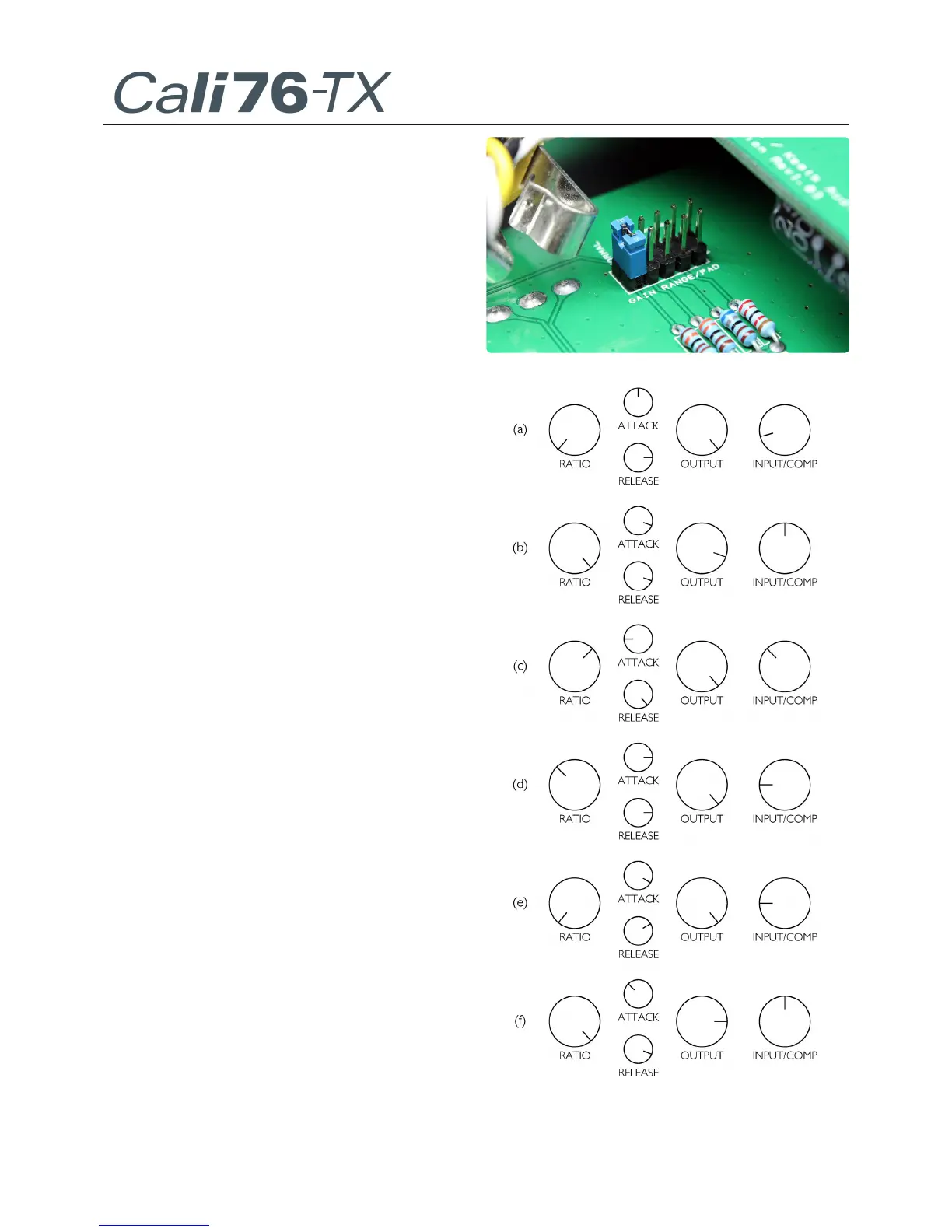
Figure 4: Useful Settings: (a) vocals - subtle compression;
(b) vocals - limiting; (c) acoustic guitar / piano; (d) bass;
(e) drums - subtle compression (famous Dr.Pepper
Setting); (f) drums - "pumping" hard compression.
Note: All source signals normalised to -10dBV.
Figure 3: Input sensitivity jumpers on Cali76TX.


 To Next Page
 Loading...