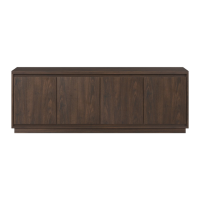
The 9005 Display Cabinet is a stylish and functional piece of furniture designed for storage and display purposes. It features a combination of enclosed cabinet space with doors and open shelving, along with integrated drawers, offering versatile storage solutions for various items. The cabinet's design suggests a modern aesthetic, suitable for a range of interior décors.
Function Description:
The primary function of the 9005 Display Cabinet is to provide organized storage and an elegant display area. The upper section of the cabinet features two door panels (H & J), which enclose a space likely intended for items that need to be kept out of sight or protected from dust, such as dishes, books, or collectibles. The door panels themselves appear to have a decorative, possibly textured or patterned, insert, adding to the cabinet's visual appeal.
Below the enclosed cabinet space, there are open shelves (C and D). These shelves are ideal for displaying decorative items, photographs, or frequently accessed objects. The presence of both a middle shelf (C) and a bottom shelf (D) within the open section allows for further organization and categorization of displayed items.
At the bottom of the cabinet, there are integrated drawers. The assembly instructions detail the construction of these drawers, including the drawer face (N), drawer sides (Q & R), drawer back (O), drawer bottom panel (M), and drawer rail (P). These drawers provide concealed storage for smaller items, linens, or other essentials, helping to maintain a tidy and clutter-free environment. The handles (15) on the drawer faces facilitate easy opening and closing.
The overall structure is supported by four posts (K), which elevate the cabinet from the floor, contributing to its aesthetic and potentially making cleaning underneath easier. The cabinet is designed to be a freestanding unit, suitable for placement in living rooms, dining rooms, hallways, or offices.
Important Technical Specifications (Derived from Hardware and Parts Lists):
The cabinet is constructed from various panels and components, indicating a sturdy build. Key components include:
- Panels: Top Panel (A), Bottom Panel (B), Middle Shelf (C), Bottom Shelf (D), Side Panels (F & G), Back Panel (L), Drawer Bottom Panel (M), Drawer Face (N), Drawer Back (O), Door Panels (H & J).
- Structural Supports: Support Bar (E), Posts (K).
- Drawer Components: Drawer Side (Left Hand) (Q), Drawer Side (Right Hand) (R), Drawer Rail (P).
The hardware list provides insight into the fastening mechanisms and materials:
- Screws:
- M6 x 15mm JCB (1): Used for general assembly, likely connecting panels.
- M4 x 32mm Wood Screw (6): For securing wooden components.
- M4 x 16mm Wood Screw (3): Smaller wood screws for various attachments.
- M4 x 20mm Wood Screw (4): Another size of wood screw.
- M4 x 25mm Wood Screw (5): Specifically used for fitting angled screws to the drawer rail.
- CSK Cap Wood Screw (M6 x 50mm) (8): Longer, possibly decorative, screws for specific structural points.
- Bolts:
- M4 x 20mm Bolt (13): Used for attaching handles.
- M4 x 25mm Bolt (14): Also used for attaching handles.
- Other Fasteners:
- M6 x 60mm JCB (2): Longer JCB screws, likely for critical structural connections.
- M6 x 25mm Wood Dowel (7): Wooden dowels for alignment and reinforcement of joints, particularly in drawer assembly.
- Spring Washer (11) and Flat Washer (12): Used with bolts to ensure secure fastening and prevent loosening.
- Brackets and Supports:
- 'L' Bracket (5005-3) (9): Used to fit the 'L' bracket to the side panels, providing structural integrity.
- Shelf Support (S060) (10): Used to support the adjustable shelves within the cabinet.
- Hinges: Hinge (17): Essential for the functionality of the door panels.
- Handles: Handle (1005) (15): For opening drawers and doors.
- Tools: Allen Key (16): Provided for assembly, indicating the use of hex-head screws or bolts.
The instruction to "Do not assemble using power tools. This can cause the bolts to be overtightened" is a critical technical specification, highlighting the importance of manual assembly to prevent damage to the components, particularly the wood, and to ensure the longevity of the furniture. This suggests that the materials, while sturdy, are susceptible to damage from excessive torque.
Usage Features:
- Versatile Storage: The combination of enclosed cabinet space, open shelving, and drawers offers diverse storage options, accommodating a wide range of items from display pieces to hidden essentials.
- Display Functionality: The open shelves are designed for showcasing decorative items, allowing users to personalize the cabinet and integrate it with their home décor.
- Concealed Storage: The door-enclosed sections and drawers provide discreet storage, helping to maintain a tidy appearance and protect contents from dust or view.
- Adjustable Shelving: The use of shelf supports (10) implies that the shelves might be adjustable, allowing users to customize the height of the shelves to fit items of different sizes. This enhances the cabinet's adaptability.
- Ease of Access: Handles (15) on the drawers and doors ensure easy and comfortable access to stored items.
- Aesthetic Appeal: The design, including the decorative door panels and elevated structure, contributes to the cabinet's aesthetic value, making it a focal point in a room.
Maintenance Features:
- Manual Assembly Recommendation: The instruction against power tools (due to overtightening risk) suggests that the cabinet is designed for careful, manual assembly, which can contribute to its long-term stability if done correctly. This also implies that any future disassembly or reassembly for maintenance or relocation should also be done manually.
- Component Replacement: The detailed parts list indicates that individual components could potentially be replaced if damaged, although this would depend on the availability of spare parts from the manufacturer.
- Cleaning: The materials used (likely wood or wood composite) would typically require standard furniture cleaning practices, such as dusting with a soft cloth and occasional wiping with a damp cloth, followed by drying. The elevated design with posts (K) may facilitate easier cleaning underneath the cabinet.
- Drawer Alignment: The instruction to "Lossen the JCBs on the Drawer Face if the face needs alignment" (Step 15) is a key maintenance feature. It indicates that drawer faces can be adjusted post-assembly to ensure proper alignment, which is crucial for both functionality and appearance. This allows for minor corrections if the drawer face becomes misaligned over time or during initial assembly.
- Durability Considerations: The use of various screw types, dowels, and brackets suggests a design intended for reasonable durability. However, the warning against overtightening implies that careful handling and assembly are paramount for maintaining the structural integrity and preventing premature wear or damage. Regular checks of fasteners may be beneficial to ensure they remain tight, especially for frequently used components like drawers and doors.

 Need help?
 General

 To Next Page