EasyManua.ls Logo

Panasonic BL-C111A - User Manual

Panasonic BL-C111A
11 pages
Print Icon
To Next Page IconTo Next Page
Loading...
HomeLogic LLC
100 Hoods Lane
Marblehead, MA 09145
Phone (781) 639-5155
Fax (781) 639-9677
OneHome
Management and Control Solutions
Camera Integration Note
Manufacturer: Panasonic
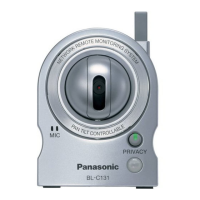
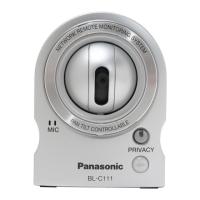
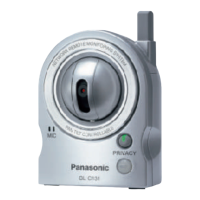
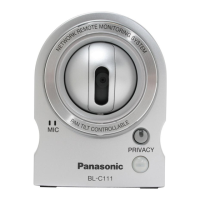
Model Number(s): BL-C111A, BL-C131A (wireless)
Comments: Network Camera (version 3.10)
Document Revision Date: 5/19/2011
NOTE: This document refers to Camera setup in software versions below 5.2 ONLY.
Please see the Rev 5.2 Integration Note for systems running 5.2 or greater.
O
VERVIEW AND SUPPORTED FEATURES
Installing the Panasonic camera can be broken down into the following steps:
1. Install cameras at desired locations, and pull power and Cat5 cabling as needed. Refer to the
Panasonic documentation for mounting details.
2. Connect the cameras electrically to the home network and configure the cameras. See Camera
Configuration.
3. Integrate the cameras into the OneHome system and test proper operation. This step is outlined
in HomeLogic Configuration Details.
T
HE
BL-C111A
AND
BL-C131A
SUPPORT THE FOLLOWING FEATURES
:
Pan / Tilt: These cameras can be turned to see various locations.
Presets: These cameras support presets, allowing the user to store predefined locations such as a
driveway or pool. This feature requires OneHome software version 4.0 or later.
Image Flip: These cameras can be mounted with its base up or down, and the image will appear normal.
Built-in Audio: Audio from the Panasonic cameras built-in microphone is supported in version 4.0 and
later.
Motion Detection: These cameras support motion detection to trigger events in the OneHome system.
T
HE
BL-C111A
AND
BL-C131A
DO
NOT
SUPPORT THE FOLLOWING FEATURES
:
Zoom: Cameras lacking optical zoom cannot be zoomed in HomeLogic.
C
AMERA
C
ONFIGURATION
The camera configuration is done with software provided by Panasonic, which must be run from a
computer with Windows also connected to the same network as the camera.
The software program from Panasonic is EasyConfig.exe: the version we checked is shown at the top.
I
MPORTANT
N
OTES
1. Cameras must be configured one at a time: If you are installing more than one camera, setup
the first one completely before powering up subsequent cameras.
2. Setup the camera within 20 minutes: Initial settings must be made within 20 minutes of the
camera being turned on. If the camera has been powered up for more than 20 minutes, cycle
power to the camera before proceeding.

Other manuals for Panasonic BL-C111A

Question and Answer IconNeed help?

Do you have a question about the Panasonic BL-C111A and is the answer not in the manual?

Overview

This document outlines the integration of Panasonic BL-C111A and BL-C131A (wireless) network cameras with the OneHome™ management and control system. It provides a comprehensive guide for installation, configuration, and feature utilization, specifically for OneHome software versions below 5.2.

The Panasonic BL-C111A and BL-C131A cameras offer a range of functionalities designed to enhance home security and monitoring. A key function is their Pan/Tilt capability, allowing users to remotely adjust the camera's viewing angle to monitor various locations, such as a driveway or pool. This flexibility ensures comprehensive coverage without needing multiple fixed cameras. Complementing this, the cameras support Presets, enabling users to save specific viewing positions for quick recall. This feature is particularly useful for frequently monitored areas and requires OneHome software version 4.0 or later to function.

For installation flexibility, the cameras include an Image Flip feature, which ensures that the image appears normal regardless of whether the camera is mounted with its base up or down. This simplifies installation in diverse environments. Furthermore, the cameras are equipped with Built-in Audio, allowing for audio monitoring from the camera's microphone, a feature supported in OneHome version 4.0 and later.

A significant security feature is Motion Detection. These cameras can detect motion and trigger events within the OneHome system, providing an alert mechanism for unusual activity. This capability is crucial for proactive security monitoring. However, it's important to note that these specific Panasonic models do not support optical zoom, meaning users cannot digitally zoom in on images within HomeLogic.

The installation process for the Panasonic camera is structured into three main steps:

  1. Physical Installation: Cameras should be installed at desired locations, with power and Cat5 cabling pulled as needed. Detailed mounting instructions are provided in the Panasonic documentation.
  2. Electrical Connection and Configuration: Cameras are connected to the home network and configured using Panasonic's provided software, EasyConfig.exe. This step is critical for network integration.
  3. OneHome System Integration: Once configured, the cameras are integrated into the OneHome system, and their proper operation is tested. This final step is detailed in the HomeLogic Configuration Details section.

Camera Configuration is performed using the EasyConfig.exe software, which must be run from a Windows computer connected to the same network as the camera. Several important notes guide this process:

  • One-at-a-time Configuration: If multiple cameras are being installed, each must be set up completely before powering up subsequent cameras to avoid conflicts.
  • Time-sensitive Setup: Initial settings must be made within 20 minutes of powering on the camera. If this window is missed, power cycling the camera is necessary before proceeding.
  • Password Management: Users must create a unique username and password during setup. Losing this information necessitates a factory reset of the camera and repeating the entire setup procedure. The default username for Panasonic cameras is "Administrator," and the default password is "password."

The configuration process involves several steps within the EasyConfig software:

  1. Starting the Software: Insert the Panasonic CD to autostart the Network Camera Setup software. If it doesn't autostart, launch Setup.exe manually.
  2. Searching for Cameras: Once the software is running, select "Search for Cameras" to locate connected devices.
  3. Accessing the Camera: After the software finds the camera, select the desired camera and click "Access Camera." This will open a new browser window for initial password setup.
  4. Initial Authentication Setting: Users will be prompted to set a username and password. The default recommendation is "Administrator" for the username and "password" for the password. After entering these, click "Save."
  5. Setup Completion: Once initial setup is complete, click "To Single Camera page."
  6. Login: Users will then be prompted to log in with the newly set username and password.

Camera Settings are adjusted through the camera's browser interface after logging in:

  1. Browser Interface: After successful login, the standard browser interface for the camera will appear.
  2. ActiveX Control Installation: The system will attempt to install an ActiveX control to display the camera image. While not essential for OneHome operation, it's needed to view the camera image on the computer. Users should close any dialogs or accept the control as appropriate. On Windows, popup blocking may need to be disabled to allow ActiveX installation.
  3. Accessing Setup: Click "Setup" at the top of the interface to access configuration options.
  4. UPnP Configuration: Navigate to "UPnP" under "Basic" on the left panel. It is recommended to click "Disable" in both parts of the screen and then "Save" to store these settings.
  5. Account Settings: Under "Accounts," click "Administrator." Select "Permit access from guest users." Leave the password boxes blank to avoid changing the password, then click "Save." Confirm any warning messages.
  6. General User Settings: Click "General User" under "Accounts," then click "Modify." Select "Level 3" to automatically check all boxes on the page, granting full control, and then "Save."
  7. Network Settings: Click "Network" to access network configuration.
  8. Static IP Address: In the "Connection Mode" section, select "Static." This allows users to assign a fixed IP address to the camera. It is suggested to set the first camera to 192.168.0.80, the second to 192.168.0.81, and so on. Verify other settings match the provided example and click "Save."
  9. Restart and Verify: If prompted, restart the camera. Since the camera's IP address has changed, the browser window will no longer display the camera. Enter the new IP address in the browser's address bar to access the camera's home page and confirm the settings. Finally, close the browser.

Motion Detection for HomeLogic DVR Configuration: To utilize motion detection with the HomeLogic DVR tab, users must access the camera's web configuration via its IP address and log in.

  1. Access Motion Detection Settings: Click "Setup," then navigate to "Buffer/Transfer" and select "Motion Detection."
  2. Threshold and Sensitivity Adjustment:
    • Threshold: This measures the camera's sensitivity to changes. A lower setting increases sensitivity, allowing the camera to detect smaller changes.
    • Sensitivity: This affects the camera's light sensitivity. A higher setting results in more frequent detections of lighting changes.
    • Recommendation: For optimal performance, the Threshold should be set to the LOWEST setting, and Sensitivity should be set to the HIGHEST.
  3. DVR Integration: For complete details on setting up the DVR tab in HomeLogic, refer to the DVR Integration Note.

HomeLogic Configuration Details provides a table outlining the settings used in the HomeLogic Configurator. Key variables include:

  • Device Type: Panasonic BL-C111A.
  • IP Address: Set to a static IP (e.g., 192.168.0.80 for the first camera).
  • Port: Typically left at 80.
  • UserName: Administrator.
  • Password: password.
  • Flip Image 180: Set to YES if the camera is inverted.
  • Goto Preset when Idle: Camera will Pan/Tilt/Zoom to a certain preset when no streams are active.
  • Record Resolution: "Don't Change" will default to the last active resolution or a specific resolution for recording.
  • Record Tolerance: "0% (Keep All Frames)" will discard frames with no motion to conserve disk space.
  • Motion Detect: Enabled to trigger event maps when motion is detected (DVR).
  • Software Motion Trigger: "50%" is a lower sensitivity setting.

No Communication Device is needed for these cameras; simply add them as Video Cameras in HomeLogic.

Panasonic BL-C111A Specifications

General IconGeneral
Camera TypeNetwork Camera
Resolution640 x 480
Connectivity TechnologyWired, Wireless
Optical ZoomNo
Digital Zoom4x
Power SupplyDC 5V
Frame Rate30 fps
Power Consumption3.5 W
Operating Humidity20% to 80% (non-condensing)
LensFixed
FeaturesMotion detection
ProtocolsHTTP, SMTP, FTP
Network ConnectivityEthernet
AudioTwo-way audio
CompressionJPEG
Operating Temperature-10°C to 50°C
Field of View53° (horizontal), 40° (vertical)

Related product manuals