This document provides operating instructions for a Panasonic Ducted (E3 type) air conditioner. It covers indoor and outdoor unit models, safety precautions, product information, names of parts, maintenance, operation mechanisms, nanoe™ X function, and troubleshooting.
Function Description
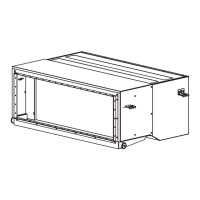
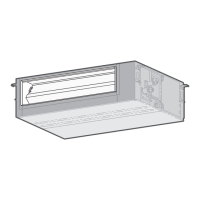
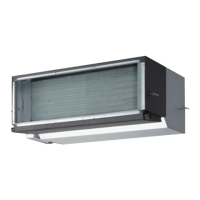
The Panasonic Ducted (E3 type) air conditioner is designed to provide comfortable room conditions by cooling or heating the air. It is a commercial air conditioner indoor unit, with various indoor unit models (S-60PE3R, S-71PE3R, S-100PE3R, S-125PE3R, S-140PE3R, S-160PE3R) and corresponding single-phase and 3-phase outdoor unit models (PZ2, PZH2, PZ3, PZH3 types).
A key feature of this air conditioner is the integrated nanoe™ X function. This biocidal product generates negative ions from ambient air or water, which are released into the room. These ions are designed to deactivate bacteria and viruses in the air and on surfaces, and to inhibit mold growth. The nanoe™ X function also helps to reduce odors in the room. By default, this function operates automatically upon purchase.
The air conditioner operates on a heat pump system for heating. During heating, its performance may decrease as outside temperature drops, and in such cases, an additional heating appliance might be needed. The unit also features a defrosting operation to melt frost formed on the outdoor unit, during which the indoor fan may stop or run at a very slow speed.
For cooling, the unit circulates cool air, and if the room temperature reaches the set level, the outdoor unit will cycle on and off automatically. During "DRY" operation, the indoor unit fan may stop when the outdoor unit is off to prevent humidity from rising. If the room temperature is close to the set level, the fan speed may automatically adjust to a "breeze" (light wind).
The system is designed for fixed wiring and requires a dedicated power outlet for each unit, along with appropriate overcurrent protection devices like an Earth Leakage Circuit Breaker (ELCB) or Residual Current Device (RCD). The unit must be properly grounded to prevent insulation failure hazards.
Usage Features
To ensure safe and effective operation, users should thoroughly read the operating instructions. The air conditioner is intended for use by expert or trained users in commercial settings, light industry, or on farms. It is not intended for use by persons with reduced physical, sensory, or mental capabilities unless supervised. Children should be supervised to ensure they do not play with the appliance.
Before Operation:
- Turn the power mains on 5 hours before the initial start of operation for warm-up.
- Keep the power mains ON for continuous use.
- Ensure the voltage of the electric supply matches the unit's nameplate specifications.
Energy Saving Tips:
- Avoid blocking the air intake and outlet of the unit, as this impairs performance and can cause malfunction.
- During cooling, use sunshades, blinds, or curtains to prevent direct sunlight from entering the room.
- Keep windows, doors, and other openings closed to prevent conditioned air from escaping.
- Always keep the air filter clean, as a clogged filter reduces performance.
Remote Control:
The air conditioner can be operated using various remote controllers:
- Wireless Remote Controller (Model No. CZ-RWS3 with receiver Model No. CZ-RWRC3)
- Timer Remote Controller (Model No. CZ-RTC4)
- High-spec Wired Remote Controller (Model No. CZ-RTC5B)
- Wired Remote Controller (Model No. CZ-RTC6)
Operating instructions for the specific remote controller are included with the device. The nanoe™ X function can be set to OFF via the remote controller if desired.
Safety Precautions during Use:
- Never turn the air conditioner on or off directly from the power mains switch; use the ON/OFF operation button on the remote controller.
- Do not insert fingers or other objects into the air conditioner's indoor or outdoor units, as rotating parts can cause injury.
- Avoid touching the air inlet or sharp aluminum fins of the outdoor unit to prevent injury.
- Do not sit or step on the unit to avoid accidental falls.
- Do not cool or heat the room excessively if babies or invalids are present.
- Keep fire alarms and air outlets at least 1.5m away from the unit.
- Open doors or windows frequently when using gas or oil heating appliances in the same room, as the air conditioner does not provide fresh air ventilation and these appliances consume oxygen, posing a risk of suffocation.
- Do not use or store gasoline or other flammable vapors or liquids near the air conditioner.
- Do not use the appliance in a potentially explosive atmosphere.
- Never touch the unit with wet hands.
In Case of Abnormality/Failure:
- Immediately stop using the product, disconnect power (pull plug, switch off breaker, or power disconnecting means).
- Examples of abnormalities include frequent ELCB trips, unit not starting, power disconnection when the cord is moved, burnt odor, abnormal noise, deformed or abnormally hot body, water leaks, abnormally hot power cord/plug, uncontrolled fan speed, or continuous fan operation after the unit is stopped.
- Contact your local dealer for maintenance or repair. Do not attempt to repair the air conditioner yourself.
Maintenance Features
Regular maintenance is crucial for the air conditioner's performance and longevity.
Air Filter Maintenance:
- The air filter should be kept clean to prevent clogging, which impairs unit performance.
- Consult your dealer or service center when the "Filter" indicator appears on the wired remote controller display.
General Cleaning:
- For safety, always turn off the air conditioner and disconnect the power before cleaning.
- Do not pour water on the indoor unit, as this can damage internal components and cause electric shock.
- Never use solvents or harsh chemicals, and avoid wiping plastic parts with very hot water, as this can cause deformation or discoloration.
- Be cautious of sharp metal edges and fins when cleaning to prevent injury.
- Use a firm stool or ladder when cleaning indoor units installed in high locations.
- The internal coil and other components of the outdoor unit require periodic cleaning by an authorized dealer or service center. Users should not attempt to clean the inside of the indoor and outdoor units themselves.
Long-term Storage:
- If the air conditioner will not be used for a long time, pull off the power plug from the receptacle, or switch off the breaker or power disconnecting means to isolate it from the main power supply.
Refrigerant Information:
- The appliance uses a specific type of flammable refrigerant.
- If refrigerant leaks and comes into contact with a flame, it can produce a toxic gas.
- The appliance must be stored in a well-ventilated area without continuously operating ignition sources (e.g., open flames, gas appliances, electric heaters).
- The storage room size should correspond to the room area specified for operation.
- The installation area must be constructed to prevent refrigerant from stagnating in case of a leak, to avoid fire or explosion hazards.
- Do not pierce or burn the refrigerant circuit.
- Do not use means to accelerate defrosting or cleaning other than those recommended by the manufacturer.
- Ventilation openings must be kept clear of obstruction if mechanical ventilation is required.
- Confirm with an authorized dealer or specialist the usage of the specified refrigerant type. Using an incorrect refrigerant type can cause product damage, bursting, and injury.
Disposal:
- Dispose of the unit according to national and/or local legislation.
- For disposal in countries outside the European Union, contact local authorities or dealers for the correct method. The battery symbol indicates compliance with chemical directives.
Troubleshooting:
- The manual provides a troubleshooting guide for common issues like noise (streaming water, cracking, humming), discharged air smells, dewdrops, fog, fan operation irregularities, dust discharge, and nanoe™ X display issues.
- If the air conditioner does not work properly after checking the troubleshooting guide, stop operation, turn off the power, and contact your dealer, reporting the serial number and symptom. Also report any inspection marks or error codes (E, F, H, L, P in combination with numbers) displayed on the remote controller's LCD.

 Need help?
 General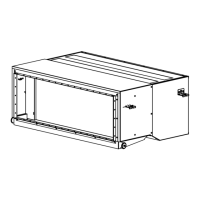


 To Next Page